Emma Pollon-MacLeod, BSc., N.D.
Adam Livingston, PharmD, RPh
Uniting naturopathic doctors and pharmacists creates a patient-centered model that addresses chronic illness, reduces polypharmacy, and improves long-term health outcomes.
This article explores how naturopathic medicine and pharmacy can work together to bridge gaps in patient care. From compliance and personalized medicine to compounding and deprescribing, collaboration between these professions holds the key to managing chronic conditions more effectively and creating lasting wellness.
Introduction
At first glance, they can seem like opposing sides in an argument: Naturopathic Medicine vs. Pharmaceutical Medicine, East vs. West, Alternative vs. Allopathic. However, the future of personalized medicine lies in building bridges between professions rather than creating barriers.
Naturopathic doctors prioritize prevention, focusing on lifestyle, diet, and whole-body approaches. They have time with patients to dig in and understand what is driving symptoms, supporting the whole body, and creating a personalized and patient-centered approach.
Pharmacists are unique because they are one of the only clinically trained healthcare professionals who are consistently available to the public. With the current shortage of family doctors in Ontario, pharmacists are becoming an increasingly critical part of the healthcare system. However, they are often rushed and overburdened with prescription volumes, and they don’t get the time or space to have the lengthy health conversations some patients require.
In our current healthcare system, patients needs have shifted drastically compared to 50 years ago. Today, the majority of medications dispensed in pharmacies are used long-term to manage chronic medical conditions. There has been an explosion of chronic illnesses in the Western world, which has created a shift away from the pharmacy model of previous generations that focused more on treating acute illnesses.
In order to grapple with this shift, collaboration between the professions of naturopathic medicine and pharmacy is critical. Creating a lane of communication between pharmacists and naturopathic doctors enables pharmacists to identify patients who may require additional lifestyle support for managing their chronic conditions. Pharmacists are well-positioned to recognize that when a medication is used for a chronic disease, the likelihood of additional prescriptions being added is very high. This is known as a prescribing cascade, and pharmacists observe it leading to polypharmacy (taking five or more medications) in community pharmacies across Canada every day. Many of these patients are not in need of more symptom-managing drugs, but instead a thorough examination of the root cause of the chronic condition they are taking several medications to treat. Finding the root cause of an illness is the superpower of naturopathic medicine. When this is combined with the biochemical personalization superpower of compounding pharmacists, the positive patient impacts that result are incredible.
The Synergy Between Naturopathic Medicine and Pharmacy: Compliance
The amazing thing about Naturopathic Medicine is the time practitioners have to connect with their patients. This involves sitting and understanding the key drivers of their health, as well as communicating and educating them about treatment options. A core principle of Naturopathic Medicine is the emphasis on prevention and education for patients. There is a focus on addressing and supporting the causes of disease, rather than just its symptoms.
However, there are many times when patients do require prescription medications for the management of their conditions. Very often, if a patient doesn’t feel aligned with these medications, they simply aren’t going to take them as instructed. This is rarely due to stubbornness, but more often due to a lack of understanding or education, or even simple mistrust. Many don’t get a chance to ask questions and feel heard about their concerns. Pharmacists are positioned to dispense the medication and talk about side effects, but they may not have the time to dig into “why” the patient was prescribed the medication in the first place. This is another opportunity for collaboration amongst the professions.
Naturopathic doctors are positioned to have these nuanced conversations around prescription medication. We have the background education on the patients’ history, and if we have done additional prescribing courses, we have an understanding of prescription medications. We can speak about the risk-to-benefit ratio, why they may require more intensive care, while we work on lifestyle and other factors. We can address common fears and misconceptions and create a safe space for patients to have longer conversations about why they feel hesitant. Overall, this can help with their compliance and health outcomes. Instead of judging patients for their non-compliance, pharmacists have the opportunity to flag these patients to help better understand what it is they are hesitant about. Patients can then be directed back to the pharmacist for more detailed questions about the specific medication they are being prescribed.
The Synergy Between Naturopathic Medicine and Pharmacy: Personalized Practice
The picture of a chemist in an apothecary mixing up medicines is a thing of the past. The art and science of pharmacy is sadly shifting away from the chemist model into a highly commoditized, volume and retail-based model. Independent pharmacies and compounding pharmacies are the beacons of light that hold true to the traditions of pharmacy. Just like with Naturopathic Medicine, there must be an evolution to meet the changing needs and demands of the people and community, without losing the essence of the profession.
Compounding pharmacists are akin to naturopathic doctors in the Western medical world. They understand the importance of personalization and that while a one-size-fits-all approach may work for the majority, it doesn’t work for everyone. Compounding pharmacists utilize their expertise to fill gaps that are present in traditional pharmaceutical medications. Their specialized skills enable them to customize medications when standard pharmaceutical options fall short, whether a patient has an allergy, requires a unique dose, or needs an alternative delivery method. This ability to personalize fills critical gaps in care and helps ensure that patients receive exactly what they need, in the way that works best for them.
The Regulations of Compounding Pharmacy in Canada
One of the biggest critiques of compounding pharmacy is a lack of standardization and regulations. Naturopathic doctors are well-versed in broad, sweeping critiques that overlook new regulations and industry standards.
In recent years, Canada’s compounding landscape has undergone a significant shift due to the introduction of new national standards by the National Association of Pharmacy Regulatory Authorities (NAPRA). Designed to unify and elevate pharmacy practices nationwide, these model standards encompass non-sterile, non-hazardous, sterile, and hazardous sterile compounding.
In Ontario, the Ontario College of Pharmacists adopted NAPRA’s sterile compounding standards in 2016, with full enforcement by January 1, 2019. The non-sterile standards implemented in 2018 prompted a comprehensive overhaul of facility design, workflow systems, staff training, and documentation practices.
These upgrades have required significant investment and effort, but they speak volumes about the commitment of compounding pharmacists to safety, precision, and patient care. The result is not only a more rigorous pharmacy model, but also one that is better aligned with the philosophies of personal care shared by naturopathic medicine.
What does this mean for common prescriptions from naturopathic doctors?
For pharmacies compounding bioidentical hormone creams, for example, NAPRA’s non-sterile compounding standards have significantly raised the bar. We’re now required to assess the risk level of each formulation, upgrade our lab environments, implement rigorous documentation protocols, and perform routine quality checks. This means every estrogen, progesterone, or testosterone cream is prepared under strict environmental controls and with tight process validation. While these changes have added complexity to the workflow, they’ve also enhanced consistency, safety, and confidence in the personalized therapies we provide, especially in sensitive areas like hormone health.
Compounded Hormone Prescriptions
Micronized Progesterone Capsules
Compounding bioidentical hormones into personalized dosages is one of the biggest benefits of compounding pharmacies. The same active ingredients are used: Estradiol and micronized progesterone, but specific dosages can be achieved while maintaining efficacy.
The commercially available option of micronized progesterone in Canada typically comes in a single 100mg dose. For many, this dose can be too high, particularly for women in perimenopause who aren’t yet using any estrogen hormone therapy. Progesterone can be compounded into any strength (i.e., 25mg capsules), so dosages can be adjusted throughout the menstrual cycle to support benefits without causing bloating or drowsiness.
Take micronized progesterone capsules, for example: 1 capsule (25mg) is taken for days 1-14, and 2 capsules (50mg) are taken for days 15-25 of the prescription. This aligns the medication with the body’s natural hormonal patterns and rhythm. Or a highly sensitive patient may have their progesterone compounded into liquid, e.g., (15mg/mL). This is done so that patients can gradually increase their dosing to find the appropriate dose that works for them. An example of this would be taking 1mL before bed to test tolerance. Until sleep improves with no morning drowsiness, patients can then increase by 1mL every 3 nights (up to a maximum dose of 5mL) to find their appropriate dose, which could also eventually be compounded into a capsule.
Vaginal Estriol
Genitourinary syndrome of menopause can cause a huge impact on a woman’s quality of life. Commercially available products for this purpose include tablets, which contain estradiol or estrone cream. Using a gentle estriol, along with some hyaluronic acid, can not only provide therapeutic estrogen but also have moisturizing effects..
For example, a prescribed cream may be made up of 0.1% estriol and 0.2% hyaluronic acid. This is designed to be a soothing treatment. It is to be applied daily for 14 days, and then twice per week thereafter.
Topical Estrogen
Topical estrogen can be a good choice for someone looking at hormone therapy, especially women in the transitional stage of perimenopause. Stronger, commercial products like Estrogel pose a risk of overwhelming the system, particularly if a woman is still having a period. There are also other commercially available products; however, these frequently suffer from supply issues.
Using a low dose of Estradiol or Biest cream can be a good way to transition a woman onto hormone therapy. Not only is the body getting used to additional estrogen, but it also provides a therapeutic benefit. This treatment may appear in several different forms. The prescription could be to apply 0.5 mg of Biest cream, which is 50% estradiol and 50% Estriol, daily, or it may be solely 0.35 mg of topical estradiol daily.
Areas of Personalized Medicine Where Pharmacists are Key
Compounding Non-Commercially Available Medications
Patients are not one-size-fits-all, and neither are their effective doses of medications. One patient may respond to 10mg of one drug, whereas another requires 100mg. A compounding pharmacy can be an excellent option for patients who require customized medication dosages that are not readily available from pharmaceutical manufacturers. A good compounding pharmacist can make almost anything!
Allergen-Friendly Formulations & Supporting Sensitive Patients
If your patient is allergic or sensitive to any ingredient in commercial medications but requires the active drug ingredient, compounding pharmacies can create a customized version. A prescription compound can provide the benefits of the medication while minimizing reactions or side effects.
If a patient is flagged by a Naturopathic Doctor as requiring medication they may be extremely sensitive to, a collaborative approach can be taken to suggest a prescription to the prescriber. This approach can be particularly helpful for tapering patients off medications, including antidepressants or benzodiazepines, that require customized protocols and fine-tuned dose adjustments.
Microdosing Medications
Using lower doses of medications for ultra-sensitive patients can be an amazing tool for supporting their unique health needs. Every healthcare provider has patients who seem to react strongly to everything, and that’s okay! We are all chemically unique human beings, and not everyone needs the maximum doses of medication to experience the benefits. Particularly in areas of drugs for mental health conditions, more and more patients are finding that a little dose can go a long way while preventing some of the side effects seen at higher doses.
Deprescribing
Polypharmacy (individual patients taking five or more medications at one time) is becoming more prevalent in North America. We are using more drugs than ever before in healthcare history. No one in our medical system is better-positioned, with a bird’s-eye view of prescribing trends, than pharmacists. A hugely underused feature of pharmacists’ expertise is reducing inappropriate medication use for patients to minimize safety issues created by widespread drug overuse. In the future, pharmacists could play a key role in flagging questionable drugs and working with prescribers to avoid harm from overmedicating patients.
Deprescribing is strategically assessing and reducing a patient’s reliance on harmful or unnecessary medications. It is particularly useful for circumstances such as:
- Hospital Discharge Prescriptions
Example: During a hospital stay, a patient is put on a proton pump inhibitor (PPI) to reduce stomach acid. This is prescribed as a routine preventative add-on. This prescription then moves to the patient’s file. It will continue to be prescribed and refilled because there is nothing in place for its effectiveness to be reviewed and potentially be deprescribed.
- Prescribing Cascades
Example: A prescribing cascade is used when new medications are added to treat side effects caused by other medications. Instead of evaluating and adjusting the original prescription, a long list of prescriptions grows of different medications that adjust one another. This process can actually increase side effects and risks.
- Change of Conditions
Example: As bodies and routines change, so should medication. Patient weight, health, and lifestyle changes affect what medication will best support and aid the body. Prescriptions can become too high, too low, or unnecessary. This is why it is important for prescriptions to be re-evaluated as conditions change.
A collaboration between Naturopathic Doctors and pharmacists can facilitate flagging if deprescribing may be an option. Patients can be sent to pharmacists who are familiar with deprescribing for them to perform a medication assessment and deprescribing protocol with the prescribing physician, if required.
Benefits of a Unified Model
This collaborative model between naturopathic doctors and pharmacists enables faster resolution of chronic issues through combined expertise. Patients understand the “why” behind their treatment plan, becoming active in their healing process for long-term success. It also reduces polypharmacy, the use of multiple drugs to treat an ailment, while introducing safer alternatives. The focus shifts to prevention, addressing root causes rather than symptoms, to ensure lasting wellness.
Overcoming Challenges
Current barriers include limited cross-professional awareness and gaps in insurance coverage. While common, it’s essential to examine how to break down these hindrances and improve patient outcomes. Solutions involve:
- Building referral networks between naturopathic doctors and pharmacists.
- Advocating for clinical and industry policy changes.
- Implementing joint education initiatives.
Naturopathic doctors should proactively connect with open-minded pharmacists through professional associations and conferences to advance this integration, such as events at the Alliance for Natural Health.
Future Directions
Merging pharmaceutical precision with naturopathic principles creates transformative patient-centered care. This synergy offers superior chronic disease management through personalized, root-cause solutions. As healthcare evolves, collaborative models will define the future of prominent healthcare.

Dr. Emma Pollon-MacLeod, BSc., N.D. Clinical Director, Naturopathic Doctor at Nutrichem. Dr. Emma is a Certified Menopause Society Certified Practitioner and a passionate advocate for natural, holistic healthcare, making it her mission to determine the root cause of illness. Her background in biochemistry allows her to navigate complex health conditions and provide realistic and effective treatment plans for her patients. Dr. Emma’s naturopathic practice has a focus on hormonal health, including genitourinary and pelvic health and complex allergy conditions, such as mast cell activation syndrome.
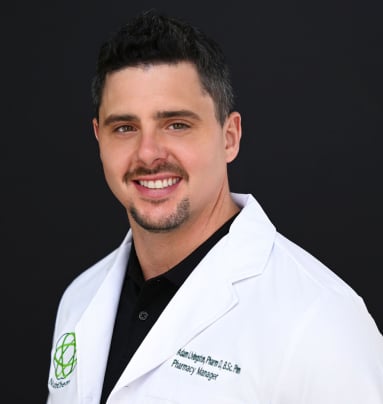
Dr. Adam Livingston, PharmD, RPh, is a clinical pharmacist, compounding pharmacist, and the designated manager (DM) of NutriChem Compounding Pharmacy & Clinic. Adam specializes in deprescribing (reducing inappropriate medication use), and medical cannabis therapeutics. As a pharmacist, Adam believes prescription drugs can be a useful tool in a healthcare provider’s toolbox. However, for many chronic conditions, they simply aren’t that effective and can be very difficult to discontinue. As the Deprescribing Program Coordinator at NutriChem, Adam helps to guide patients, where appropriate, away from harmful drugs, such as proton pump inhibitors, benzodiazepines, opioids, and sleeping pills, through various deprescribing protocols.
References
- Boon, H., Mior, S., Barnsley, J., Ashbury, F. D., Griener, G., & Abramson, S. (2009). Integrative healthcare: Arriving at a working definition and consensus model. Complementary Therapies in Medicine, 17(3), 123–128. https://doi.org/10.1016/j.ctim.2009.03.002
- Boon, H., Verhoef, M., O’Hara, D., & Findlay, B. (2004). From parallel practice to integrative health care: A conceptual framework. BMC Health Services Research, 4(15). https://doi.org/10.1186/1472-6963-4-15
- Farrell, B., Tsang, C., Raman-Wilms, L., Irving, H., Conklin, J., & Pottie, K. (2015). What are priorities for deprescribing for elderly patients? Capturing the voice of practitioners: A modified Delphi process. PLoS ONE, 10(4), e0122246. https://doi.org/10.1371/journal.pone.0122246
- Health Canada. (2015). Good Manufacturing Practices (GMP) Guidance Document for Natural Health Products (Version 3). Ottawa, ON: Government of Canada. https://www.canada.ca/en/health-canada/services/drugs-health-products/natural-non-prescription/guidance-documents/good-manufacturing-practices.html
- National Association of Pharmacy Regulatory Authorities (NAPRA). (2018). Model Standards for Pharmacy Compounding of Non-Sterile Preparations. Ottawa, ON: NAPRA. https://napra.ca/pharmacy-compounding-non-sterile-preparations
- Olatunbosun, S. T., Boon, H. S., & Hirschkorn, K. (2014). Collaborative health care: A model for pharmacists and complementary and alternative medicine practitioners. Canadian Pharmacists Journal, 147(2), 109–116. https://doi.org/10.1177/1715163514521225
- Reeve, E., Wiese, M. D., Hendrix, I., Roberts, M. S., & Shakib, S. (2013). People’s attitudes, beliefs, and experiences regarding polypharmacy and willingness to deprescribe. Journal of the American Geriatrics Society, 61(9), 1508–1514. https://doi.org/10.1111/jgs.12418
- Scott, I. A., Hilmer, S. N., Reeve, E., Potter, K., Le Couteur, D., Rigby, D., … & Martin, J. H. (2015). Reducing inappropriate polypharmacy: The process of deprescribing. JAMA Internal Medicine, 175(5), 827–834. https://doi.org/10.1001/jamainternmed.2015.0324