The Recent International Congress on Naturopathic Medicine
*esperanto: an artificial international language based as far as possible on words common to the chief European languages
David Schleich, PhD
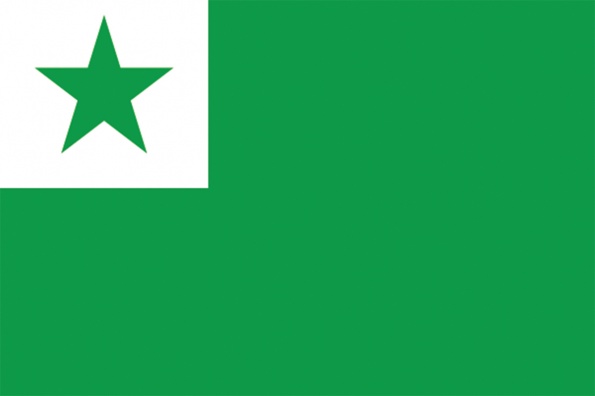 Back in 1887, Lazarus Ludwig Zamenhof, a Polish oculist, devised an international language called “Esperanto.” Despite its being quite Euro-centric, it remains a fine idea, organizing language around roots common to European languages, with other features I kept thinking about for several days this past summer in Paris while attending a naturopathic congress in Paris. One feature is that the words are spelled as pronounced. Another is that the grammar is simple and regular. Even verbs are regular, with one form for each tense or mood. As I listened to the many presenters at the first International Congress on Naturopathic Medicine, the very metaphor of Esperanto tempered my experience. Here we had naturopathic physicians from every corner of the world finding common ground and deconstructing uncommon ground, yearning like a stream for the sea, yearning to find a path to travel together. The whole idea of Esperanto, after all, is to be a second language which enables people with different native languages and cultures to communicate equally with each other. Its vocabulary, its circumflex diacritic letters and grammar are quite dissimilar from, say, English, French, German, or Spanish. Even so, the congress felt like a kind of naturopathic Esperanto of content and ideas, generated by a remarkable group of naturopathic physicians from around the globe.
The Genesis of the First International Congress in Paris
Some years ago the European Union of Naturopathy (L’UEN-Union Européenne de Naturopathie) sponsored a similar gathering in Spain of naturopathic physicians from many countries who had similar goals. Dr Michael Traub, then-president of the AANP, attended that event along with a number of North American NDs and reported on the need for more collaboration and sharing among countries with naturopathic professionals. However, this gathering in Paris was different – more comprehensive, somewhat bolder in purpose. The first International Congress on Naturopathic Medicine occurred at the Marriott Rive Gauche Hotel and Conference Centre, close to the abundant energy and light of Paris. US naturopathic medical educators were featured, along with many naturopathic physicians and others from across the globe. What happened on the left bank of the Seine during 3 days in early July, 2013, was prescient and important for naturopathic medical educators everywhere. The range and quality of the lectures and research poster presentations inspired many who attended, reflecting tens of dozens of projects in play and numerous naturopathic movements in a variety of countries.
Anne Marie Narboni (a Canadian ND practicing in Paris) and Sussanna Czeranko (a Canadian ND practicing in the United States) conceived of this conference less than 2 years ago, just after the 2011 Integrative Health Symposium in New York. Both were alarmed by the presumptuous encroachment of biomedicine into naturopathic modalities and therapies after a century of rejection of those very same ideas and approaches. They rapidly gathered a planning board of like-minded colleagues from around the world to make it happen: Diana Arundell (Australia), Laurence Casenave (Luxemburg), Narendra Chand (Nepal), Phillip Cottingham (New Zealand), Sussanna Czeranko (United States), Yasmina Daoudi (France), Fabienne DeLambilly (France), Valerie Lhuillier (France), Sandrine Masson (France), Severine Pannier (France), Aude Veret (France), Anne Laurence Weiss (France), Barbara Dowgiallo (Canada), Dinesh Kartha (United Arab Emirates), Olivier Leost (United Kingdom), and Rajesh Singh (India). Anne Marie and her committee drove the agenda tirelessly from her Parisienne base, manifesting in this very special event.
How It Rolled Out
The goal of the congress/conference was to gather naturopath physicians from a wide variety of national jurisdictions in a high-quality venue (the food would have passed any naturopathic gauntlet; the simultaneous translation was seamless) to share, to compare, and to unify. The first afternoon’s program set the tone for an eclectic and comprehensive congress curriculum. The program began with an overview of the regulatory and public policy health landscape in the United States. This session was juxtaposed with one focusing on the recent history of naturopathy in France. The comparison was very telling and a kind of microcosm of similar variations within single countries, a topic which recurred in the congress. On that same afternoon the 300+ delegates also experienced sessions about the progress of contemporary naturopathic research, back-to-back with well documented plenary presentations about still-valuable clinical pearls from a century ago, and about contemporary nutritional immunomodulation protocols for chronic inflammatory disorders. The second day began with 2 well-received macro-view presentations, one espousing a unifying theory of naturopathic medicine with a particular emphasis on American experience, and the other an overview of the naturopathic response to global health and environmental crises: CAM research; public health research models; Buteyko breathing therapy; practice management; orthodox naturopathy; mycology and nutrition; future trends in naturopathic licensing in European countries; mind-body medicine; energy medicine; addiction treatment; naturopathic treatment of autism; biodentical hormone replacement therapy; naturopathic philosophy and precepts; health services research; chronic fatigue syndrome; and energy medicine.
As with every conference/congress, there are many topics, not always linked directly to formal presentations, which occur along with the declared themes and filaments of the conference itself. (See Table 1.)

Global Discourse
The interest among non-North American naturopathic physicians in our system of regulatory and public policy frameworks was strong. Interspersed among presentations and part of lunch, dinner, and inter-event conversations were discussions about the types of recognition NDs have in various parts of the world, and the benefits and drawbacks of each (Table 2). Often, the comparisons with the US system became a focal point of those interactions. Whether one considers that naturopathic physicians cannot prescribe homeopathics in Italy or that there are several dozen naturopathic associations in Australia all vying for the attention of the profession, the information was abundant and challenging. Not unlike the tension in the United States between non-licensable naturopaths whose training has been from a non-CNME-accredited program, there is consternation about standards and the loss of history and tradition in the medicine if we move too much in the direction of biomedicine in the interests of achieving state recognition and access to reimbursement.
Another strong meta-theme in the conference was the continuing growth of nutraceutical markets globally and the role naturopathic physicians have and will have in their development and appropriate use. The growth of the nutraceuticals market in India was often cited.
Naturopathic Esperanto
The metaphor with which we began these descriptive comments about the congress may be applicable to the larger filaments of sharing which occurred among the delegates and planners. This congress was a kind of Naturopathic Esperanto of clinical, educational, research, and political discourse, whose outcomes will be of interest to our naturopathic medical educators in North America as they prepare grads for an increasingly complex, interconnected world. The time is approaching when our programs will need to prepare naturopathic physicians for work outside the world we are in at the moment.
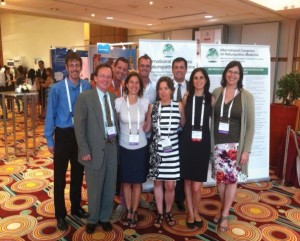 Rear, from left: Patrick Healey (student, NCNM), Dr Jason Black (ND, Oregon), Dr Eric Blake (ND, Oregon), Dr Jared Skowron (ND, Connecticut); front, from left: Dr David Schleich (Oregon), Dr Jessie Black (ND, Oregon), Dr Sussanna Czeranko (ND, Oregon), Dr Michelle Qaqundah (ND, Italy), Dr Seroya Crouch (ND, Australia)
 David Schleich, PhD is president and CEO of NCNM, former president of Truestar Health, and former CEO and president of CCNM, where he served from 1996 to 2003. Previous posts have included appointments as vice president academic of Niagara College, and administrative and teaching positions at St. Lawrence College, Swinburne University (Australia) and the University of Alberta. His academic credentials have been earned from the University of Western Ontario (BA), the University of Alberta (MA), Queen’s University (BEd), and the University of Toronto (PhD).