

A...
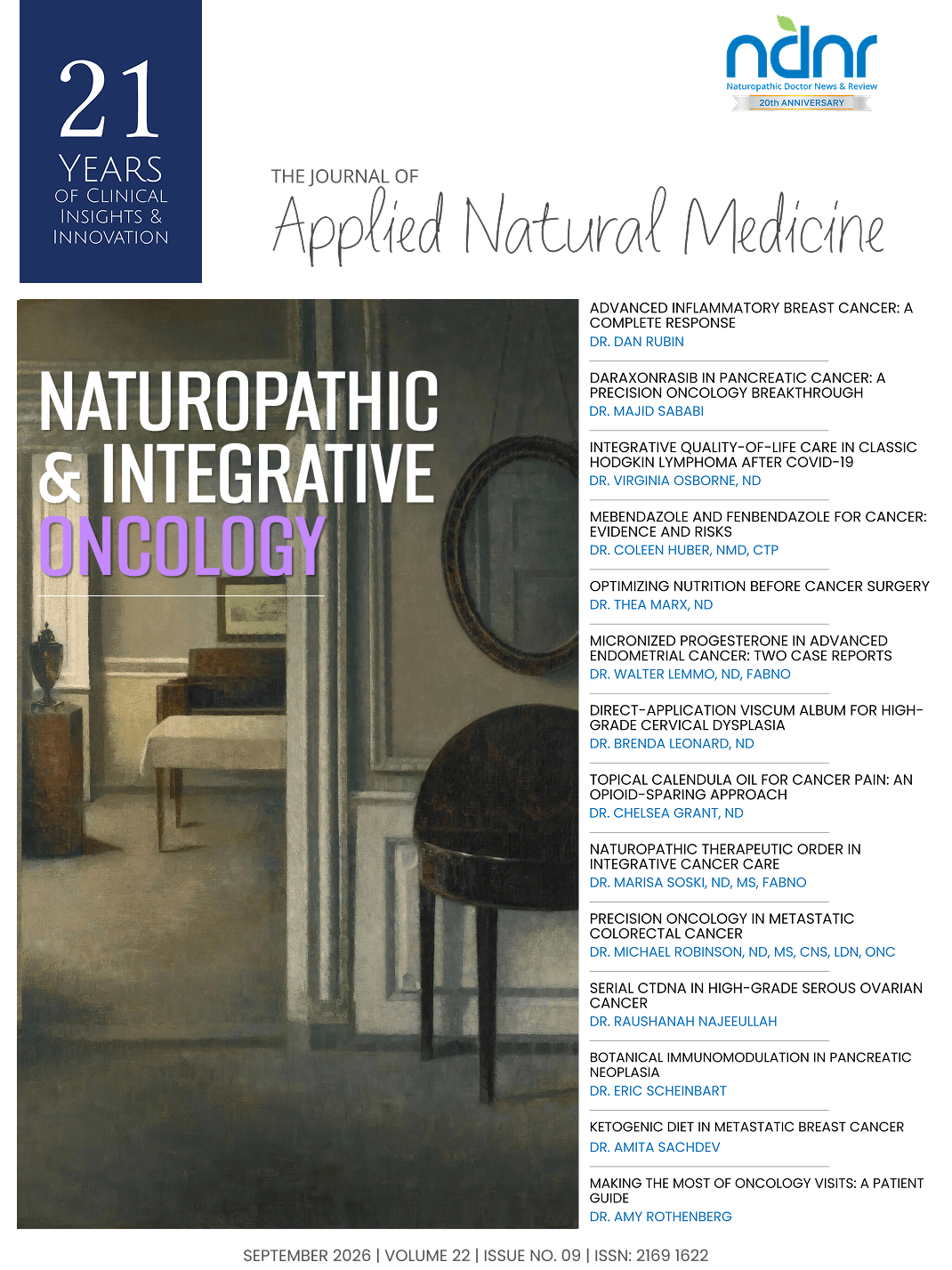
Chemotherapy-Induced Peripheral Neuropathy: An Evidence-Based Guide for Naturopathic Physicians
read more
The use of any chelation medication by physicians can be a beneficial addition to clinical practice. This benefit is not without risk, as is common to most therapeutic interventions, but with proper training and implementation chelation risks can be effectively managed. The purpose of this article is to give a general overview of intravenous EDTA chelation, and to illustrate the treatment and benefits in two clinical cases.
The term chelation is derived from the Greek root chele referring to the claw of a crab. It is applied to infer the claw-like binding action that occurs when an organic compound binds to a metal ion. Chelators occur in nature in many forms, such as chlorophyll and hemoglobin.
The chelating agent ethylenediaminetetraacetic acid (EDTA) has many forms. In fact, in organic chemistry applications there are more than thirty forms available due to the base molecule’s affinity for chemical combination. In medicine the common intravenous forms are Calcium Disodium EDTA (Ca-EDTA or Versenate), Disodium EDTA (Na-EDTA or Edetate) and Magnesium Disodium EDTA (Mg-EDTA). Other forms are available in non-parenteral agents.
In standard medical practice Ca-EDTA is approved for the chelation of lead and other heavy metals, and Na-EDTA is approved for hypercalcemia, typically associated with neoplasm. Magnesium works much the same as the chelating chemistry of Ca-EDTA, and in fact is equal in chelating ability. It should be noted that Mg-EDTA and Na-EDTA have the potential effect of hypocalcemia, but Ca-EDTA does not.
In broader medical use the EDTA group of chelating agents is used for a variety of conditions. These conditions include heavy metal toxicity, atherosclerosis, arteriosclerosis, coronary disease, and peripheral vascular diseases, as well as chronic degenerative processes. The use of EDTA in these types of conditions has been widely practiced in the alternative medical community for at least fifty years. It should be noted that while exact mechanisms of action in the alleviation of these conditions are poorly understood, the history of positive clinical outcomes is well established.
All three parenteral forms of EDTA have the capability of removing heavy metals from the system. Heavy metals are known to interfere with crucial enzyme systems and many of these enzyme systems are required to naturally prevent disease. Na-EDTA and Mg-EDTA can chelate calcium, which is postulated to help in the resolution of arterial plaquing. There is also the potential benefit to the microvasculature of improved nitric oxide functioning by the removal of NO-synthase inhibiting ions by all forms of EDTA. These few examples of potential benefit are meant only to touch the surface of potential positive physiologic actions of the EDTA family. If the alternative medical literature is reviewed, many theories are postulated regarding these positive effects, and it is reasonable that over time more data will substantiate many of these theories.
As we extol the virtues of the chelating process in disease states we must also be aware of the contraindications, toxicities, side effects and precautions. EDTA is rarely antigenic, so true allergic reaction is equally rare. This follows for toxic reactions as well, and when administered per established guidelines toxicity is all but nonexistent. EDTA does create symptoms due to the stress of detoxification, and it is important to clinically review lab values of the patient’s kidney, liver and cardiac status prior to administering EDTA. It is also imperative to follow these indices throughout the chelation series, at intervals which are clinically reasonable. Patients should be monitored for potential nephrotoxicity, hypocalcemia, thrombophlebitis, pseudo-thrombophlebitis, hypoglycemia, hormone effects (parathyroid), and occasionally intestinal effects. More common are the detoxification side effects of fatigue and rash.
We find it imperative that after every third chelation treatment a mineral IV is given. This IV cannot only abate the potential deficiencies of nutrient minerals attracted to EDTA (zinc, copper, calcium, magnesium, sodium and potassium), but is also an extra precaution against poor gut absorption of mineral supplements. Often in the chronically ill and toxic patient the oral absorption of minerals will be poor until detoxification has progressed and health begins to return. Regardless of the patient’s health, they should be prescribed daily oral dosing of a balanced vitamin/mineral supplement. Along with the chelation treatment supplements and lifestyle modifications appropriate for the patient should be prescribed. EDTA is affected by body pH, and is more stable in a more alkaline system, so usual alkalinizing dietary modifications should be followed as well.
Relief of symptoms can occur within the first treatment for many, and for some it may take a series of treatments. Chelating physicians regularly report improvement in the conditions treated with the above approach to chelation administration and nutrient, diet and lifestyle modifications. Also, if proper patient work-up, preparation, dose calculation and follow-up are observed, EDTA chelation can be a very safe and effective therapy.