
by NDNR | Nov 13, 2006 | 2006 | November, Botanical Medicine, Endocrinology, Nature Cure
Eric Yarnell, ND, RH(AHG) In recent years, several common spices have received attention as possible insulin sensitizers. Many of these spices, including Cinnamomum spp (cinnamon, cassia) bark and Syzygium aromaticum (clove) flower buds, were once central players in...
by NDNR | Nov 6, 2006 | 2006 | November, Endocrinology
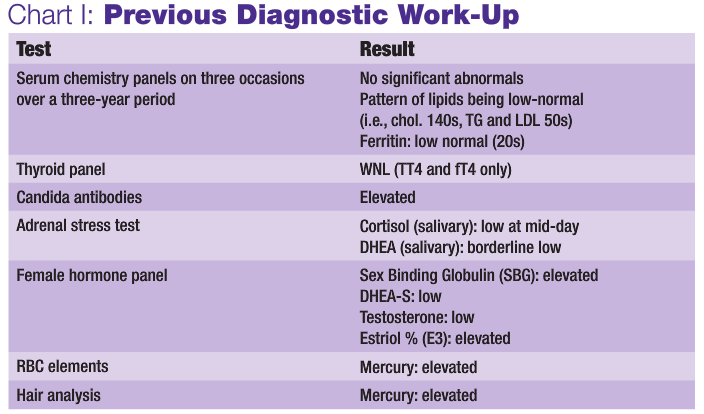
David M. Brady, ND, DC, CCN, DACBN This article is one in a series of Clinical Rounds, which has been appearing periodically in NDNR. Real case studies from Dr. Brady’s practice are presented. It is his aim to present interesting cases that will facilitate thought and...

by NDNR | Oct 13, 2006 | 2006 | October, Environmental Medicine
Mitch Kennedy, ND Before the 1940s, lead arsenate (LA) was the predominant pesticide used in fruit orchards. Introduced in 1892 in Massachusetts for use against the Gypsy moth, the pesticide was quickly adopted for use in fruit orchards, especially apples, because of...
by NDNR | Oct 13, 2006 | 2006 | October, Environmental Medicine, Fertility, Men's Health, Women's Health
Mitch Kennedy, ND Phthalate esters (PE) are used in almost every plastic product on the market today. Each year, 2 to 8 million tons of PE are produced worldwide. Phthalates have been shown to be endocrine-disrupting chemicals associated with testicular and ovarian...

by NDNR | Oct 13, 2006 | 2006 | October, Authors, Editorial / Opinion
Joe Kellerstein, DC, ND When we’re distressed about what reality is doing at the moment and we want to set about changing it, we have a problem … How do we change it? Invariably, solving the problem requires that we look at the situation with a set of mental tools...
