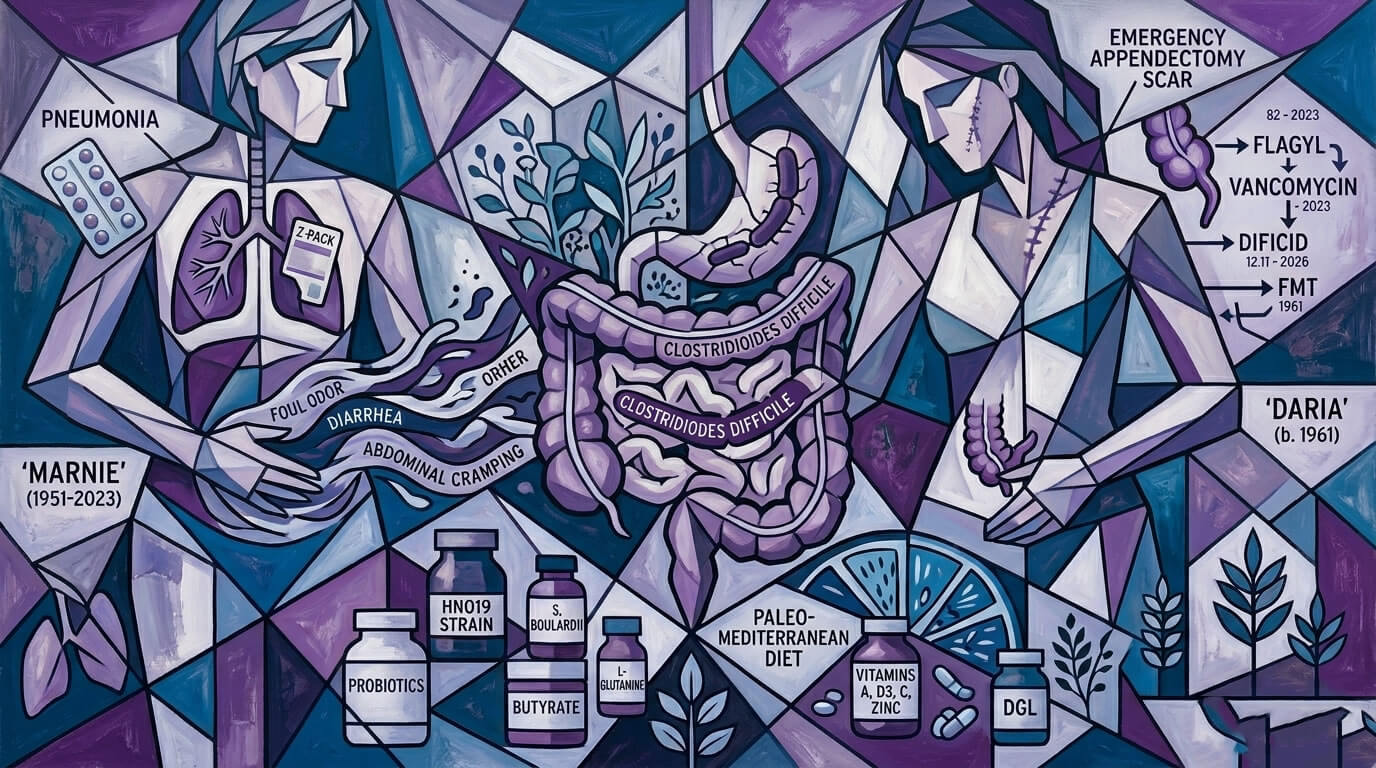
Exploring two complex cases of recurrent C. difficile infections unresponsive to antibiotics and FMT, and how naturopathic interventions supported long-term remission and restored quality of life.
Short Description: Recurrent C. difficile infections pose a significant challenge, even with conventional treatments like vancomycin or fecal microbiota transplant. These two naturopathic case studies demonstrate how targeted interventions—probiotics, nutritional support, gut-healing nutrients, and lifestyle strategies—can help patients achieve lasting recovery when standard care falls short.
Introduction:
The incidence of Clostridioides difficile (formerly Clostridium difficile) infections has increased significantly in recent years. . C. diff. is a serious bacterial infection that causes inflammation of the colon, often resulting in diarrhea and,in more severe cases, life threatening complications.
Over twenty years ago, C. diff. was primarily associated with hospitalized seniors or those with antibiotic overuse. Today, the infection can arise suddenly, even without antibiotic exposure, and at any age, though it remains most common in older adults.
Clinicians often prescribe the inexpensive generic form of Flagyl (though it is generally less well tolerated than the brand-name version) or Vancomycin asfirst line therapy,, both of which can be effective in eradicating the bacteria. While these treatments can be effective, some patients experience persistent or recurrent infecitons despite multiple antibiotic courses or even fecal microbiota transplants (FMTs). It’s essential to modulate the immune system, balance the gut microbiome, and address underlying inflammation whenever a chronic infection is present– particularly one of such severity.
The following two case studies illustrate naturopathic intervetions in complex C. Diff. cases that had not been resolved with conventional treatment alone. One involved a long-term patient whose C.Diff began after antibiotic use and persisted until we addressed underlying gut issues, whilethe other was a new patient with years of recurrent infections unresponsive to antibiotics or FMTs. These cases highlight how powerful naturopathic medicine can be when conventional therapies fall short.
Case Studies: Real-Life Success Stories
Case One: Marnie’s Battle With C. diff.
Initial Presentation
“Marnie”, a woman in her early 60s, had been a long term patient of mine. She maintained a Paleo-mediterranean diet, was active, had an ideal BMI and her laboratory values (blood sugar, lipid panel) were consistently excellent. She originally sought care for hormone balancing, optimal health, longevity, and stress reduction. Her dedication to natural health was evident physiologically; she looked significantly younger than her age and, even now 70, appears to be in her 50s. At age 62, Marnie developed pneumonia, and was prescribed a Z-pack(azithromycin), and a Medrol Dosepak (methylprednisolone). One week after she had finished both medications, she felt well and restarted her supplements (which her PCP had asked her to pause during treatment). Soon afterward, she developed sudden, severe abdominal cramping and watery diarrhea with a distinct, foul odor she described as unlike anything she had ever smelled before, and she was a wildlife rehabilitator.
Her PCP confirmed C.difficile via stool testing and prescribed vancomycin 125mg QID for 10 days. Three weeks after completing the course, she followed up in my office.
Although stool testing was now negative, she continued to experience persistent but milder abdominal pain, cramping, and loose stools. Symptoms worsened with meals, leading to weight and muscle loss.
Treatment Plan:
I restarted her supplements, emphasizing probiotic therapy:
- Lactobacillus/Bifidobacterium (HNO19 Strain, 30 billion CFU daily, titrated to TID)
- Lactobacillus/Bifidobacterium (20 billion CFU) + Saccharomyces boulardii 3 billion CFU TID before meals
Additional recommendations for gut repair and immune support included:
- Time-released sodium butyrate 300 mg TID with meals
- L-glutamine 3 g daily
- Arabinogalactan 2 g daily
- Deglycyrrhizinated licorice (DGL) 500 mg before dinner
- Vitamin A 12,000 IU BID
- Vitamin D3 5000 IU BID
- Zinc 20 mg BID with food
- Vitamin C 1000 mg with each meal
She was advised to continue a Paleo-Mediterranean diet while avoiding alcohol and refined sugar.
One Month Follow-Up:
At follow-up, Marnie reported complete resolution of major gastrointestinal complaints. She was passing normal, well-formed stools daily, her energy had returned, and she was able to exercise and resume wildlife rehabilitation work. The only residual concerns were early satiety with small meals and difficulty digesting steak.
Treatment Plan Adjustments Included:
- Probiotics reduced to one daily HNO19 capsule before breakfast and one lacto/bifido + boulardii before dinner
- Continued zinc (20 mg daily) due to persistently low serum levels
- Continued vitamin D3 5000 IU daily and vitamin C 500 mg with dinner
- Initiation of betaine HCl 300 mg, 1–2 capsules with protein-rich meals, for suspected hypochlorhydria (to discontinue if burning or warming sensation occurred)
Two-Year follow up:
Marnie remained asymptomatic for nearly two years. Over time, she didn’t need the betaine and was on a basic supportive protocol for anti-aging, optimal hormone balancing, and only took 1 probiotic daily that I would switch around every few months.
At this time, she experienced a sudden recurrence of severe abdominal cramping, watery diarrhea, and the characteristic odor of C. Difficile, despite no recent antibiotic exposure.
I advised Marnie to follow up immediately with her PCP or GI doctor for confirmation and treatment, while simultanoeusly restarting her comprehensivce gut protocol:
- Sodium butyrate 300 mg TID with meals
- L-glutamine 3 g daily
- Arabinogalactan 2 g daily
- DGL 500 mg before dinner
- Vitamin A 12,000 IU BID
- Vitamin D3 5000 IU BID
- Zinc 20 mg BID with food
- Vitamin C 1000 mg with meals
Addional antimicrobial support was intiated until she could access conventional treatment:
- Colloidal Silver, 1 tbsp held under tongue for 30 seconds TID before meals
- Botanical antimicrobial blend, 5 drops TID before meals
- Homeopathic antimicrobial tablets, 1 tablet dissolved TID before meals
- Immune-supportive multinutrient, 1 capsule TID with meals
A comprehensive stool analysis was ordered to be completed three weeks after any antibiotic course prescribed by her PCP.
Six-Week Follow up:
The patient admitted she had not followed up with her PCP. However, after two days of taking the naturoapthic protocol, her stool odor resolved, and within one week her cramping and diarrhea significantly improved. After 3 weeks, she reported feeling normal again and discontinued probiotics and antimicrbials in preparation for the stool analysis.
Findings included:
- Marked intestinal inflammation (elevated secretory IgA, calprotectin, eosinophils)
- Low pancreatic enzyme activity
- Adequate beneficial flora
- Dysbiosis with overgrowth of potentially pathogenic bacteria
She was advised to continue the comprehensive gut protocol for one additional month. Gentle chewable digestive enzymes (1–2 with meals) were added, and she performed an elimination diet which revealed dairy sensitivity, prompting full avoidance.
Two-Month Follow up:
Patient reported feeling great with no gastrointestinal complaints.. She continued one month of the gut protocol and digestive enzymes but discontinued additional antimicrobial protocol.
Final Follow up
Repeat stool testing showed normalization of inflammatory markers, absence of allergic reactivity, and decreased bacterial overgrowth. Pancreatic enzymes remained borderline low. Clinically, she was symptom-free.
Over the next eight years, Marnie has remained healthy and thriving, without recurrence of C. difficile. She no longer requires digestive enzymes and maintains excellent quality of life on a simplified maintenance protocol.
Case Two
First Visit: Daria’s Longterm C. diff. Battle
“Daria” was a 63-year-old female with a two-year history of C diff. reoccurring every few months. She started having C. diff after undergoing an emergency appendectomy when she was 61 years old. The patient each time would know it was C diff. from the severity of the symptoms the cramping, diarrhea, and weakness, that was worse than any gastrointestinal bug she had in the past. The patient didn’t notice a foul odor but admitted to having issues with smell since acquiring COVID a few years ago.
Daria was very kind and was so anxious about passing the infection on to her older parents and her math students. She wanted to retire in two years but was worried she would have to sooner because of the C diff. She had become obsessive about keeping everything clean since the original onset. The first C diff. infection resolved with the inexpensive antibiotic, the generic of Flagyl, but the patient had severe side effects, which I have found typical of the generic (mood swings, nausea, etc.). It was effective, but then one month later, the C diff. returned. This time, the doctor prescribed the typical dosage of vancomycin, 125mg four times daily for ten days, and it helped her for three months.
For a period of about one year, she would feel fine for a few months, then the symptoms would return, and the stool analysis would be positive for C diff. Eventually, the doctor prescribed Dificid to her, but the results were the same. The infection would clear but then reoccur in a few months. Finally, after about one and a half years, the patient found a gastroenterologist to prescribe a fecal microbiota transplant. Over the years, I have seen this completely clear C diff. and only on a handful of occasions have I seen this modality fail. For Daria, this gave her about six months of relief, but then the infection would reoccur.
Daria was extremely anxious and didn’t want to change any of her supplements. She was about four months into no infection after her FMT and was worried that taking anything new would bring on an infection. She agrees to taking Garum Armoricum 3 before breakfast, which is helpful for GI issues (it’s a tiny pill), OCD, and health anxiety. It’s very balancing, so no testing needed first. She agreed to take a proprietary blend of L-theanine, inositol, sunflower lecithin, and a low dose of magnesium L-threonate 1 scoop before breakfast and 1 scoop before dinner. I added in a spore biotic since she was unwilling to change or take a different probiotic.
I told her to get a stool analysis and follow up in 1 month.
2nd Visit 3 weeks later:
Daria was crying during her follow-up. She developed another C diff. infection right after the first appointment. Following Dificid, she had a fecal microbiota transplant. She was so distraught that the C diff. was more frequent now after the FMT. After a few minutes, she calmed down and could relay that the supplements had really helped her health anxiety and obsessive symptoms even though she was so upset. She was now open and willing to do anything that I advised her to do.
The patient’s comprehensive stool panel showed slight trouble digesting fats, mild inflammation with a borderline secretory IgA, very low short chained fatty acids, extremely low probiotics, overgrowth of potentially pathogenic bacteria, and positive for yeast.
To help with the dysbiosis and the yeast, I recommended a mostly Paleo diet with a focus on half a plate of vegetables and healthy non-contaminated fish. To bring down the inflammation, aloe distilled 1/8 cup TID before meals, DGL chewable 1 TID before meals, and IgY Max immunized egg powder 1 scoop in water before breakfast, CoQ10 100mg TID with meals (patient was on a statin).
To bring up the short-chained fatty acids, time-released butyrate 1 TID. To help prevent reinfection and to kill the yeast; vitamin d 5000iu with breakfast, immune support proprietary herbal combination 5 drops TID before meals, time released melatonin 1 to 5mg before bed, and a GI binder with zeolite 1 to 2 before bed, a lacto/bifido probiotic w/ HNO19 100 billion 1 TID before meals and lacto/bifiod 20 billion and saccharomyces boulardii 3 billion before meals TID. Daria refused the German homeopathic antibiotic because she was afraid of it, but agreed to take and do everything else. I kept her on the Garum Armoricum, L-theanine, inositol, sunflower lecithin, and magnesium L-threonate and the spore biotic.
I told the patient to follow up in 1 month.
3rd Visit 3 weeks later:
The staff squeezed in the patient. She was having diarrhea and cramping and was visibly upset. I had her immediately follow up with her PCP for testing. She was negative for C diff. I referred her to a cognitive-behavioral therapist to help with some of the anxiety she was having when her stomach occasionally with poor nutrition would get irritated.
Over the next six months:
For the next six months on and off, Daria would call with anxiety, diarrhea, and cramping after eating too many sweets, and we would squeeze her in. She would always test negative for C diff. I would increase some of the anti-inflammatory supplements, and she would feel better along with following up with her therapist.
Current Visit two years later:
Daria at 70 years old has been fine now for over two years with no reoccurrence of C diff. and no abdominal symptoms. She is still on a basic protocol to support her gastrointestinal track and her stress response including lacto/bifido 20 billion before meals BID, and Saccharomyces boulardii 3 billion qd before breakfast, spore probiotic 1 before dinner, Garum Armoricum, L-theanine, inositol, sunflower lecithin, and magnesium L-threonate. Her anxiety is gone, and she is enjoying her life with her husband in her retirement from teaching math. She was so grateful that she had found our office, and that she was no longer suffering. I am always amazed at how powerful basic naturopathic medicine is. I am so grateful for our profession.
REFERENCES:
Mada PK, Alam MU. Clostridioides difficile infection. 2024 Apr 10. In: StatPearls [Internet]. Treasure Island (FL): StatPearls Publishing; 2025 Jan–. PMID: 28613708.
Simpson M, Lyon C. PURL: Do probiotics reduce C diff. risk in hospitalized patients? J Fam Pract. 2019 Jul/Aug;68(6):351;352;354. PMID: 31381623; PMCID: PMC6744006.
Vermeersch SJ, Vandenplas Y, Tanghe A, Elseviers M, Annemans L. Economic evaluation of S. boulardii CNCM I-745 for prevention of antibiotic associated diarrhoea in hospitalized patients. Acta Gastroenterol Belg. 2018 Apr-Jun;81(2):269-276. PMID: 30024698.
-
- Liu Y, Chen N, He H, Liu L, Sun S. Sodium butyrate alleviates DSS-induced inflammatory bowel disease by inhibiting ferroptosis and modulating ERK/STAT3 signaling and intestinal flora. Ann Med. 2025 Dec;57(1):2470958. doi: 10.1080/07853890.2025.2470958. Epub 2025 Mar 3. PMID: 40028886; PMCID: PMC11878173.
Taylor L, McCaddon A, Wolffenbuttel BHR. Creating a Framework for Treating Autoimmune Gastritis-The Case for Replacing Lost Acid. Nutrients. 2024 Feb 27;16(5):662. doi: 10.3390/nu16050662. PMID: 38474790; PMCID: PMC10934127.
Zou M, Liang Q, Zhang W, Liang J, Zhu Y, Xu Y. Diet-derived circulating antioxidants and risk of inflammatory bowel disease: a Mendelian randomization study and meta-analysis. Front Immunol. 2024 Feb 21;15:1334395. doi: 10.3389/fimmu.2024.1334395. PMID: 38449867; PMCID: PMC10915022.
Kumar V, Fischer M. Expert opinion on fecal microbiota transplantation for the treatment of Clostridioides difficile infection and beyond. Expert Opin Biol Ther. 2020 Jan;20(1):73-81. doi: 10.1080/14712598.2020.1689952. Epub 2019 Nov 13. PMID: 31690143.
-
- Liu Y, Wang J, Wu C. Modulation of Gut Microbiota and Immune System by Probiotics, Pre-biotics, and Post-biotics. Front Nutr. 2022 Jan 3;8:634897. doi: 10.3389/fnut.2021.634897. PMID: 35047537; PMCID: PMC8761849.
Playford RJ. Effects of Chicken Egg Powder, Bovine Colostrum, and Combination Therapy for the Treatment of Gastrointestinal Disorders. Nutrients. 2024 Oct 29;16(21):3684. doi: 10.3390/nu16213684. PMID: 39519517; PMCID: PMC11547998.
- Stremmel W, Gauss A. Lecithin as a therapeutic agent in ulcerative colitis. Dig Dis. 2013;31(3-4):388-90. doi: 10.1159/000354707. Epub 2013 Nov 14. PMID: 24246994.