

A...
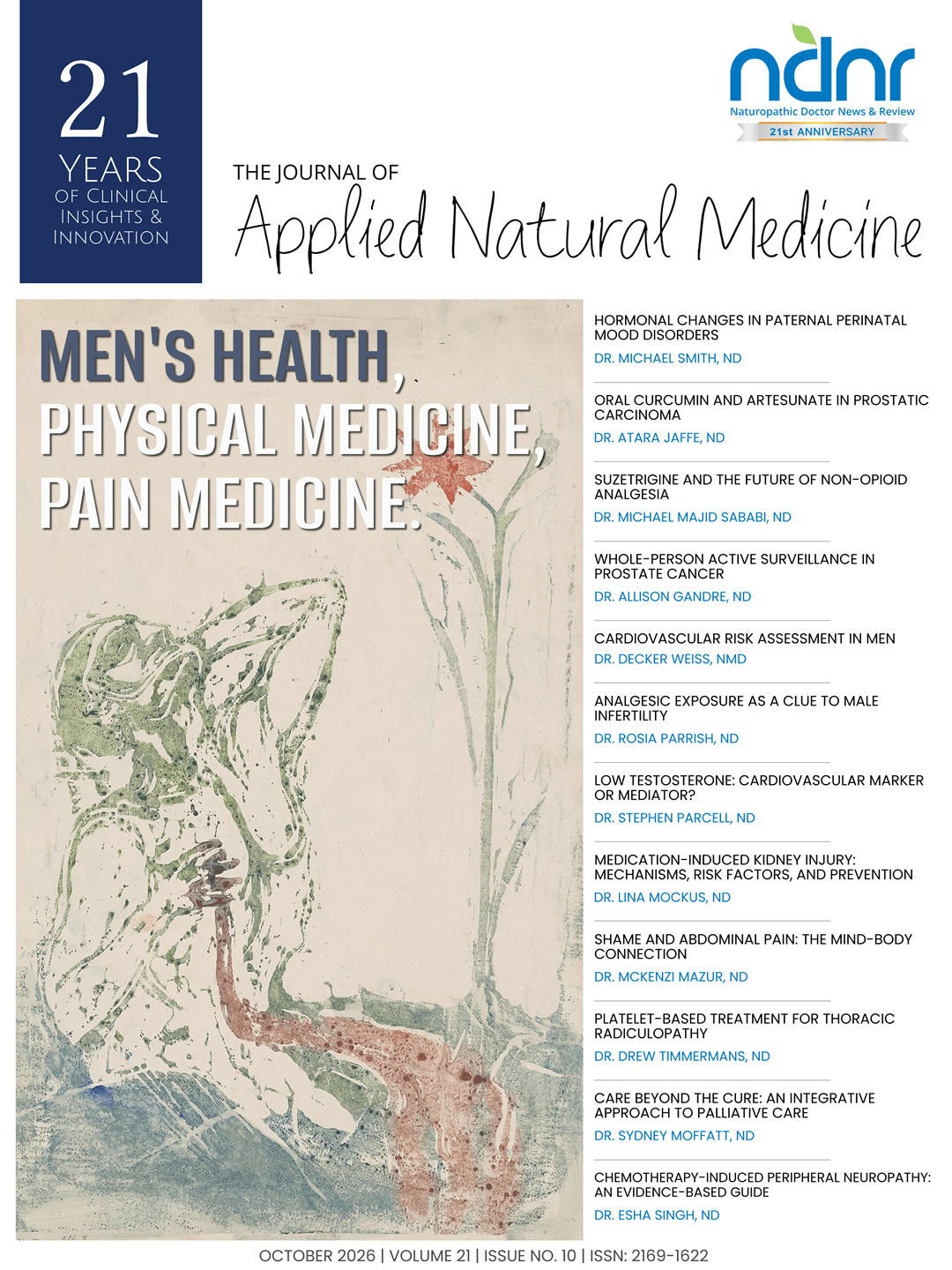
Chemotherapy-Induced Peripheral Neuropathy: An Evidence-Based Guide for Naturopathic Physicians
read more
NODE SMITH, ND
Even before the COVID-19 pandemic, most people in the United States already had been sick with a coronavirus, albeit a far less dangerous one. That’s because at least four coronaviruses in the same general family as SARS-CoV-2 cause the benign yet annoying illness known as the common cold.
In a new study that appears in Nature Communications, scientists from Scripps Research investigated how the immune system’s previous exposure to cold-causing coronaviruses impact immune response to COVID-19. In doing so, they discovered one cross-reactive coronavirus antibody that’s triggered during a COVID-19 infection.
The findings will help in the pursuit of a vaccine or antibody treatment that works against most or all coronaviruses, says senior author Raiees Andrabi, PhD, an investigator in the Department of Immunology and Microbiology.
“By examining blood samples collected before the pandemic and comparing those with samples from people who had been sick with COVID-19, we were able to pinpoint antibody types that cross reacted with benign coronaviruses as well as SARS-CoV-2,” says Andrabi, who works closely with the laboratory of professor Dennis Burton, PhD.
In later tests, the antibody also neutralized SARS-CoV-1, the coronavirus that causes SARS, or severe acute respiratory syndrome.
“We were able to determine that this type of cross-reactive antibody is likely produced by a memory B cell that’s initially exposed to a coronavirus that causes the common cold, and is then recalled during a COVID-19 infection,” Andrabi says.
Memory B cells are an essential part of the immune system. They “remember” initial disease threats and can circulate in the bloodstream for decades, ready to be called back into action if the threat emerges again. These cells are responsible for producing targeted antibodies.
The discovery may be an important step in the eventual development of a pan-coronavirus vaccine, which would be able to protect against potential coronaviruses that emerge in the future, says Burton, the James and Jessie Minor Chair in Immunology in the Department of Immunology & Microbiology at Scripps Research.
“Another deadly coronavirus will likely emerge again in the future — and when it does, we want to be better prepared,” Burton says. “Our identification of a cross-reactive antibody against SARS-CoV-2 and the more common coronaviruses is a promising development on the way to a broad-acting vaccine or therapy.”
Burton’s lab is also investigating broadly neutralizing antibodies that can be harnessed to protect against many forms of influenza, which is another virus likely to cause a pandemic in the future.
In the new study, the team used electron microscopy to understand how the cross-reactive antibody is able to neutralize a range of coronaviruses. They saw that it mostly binds to the base of the virus’s spike protein, an area that doesn’t change much from strain to strain, says first author Ge “Sophie” Song, a graduate student in the Burton laboratory.
“The study highlights how important it is to fully understand the nature of preexisting immunity, especially in regard to coronaviruses,” Song says. “Earlier exposure to a coronavirus, even a benign virus that causes colds, impacts the nature and level of antibodies produced when more serious coronavirus threats emerge.”
Funding for this research was provided by NIH CHAVD and R01 awards, the IAVI Neutralizing Antibody Center, the Bill & Melinda Gates Foundation, the John and Mary Tu Foundation and the James B. Pendleton Charitable Trust.
1. Ge Song, Wan-ting He, Sean Callaghan, Fabio Anzanello, Deli Huang, James Ricketts, Jonathan L. Torres, Nathan Beutler, Linghang Peng, Sirena Vargas, Jon Cassell, Mara Parren, Linlin Yang, Caroline Ignacio, Davey M. Smith, James E. Voss, David Nemazee, Andrew B. Ward, Thomas Rogers, Dennis R. Burton, Raiees Andrabi. Cross-reactive serum and memory B-cell responses to spike protein in SARS-CoV-2 and endemic coronavirus infection. Nature Communications, 2021; 12 (1) DOI: 10.1038/s41467-021-23074-3

Node Smith, ND, is a naturopathic physician in Humboldt, Saskatchewan and associate editor and continuing education director for NDNR. His mission is serving relationships that support the process of transformation, and that ultimately lead to healthier people, businesses and communities. His primary therapeutic tools include counselling, homeopathy, diet and the use of cold water combined with exercise. Node considers health to be a reflection of the relationships a person or a business has with themselves, with God and with those around them. In order to cure disease and to heal, these relationships must be specifically considered. Node has worked intimately with many groups and organizations within the naturopathic profession, and helped found the non-profit, Association for Naturopathic Revitalization (ANR), which works to promote and facilitate experiential education in vitalism.