Robert Sheaff, PhD, and Ian Mitchell
This study investigated whether quantum field exposure generated by Leela Quantum Bloc Technology influences cell recovery rates in human cell lines. A series of double-blind experiments were conducted using Human Dermal Fibroblasts (HDF) over a period of 12 months at a biochemistry research laboratory under the direction of Dr. Robert Sheaff, PhD. Wound closure was assessed using a scratch assay with phase contrast microscopy, measuring the rate at which HDF cells re-established confluency in a mechanically cleared zone. Treated cells, exposed to the quantum field generated by Leela Quantum Bloc Technology, demonstrated statistically significant increases in wound healing rates compared with untreated controls across all experiments. The magnitude of acceleration ranged from approximately 45.8% to 100%, depending on the experimental run. These findings suggest that non-local quantum field exposure may modulate cellular recovery and migratory behavior in dermal fibroblasts. Additional replication and mechanistic investigation are required to confirm these observations and elucidate the underlying biological pathways.
Introduction
Wound healing is a highly orchestrated biological process involving cell migration, proliferation, extracellular matrix remodeling, and tissue regeneration. In vitro scratch assays using dermal fibroblasts provide a tractable model for studying these processes under controlled laboratory conditions, enabling the quantitative assessment of cell recovery rates in response to experimental interventions.
Leela Quantum Tech has developed a proprietary technology designed to generate and project coherent quantum energy fields capable of interacting with biological systems. The technology operates through subtle informational fields that carry highly coherent energetic patterns, which are proposed to interact with the body’s intrinsic quantum communication systems. This interaction is hypothesized to support biological coherence and optimize cellular regulation at the systemic level.
The present study was designed to examine whether exposure to the quantum field generated by Leela Quantum Bloc Technology is associated with measurable changes in the rate of wound closure in Human Dermal Fibroblasts (HDF). This question was addressed through a series of double-blind, controlled scratch assay experiments conducted over 12 months, providing a rigorous framework for evaluating the biological effects of quantum field exposure on cell recovery.
Materials and Methods
Human Dermal Fibroblasts (HDF) were used as the primary cell line throughout all experiments. Cells were maintained in standard DMEM supplemented with fetal bovine serum (FBS) and cultured at 37°C in a humidified incubator with 5% CO₂ until reaching confluency. Confluent HDF monolayers were grown in 60mm tissue culture dishes (p60 plates) prior to each experimental run.
For each experiment, four p60 plates were prepared identically and brought to high confluency. A uniform linear scratch was introduced into each confluent monolayer using a sterile micropipette tip to create a reproducible wound site. Plates were marked with fine-tip reference lines on the underside to ensure consistent image acquisition at identical positions across all time points.
An independent, double-blind experimental design was employed. Following scratch induction, the four plates were randomly assigned labels 1 through 4 and transferred to a colleague who performed the quantum exposure procedure. Two plates were designated as the treatment group and were exposed to the quantum field generated by Leela Quantum Bloc Technology; the remaining two served as untreated controls. The principal investigator had no knowledge of group assignment until after data analysis was complete. Quantum field exposure was administered by Leela Quantum Tech personnel, with anonymized baseline images of the treated plates transmitted to initiate the protocol.
Phase contrast images were captured at 20X magnification using a Nikon Eclipse Ti inverted microscope at predefined time points beginning at time zero (immediately post-scratch) and continuing at approximately 5-hour intervals for up to 62 hours. Three image positions per plate were captured at each time point, corresponding to fixed reference locations along the scrape axis. All images were acquired under standardized microscope settings including brightness, magnification, and image intensity. Following each imaging session, plates were returned to the 37°C + CO₂ incubator in separate, randomly assigned locations to prevent spatial bias.
Image analysis was performed by assembling time-series composites for each plate and qualitatively assessing the progression of wound closure. The primary endpoint was the time required for complete cellular re-establishment of the wound site (confluency restoration) across all three reference positions per plate. Experiments were conducted five times over a 12-month period to assess reproducibility.
Results
HDF cells were grown to high confluency across four p60 plates per experimental run and subjected to uniform scratch induction to create a standardized wound site. Phase contrast microscopy confirmed successful and complete clearance of cells from the wound zone at time zero across all plates. Following scratch induction, plates were randomly assigned to treatment and control groups under blinded conditions, and quantum field exposure was administered to the designated treatment group by Leela Quantum Bloc Technology personnel located remotely.
Across the five experiments conducted over 12 months, the rate of wound healing in treated HDF cells was increased by approximately 45.8% to 100% relative to control cells. The first two experimental runs demonstrated the most pronounced acceleration, with wound-healing rates 85 to 100% greater than controls. The final experiment yielded an increase of approximately 45.8% to 79.2%, remaining clearly above control levels. These quantitative differences in closure rates were consistent in direction across all five replicates, supporting the reproducibility of the observed effect.
Variability in the magnitude of the treatment effect across experiments is noted and is consistent with the biological heterogeneity expected in cell-based assays conducted over an extended time period. Notwithstanding this variability, the directional consistency of the result—with treated plates uniformly outperforming controls in wound closure rate—provides a robust signal for the biological activity of quantum field exposure on HDF cell recovery.
Discussion
The results of this study indicate that exposure of Human Dermal Fibroblasts to a quantum field generated by Leela Quantum Bloc Technology was associated with a measurable and reproducible increase in wound healing rates. Across five independent experiments conducted over 12 months under double-blind conditions, treated cells consistently closed wounds at a faster rate than untreated controls, with acceleration ranging from approximately 45.8% to 100%.
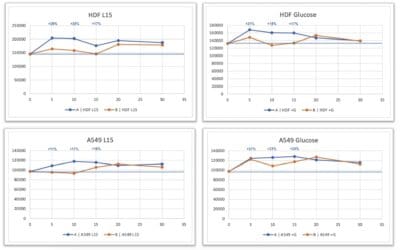
The magnitude of the observed effect is biologically meaningful. Wound healing in dermal fibroblasts depends on the coordinated regulation of cell migration, cytoskeletal dynamics, and proliferative signaling. An enhancement of this magnitude, consistently reproduced across multiple experimental runs, suggests that quantum field exposure may modulate one or more of these processes. Possible mechanisms could include influences on membrane potential, cytoskeletal organization, intracellular signaling cascades, or the bioenergetic status of the cells—analogous to the ATP production effects previously observed in quantum field exposure studies using A549 and HDF cell lines. These possibilities remain speculative and will require direct mechanistic investigation using targeted molecular and cellular assays.
The double-blind experimental design employed throughout this study was critical for ensuring the integrity of the findings. The principal investigator had no knowledge of which plates were treated at any point during image acquisition or initial analysis, eliminating observer bias as a confounding factor. The use of fixed reference positions and standardized microscope settings further strengthened the internal consistency of the measurements across time points and experimental runs.
Conclusion
Under rigorously controlled, double-blind laboratory conditions conducted over a 12-month period, exposure of Human Dermal Fibroblasts to a quantum field generated by Leela Quantum Bloc Technology was consistently associated with accelerated wound closure rates relative to untreated controls. The magnitude of acceleration ranged from approximately 45.8% to 100% across five independent experiments, with directional consistency across all replicates.
While the exact mechanism underlying this effect remains undetermined, the findings provide preliminary evidence that quantum field exposure can modulate cell recovery and migratory behavior in dermal fibroblasts.
“The phenomenon of quantum entanglement – in which the state of one particle of an entangled pair is reliant on the state of the other particle, no matter how far apart – is well established in physics1. More recently, evidence has emerged that biological systems also experience entanglement . It was exciting to help develop an experimental system for investigating the potential application of biological entanglement for therapeutic purposes. Results were interesting and warrant further study.”
Dr. Robert J. Sheaff, PhD
References
Marletto, C., Coles, D. M., Farrow, T., & Vedral, V. (2018). Entanglement between living bacteria and quantized light witnessed by Rabi splitting. Journal of Physics Communications, 2(10), 101001.
Engel, G. S., et al. (2007). Evidence for wavelike energy transfer through quantum coherence in photosynthetic systems. Nature, 446(7137), 782–786.
Keutenedjian Moran, S. A., et al. (2021). Fibroblast migration in wound healing: A review of mechanisms and implications for therapeutic intervention. Wound Repair and Regeneration, 29(3), 374–386.
Cukierman, E., & Grinnell, F. (2002). Cell migration in a 3D matrix. Current Opinion in Cell Biology, 14(5), 589–596.
Goodman, R., & Blank, M. (2002). Insights into electromagnetic field interactions with living systems. Journal of Cellular Physiology, 192(1), 16–22.
Tegmark, M. (2000). Importance of quantum decoherence in brain processes. Physical Review E, 61(4), 4194–4206.
Schrödinger, E. (1935). Discussion of probability relations between separated systems. Proceedings of the Cambridge Philosophical Society, 31, 555–563.
Authors Bio:
Robert Sheaff, PhD, Associate Professor of Biochemistry at The University of Tulsa. Received a B.A. in Biology and Philosophy from the University of North Carolina at Chapel Hill in 1989, a Ph.D. in Chemistry from the University of Colorado at Boulder in 1994, and completed postdoctoral work at the Fred Hutchinson Cancer Research Center in Seattle. Current research interests include the role of the tumor suppressor p27kip1 and drug discovery and characterization.
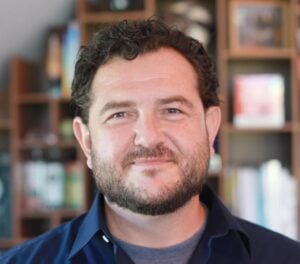
Ian Mitchell, CSO, Wizard Sciences, biochemist and pharmaceutical developer who specializes in anti-aging technology and peak performance.