Dr. Samuel Madeira, N.M.D.
Infertility affects about 180 million people worldwide and at least 15% of couples in the United States alone. The far-too-often overlooked factor in fertility medicine today is the male contribution, accounting for the cause of 30-50% of all infertility cases. The sole focus on women in fertility medicine has to stop for us to truly comprehend and resolve the infertility crisis. Today, lifestyle and environmental toxin exposures are quietly destroying male fertility, and most men and doctors remain unaware.
How bad is the decline in sperm counts, really?
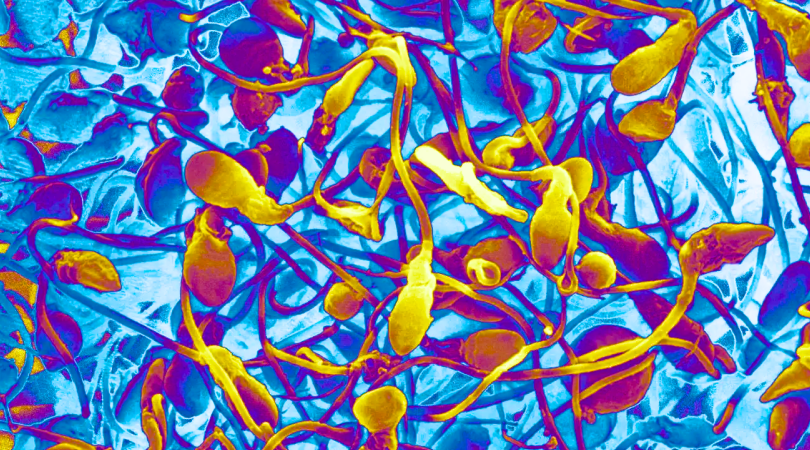
Currently, sperm counts are plummeting at a staggering rate of 2.64% per year. In one meta-analysis, Dr. Levine and colleagues (2017) established that sperm counts of men from Australia, Europe, United States, and New Zealand had declined at a rate of 1.4% per year and with an overall decrease of 52.4% from 1973 to 2011. In the updated 2023 analysis from the same author, Dr. Levine and his team discovered that globally, sperm concentration declined 51.6% between the years of 1973 to 2018. Levine found that sperm concentration declined rapidly from 2000 onwards from 1.16% per year to an accelerated rate of 2.64% per year. By the time of publishing this article, sperm concentrations in Western men have possibly declined at least another 10.56% since Levine published his 2022 meta-analysis!
What are the core causes of male infertility?
The toxins in our environment today are one of the main causes of infertility for men. The toxin exposures in utero onwards are adversely impacting men’s hormones and sperm counts. From phthalates to heavy metals to forever chemicals, the toxic burden baby boys are exposed to from in utero to age 30 is substantial and unprecedented today.
The main class of toxicants that have been labeled endocrine disrupters—compounds that interface with and disrupt our hormonal pathways—are in our food, packaging, clothing, air, and water and contribute to oxidative stress and the low sperm counts we observe in men today.
Some of the main offenders are polychlorinated biphenyls (PCBs), dioxins, phthalates, herbicides, and pesticide residues on our food and in our water.
Much research has been elucidated by Dr. Shana Swan, Ph.D. about phthalates in her research and book, Count Down, and their connection to male reproductive dysregulation including low testosterone levels and low sperm counts
.
What men eat is working against them
Not only is the inflammatory burden and ensuing metabolic dysregulation induced by ultraprocessed foods and Standard American Diets a prevailing concern when it comes to male fertility issues, but even the whole foods our ancestors relied upon are now adulterated with fertility disrupting toxicants.
Farm raised fish, for example, are a common food source of PCBs—a group of synthetic industrial chemicals that were widely used in electrical equipment, building materials, paints, sealants, and other products until they were banned in the U.S. in 1979–yet still persist in the environment and can accumulate in food, especially animal fats and certain forms of seafood. Farm raised fish also contain dioxins and pesticide residues which contribute to oxidative stress and damage in the body. It is thus prudent for men to swap out farm-raised fish for wild-caught fish lower on the food chain, such as sardines, mackerel, and wild salmon. Men should likewise strongly consider taking binders when eating fish and limit intake to twice per week to keep heavy metal exposure down.
Gulf of America shrimp are contaminated due to a longstanding history of toxic run-off in the Gulf from military bases, farms, the BP oil spill, and golf courses. Farmed Gulf shrimp have exposure to many toxins from these industries, specifically pesticides, dioxins, and antibiotics. Specifically, the BP oil spill contaminated the gulf fisheries with polycyclic aromatic hydrocarbons (PAHs), benzo[a]pyrene and naphthalene, a class of chemicals found in crude oil. PAHs are developmental toxicants and carcinogens that are also found in vehicular exhaust. Therefore, when couples look for a home, it’s wise to reside far away from highways and busy main street traffic to limit exposure to PAHs and increase their chances of conception.
Vaping and Smoking Tobacco
Tobacco Use
In 2024, about 30 million people in the USA were still smoking despite the knowledge of how harmful it is to their health. Smoking tobacco is a source of oxidative stress to sperm DNA causing reduced sperm count, motility, and disrupted morphology. Second hand smoke also is a significant concern, too, the effects of which cannot be minimized.
Vaping Use
According to the CDC, about 7.6% of men in the USA use e-cigarettes. As smoking has become less en vogue today, vaping has picked up a bit and most of the men vaping are in their early 20s. Emerging research shows that e-cigarettes are a potential source of heavy metals, such as nickel and lead and can contribute to sperm damage.
Cannabis Use
With cannabis legal for medical use in 42 of 50 states and 24 states for recreational use, we have seen a resurgence of cannabis use across the USA. While I have witnessed the clinical benefits of this medicinal plant in clinical settings for the right patients, I am concerned about the recreational long-term overuse of cannabis and its contributions to male infertility. While many states test for herbicides and pesticides in recreational cannabis, cannabis regulations vary state by state. Cannabis may therefore contain measurable levels of pesticide residues that can induce reproductive harm despite meeting the legal criteria to be sold for consumption.
Furthermore, cannabis has been demonstrated to reduce sperm count and concentration. It causes abnormal sperm morphology, lower motility, and viability, and inhibits the ability of sperm to fertilize an egg. Animal studies have shown that cannabis also leads to testicular atrophy and reduced libido; however, this has not yet been confirmed in human studies.
Men of reproductive age who are concerned about their testosterone levels and endeavoring to conceive should minimize use and confirm their cannabis sources are well tested for pesticides, since chronic use poses the most reproductive risk to men.
What are you drinking?
Chronic heavy alcohol consumption is a monumental cause of systemic adverse health outcomes. Moderate (low-risk) drinking is defined by NIAAA (National Institute on Alcohol Abuse and Alcoholism) as no more than 2 drinks per day for men, and no more than 14 drinks per week total. Men who drink in excess, which is defined as 15 or more alcoholic drinks per week, regularly impact their testosterone levels and diminish sperm concentration, count, and morphology. Sperm damage becomes pronounced at 25 units per week, which works out to roughly 11 pints of regular beer, 8 large glasses of wine, or 3–4 drinks per day. 40 units of alcohol per week, where a 33% drop in sperm concentration was observed, translates into approximately 17 pints of beer, 12 large glasses of wine, or 5–6 drinks per day. And devastatingly, chronic and heavy consumption of alcohol causes irreversible sperm tail defects.
Not only will chronic alcohol intake damage human sperm and lead to infertility, but even short term heavy alcohol consumption causes reproductive harm. In a 2017 study published in Nature, after one week of heavy drinking, sperm counts, motility and volume decreased along with increased head and midpiece sperm defects. Surprisingly, three months later, sperm concentration was still negatively impacted, indicating the long-term impacts that even short durations of heavy drinking exerts on male fertility outcomes.
Additionally, a 2023 U.S. fertility clinic study found that alcohol damages sperm beyond just affecting shape, motility, nuclear maturity, and sperm DNA integrity, with even one additional drink per day increasing the risk of failed live birth by 2.28x and up to 8.32 times.
Decreasing consumption of farm raised fish, Gulf shrimp, drinking alcoholic beverages in moderation, avoiding e-cigarettes products, tobacco products, and minimizing cannabis use all can collectively improve male fertility by decreasing their toxic allostatic load.
While it is beyond the scope of this article to delve into each of these topics, it is equally important that men should remove endocrine disrupting substances from their personal care products, home environment, cleaning products, car cleaning products, furniture and clothing. Switching to a more natural fiber wardrobe, reducing exposure to non-native EMF, proactively undertaking regular detoxification protocols such as IV glutathione and sauna therapy would be beneficial for overall positive male reproductive health outcomes. Furthermore, testing the homes for mold, sewer gas, radon, air quality, and other toxin exposures in our environment should be a cornerstone of integrative fertility medicine today to promote better fertility outcomes.
What should men be adding for optimal fertility?
Now that we have focused on what to subtract to positively improve male fertility in an era of trending male infertility, we must also focus on what to add to our diet and lifestyle as men to improve our overall health and fertility outcomes. Antioxidants, circadian rhythm alignment, and nervous system regulation are areas that may have the greatest impact on male infertility once a man cleans up his nutrition and lifestyle and decreases toxic exposures and bad habits.
Antioxidants are needed to combat the oxidative stress in the male reproductive system to improve optimal fertility. Key sources of antioxidants that can be important lever movers include:
- Pomegranate juice
- Blueberries
- Green Tea
Pomegranate is high in potent antioxidants: punicalagins and ellagic acid. Small studies suggest pomegranate may improve sperm motility and total motile sperm count. Current research shows pomegranate juice consistently improves sperm count, motility, and overall sperm quality. While evidence is promising, human trials are limited and substantial fertility benefits remain unproven.
Blueberries are rich in anthocyanins, which have both antioxidant and anti-inflammatory benefits that may mitigate oxidative stress, a key cause of sperm dysfunction in male infertility. Animal studies show improved sperm motility, antioxidant status, and spermatogenesis with blueberry consumption. Of course, blueberries are considered supportive rather than a proven treatment of male infertility alone, and human studies are lacking.
Green tea is herbal medicine that has many benefits to human health, and the evidence for male fertility suggests a dose-dependent relationship, with moderate consumption potentially supporting sperm health, but excessive intake warranting caution. In human and animal studies, epigallocatechin gallate (EGCG), the main catechin in green tea, has been shown to reduce oxidative stress and may improve sperm motility, viability, and DNA protection. In moderation, green tea intake appears beneficial through antioxidant effects, while very high doses of EGCG have shown potential pro-oxidant and sperm-toxic effects in some laboratory and animal studies. In the name of practical translation of this evidence, the typical beneficial range is about 100–400 mg EGCG/day (roughly 1–4 cups of green tea daily). Matcha may prove even more health benefit, given its generally higher polyphenol content and the consumption of the entire leaf.
Three herbal medicines for male infertility
Shilajit
While shilajit is not an herb, technically, it has strong evidence for male fertility. Shilajit increased sperm count, motility, and morphology in human trials. It is associated with higher testosterone levels in the research as well. Due to the fulvic acid, dibenzo-α-pyrones, and other polyphenolic compounds shilajit contains, it has a higher ORAC score than even blueberries. How does shilajit promote men’s fertility? The proposed mechanisms are that shilajit reduces oxidative stress and lipid peroxidation while supporting mitochondrial function and sperm energy metabolism. And that it stimulates testosterone production and supports spermatogenesis through increasing androgen levels.
Ashwagandha (Withania somnifera)
Ashwagandha improved sperm count, motility, and semen volume in human clinical studies. It lowers oxidative stress in seminal plasma and improves antioxidant defenses. It may increase testosterone and reduce stress-related hormone effects via modulating cortisol levels and increasing DHEA levels. Therefore, it may reduce stress-induced causes of infertility.
Black Seed (Nigella sativa)
Black seed extracts were shown to improve sperm count, motility, and morphology in a randomized control trial. One black seed plant constituent, thymoquinone, provides antioxidant and anti-inflammatory effects, protecting sperm from oxidative stress, and showed benefits after two months of daily use.
The Nervous System and Male Fertility – what nobody talks about
We are all aware of how chronic stress raises cortisol and can suppress reproductive hormones. Finding balance in the autonomic nervous system (ANS), which signals states of safety or threat throughout the body, is key to optimal male fertility as much as female fertility, but is oftentimes an overlooked element in fertility support protocols. Until the body finds homeostasis and balance via optimizing vagal tone, diminishing stressors and toxins, and creating a state of safety in the body, fertility may remain an elusive target.
What’s important to underscore is that male fertility may decline when the body perceives chronic stress or danger–whether that be from environmental threats like toxins, family discord, work stress, sleep deficit, circadian misalignment, or other maladaptive exposures like smoking, alcohol, or even toxic mold. Relationship conflict, professional dissatisfaction and home stress can negatively affect reproductive health. Therefore, foundational lifestyle pillars such as ensuring restorative sleep, stress reduction, and relationship stability may support fertility.
Clinicians can become lost in the weeds of investigating root causes of infertility, and it can become easy to neglect the fundamental reality that finding peace in our lives engenders a more optimal balance of our hormones and a reduction of stress hormones that suppress testosterone levels and spermatogenesis. While counterintuitive, many experienced clinicians have heard stories of patients who spent years pursuing fertility treatments without success, only to become pregnant after taking a relaxing vacation. Stepping away from the stress of trying to conceive, enjoying good food, a glass of wine, laughter, and quality time together can paradoxically be the missing key to conception, which speaks to the fact that a sense of safety is what breeds greater hormonal balance and the conditions ripe for conception. While relaxation is not a guaranteed fertility treatment, many patients report conceiving after finally taking their focus off getting pregnant.
Thus, though root causes such as mitochondrial dysfunction, immune imbalance, hormonal deficiencies, dietary variables and toxicant exposures should not be ignored, nor should the contribution of relational dynamics, stress levels, and other psychosocial variables that can dysregulate stress levels and thus negatively impact hormonal axes and reproductive health.
In summary, for too long, poor fertility outcomes have been viewed primarily through the lens of female health. This narrow focus overlooks important male contributors. A more holistic approach—one that evaluates the health and habits of both partners and considers hormonal, metabolic, environmental, and lifestyle variables—is long overdue if we are to combat the epidemic of infertility we collectively face.
Bio

Reference
Levine H, Jørgensen N, Martino-Andrade A, et al. Temporal trends in sperm count: a systematic review and meta-regression analysis. Hum Reprod Update. 2017;23(6):646–659. doi:10.1093/humupd/dmx022
Levine H, Jørgensen N, Martino-Andrade A, et al. Temporal trends in sperm count: a systematic review and meta-regression analysis of samples collected globally in the 20th and 21st centuries. Hum Reprod Update. 2023;29(2):157–176. doi:10.1093/humupd/dmac035
Swan SH, Colino S. Count Down: How Our Modern World Is Threatening Sperm Counts, Altering Male and Female Reproductive Development, and Imperiling the Future of the Human Race. New York, NY: Scribner; 2021.
Rotkin-Ellman M, Wong KK, Solomon GM. Seafood contamination after the BP Gulf oil spill and risks to vulnerable populations: a critique of the FDA risk assessment. Environ Health Perspect. 2012;120(2):157–161. doi:10.1289/ehp.1103695
Parekh N, Agarwal A. Cannabis and male fertility: a systematic review. J Urol. 2019;202(4):674–681. doi:10.1097/JU.0000000000000248
Vieira Silva J, Cruz D, Gomes M, et al. Study on the short-term effects of increased alcohol and cigarette consumption in healthy young men’s seminal quality. Sci Rep. 2017;7:45457. doi:10.1038/srep45457
Klonoff-Cohen H, Lam-Kruglick P, Gonzalez C. Effects of maternal and paternal alcohol consumption on the success rates of in vitro fertilization and gamete intrafallopian transfer. Fertil Steril. 2003;79(2):330–339. doi:10.1016/S0015-0282(02)04582-X
Van Heertum K, Rossi B. Alcohol and fertility: how much is too much? Fertil Res Pract. 2017;3:10. doi:10.1186/s40738-017-0037-x
Finelli R, Mottola F, Agarwal A. Impact of alcohol consumption on male fertility potential: a narrative review. Int J Environ Res Public Health. 2022;19(1):328. doi:10.3390/ijerph19010328
Biswas TK, Pandit S, Mondal S, et al. Clinical evaluation of spermatogenic activity of processed Shilajit in oligospermia. Andrologia. 2010;42(1):48–56. doi:10.1111/j.1439-0272.2009.00956.x
Pandit S, Biswas S, Jana U, et al. Clinical evaluation of purified Shilajit on testosterone levels in healthy volunteers. Andrologia. 2016;48(5):570–575. doi:10.1111/and.12482
Ambiye VR, Langade D, Dongre S, Aptikar P, Kulkarni M, Dongre A. Clinical evaluation of the spermatogenic activity of the root extract of ashwagandha (Withania somnifera) in oligospermic males: a pilot study. Evid Based Complement Alternat Med. 2013;2013:571420. doi:10.1155/2013/571420
Kolahdooz M, Nasri S, Modarres SZ, Kianbakht S, Huseini HF. Effects of Nigella sativa L. seed oil on abnormal semen quality in infertile men: a randomized, double-blind, placebo-controlled clinical trial. Phytomedicine. 2014;21(6):901–905. doi:10.1016/j.phymed.2014.02.006
Vahratian A, Briones EM, Jamal A, Marynak KL. Electronic Cigarette Use Among Adults in the United States, 2019–2023. NCHS Data Brief No. 524. Hyattsville, MD: National Center for Health Statistics; 2025. https://www.cdc.gov/nchs/products/databriefs/db524.htm