
Kate Williams, MA If you are a doctor practicing naturopathic medicine, you likely have been faced with multiple and varied occasions to write. For many of you, this may be excruciating and not what you signed up for. Charting patient visits is one thing, but Web site...
naturopathic doctor news & review

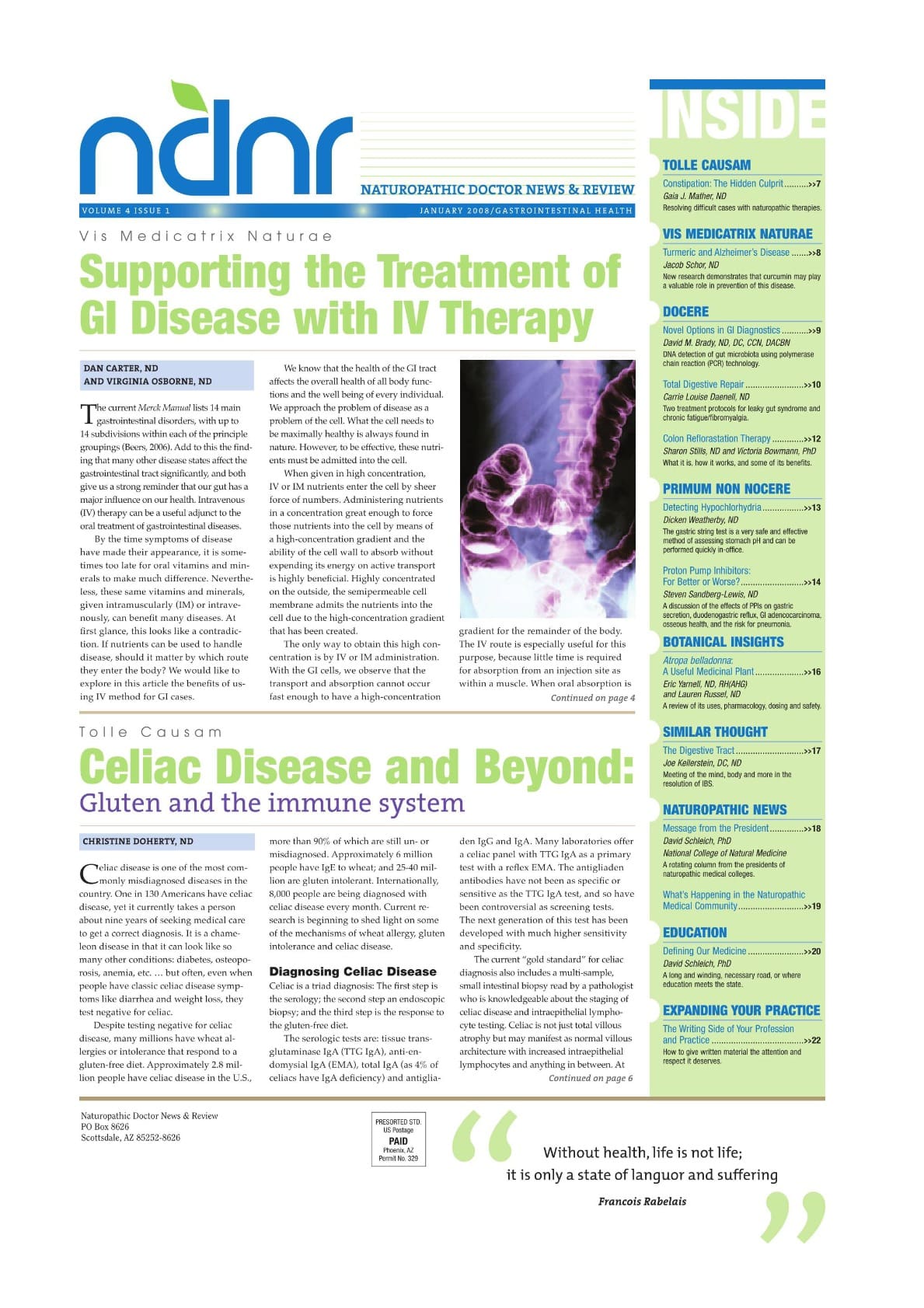
Advertisement
Table of Contents | 2008 | January
Detecting Hypochlorhydria
Dicken Weatherby, ND Hypochlorhydria is a condition of decreased secretions of hydrochloric acid (HCl) and pepsin from the parietal cells in the stomach. Generally associated with aging, it can affect anyone at any age. In my opinion, lack of stomach acid is a...
Colon Reflorastation Therapy
Sharon Stills, ND and Victoria Bowmann, PhD When I completed my formal naturopathic education and training and began private practice, I realized that my education had just begun. As patients presented their cases with many complexities, my journey of expanding...
Turmeric and Alzheimer’s Disease
Jacob Schor, ND We usually think of curcumin in terms of cancer treatment, yet it may play an equally valuable role in the prevention and treatment of Alzheimer’s disease. Curcumin is the principal curcuminoid of the Indian curry spice turmeric. A fascinating story of...
Defining our Medicine: A Long and Winding, Necessary Road, or Where Education Meets the State
David Schleich, PhD There is an inevitable need to achieve “social closure” for our medicine, achievable in our time if the necessary conditions can be systematically met. Those include: a permanent naturopathic medical education foundation within higher education...
Proton Pump Inhibitors: For Better or Worse?
Steven Sandberg-Lewis, ND Proton pump inhibitors (PPIs) are a $13 billion a year industry in the U.S. There were 95 million prescriptions written for these in 2005. Omeprazole, the first PPI to be synthesized, is also available over the counter. These drugs are...
Supporting the Treatment of GI Disease with IV Therapy
Dan Carter, ND and Virginia Osborne, ND The current Merck Manual lists 14 main gastrointestinal disorders, with up to 14 subdivisions within each of the principle groupings (Beers, 2006). Add to this the finding that many other disease states affect the...
Constipation: The Hidden Culprit
Gaia J. Mather, ND Constipation is often treated more like an inconvenience rather than an overwhelming problem until it becomes just that, a serious problem. I view constipation as a life situation that is analogous to the boiling frog anecdote, in which the frog...
The Digestive Tract: Meeting of the Mind, Body and More
Joe Kellerstein, DC, ND The digestive tract is a great testing ground for the ”vision” of a naturopathic doctor. The gut is considered external to the body and yet, strangely enough, I don’t think of mine that way. In many ways it is the meeting point of mind (stress...
Celiac Disease and Beyond: Gluten and the Immune System
Christine Doherty, ND Celiac disease is one of the most commonly misdiagnosed diseases in the country. One in 130 Americans have celiac disease, yet it currently takes a person about nine years of seeking medical care to get a correct diagnosis. It is a chameleon...
Total Digestive Repair: In the Treatment of Rheumatological Disorders
Carrie Louise Daenell, ND Although there are variations along the way, the basic structure of the GI tract is the same throughout its entire length. A good example of this variation is found in the lining of the stomach. This dense layer of cells continually...
Novel Options in GI Diagnostics: DNA Detection of Gut Microbiota
David M. Brady, ND, DC, CCN, DACBN The population of the microbiota of the human gastrointestinal (GI) tract is widely diverse and complex, with a high population density. All major groups of organisms are represented. While predominately bacteria, a variety of...
Turmeric and Alzheimer’s Disease
We usually think of curcumin in terms of cancer treatment, yet it may play an equally valuable role in the prevention and treatment of Alzheimer’s disease. Curcumin is the principal curcuminoid of the Indian curry spice turmeric. A fascinating story of theory,...
Supporting the Treatment of GI Disease with IV Therapy
Dan Carter, ND and Virginia Osborne, ND The current Merck Manual lists 14 main gastrointestinal disorders, with up to 14 subdivisions within each of the principle groupings (Beers, 2006). Add to this the finding that many other disease states affect the...
Conceptual Competencies for Naturopathic Medical Education Leaders
David Schleich, PhD Naturopathic education program deans have been described more than once as probably the profession’s most enduring visionaries. So many of our profession’s leaders have had or currently have such roles at some point in their careers (Sensenig,...
Archived Case Studies and Featured Content
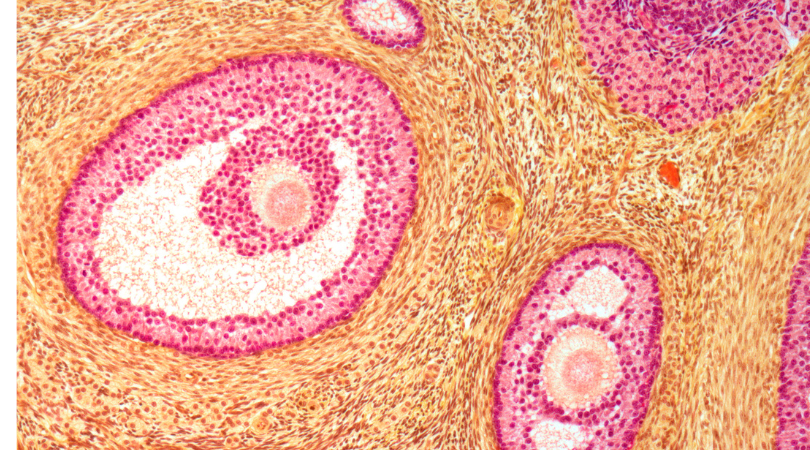
Sequencing in Multi-Mycotoxin Illness: A Case Report on Binding Capacity, Immune Modulation, Membrane Support, and Glutathione Therapy
Dr. Autumn Frandsen, ND Abstract This case describes a 71-year-old female presenting with acute-onset neuropsychiatric and systemic symptoms following relocation to a new office environment. Laboratory evaluation revealed elevated complement component C4a and...
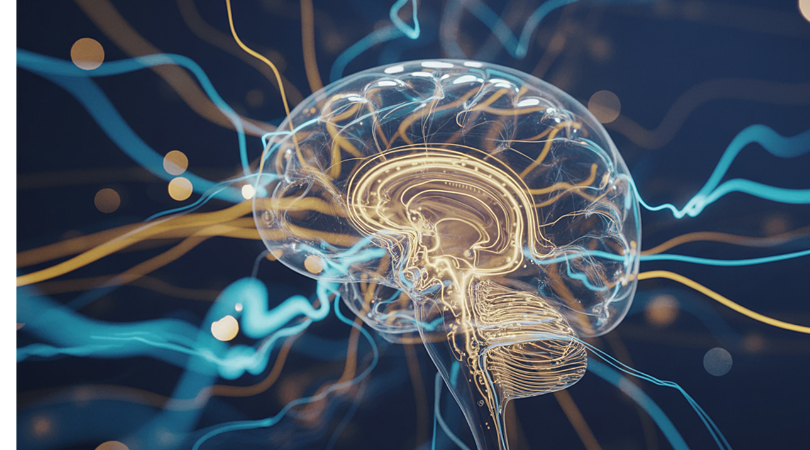
Glymphatic Detoxification: The Missing Link in Brain Health and Environmental Toxin Clearance
Dr. Millie (Millennia) Lytle ND, MPH, CNS Abstract Why optimizing glymphatic drainage is essential for cognitive resilience, detoxification, and the prevention of neurodegenerative and systemic disease. This clinical commentary explores the glymphatic system as a...
East Meets West: A Springtime Approach to Liver Detoxification
Dr. Heather Tynan, ND, DACM, Lac Abstract Bridging Traditional Chinese Medicine and Western physiology to support liver function, detoxification pathways, and systemic balance during the spring season. This article explores a seasonal, integrative approach to liver...

A Naturopathic Detox from the COVID Era: Healing the Profession Through Truth and Compassion
Charley Cropley, N.D Abstract A reflective exploration of professional conflict within naturopathic medicine and a vitalist framework for restoring integrity, dialogue, and collective healing. This commentary examines the impact of the COVID era on the naturopathic...
A Case of Recurring Acute Viral Meningitis
A 14-year journey from “unexplained headaches” to confirmed HSV-2 meningitis, highlighting how accurate diagnosis, antiviral botanicals, and individualized homeopathic prescribing can control severe neurologic symptoms and cardiac sequelae. Deborah Frances RN, ND This...
Resolution of Chronic Fatigue in a Patient With Post-COVID EBV Reactivation and Mold-Related Illness
Dr. Kasey Holland Hamski, ND A case illustrating the interplay between EBV reactivation, environmental mold exposure, and immune dysregulation in a patient with persistent post-viral fatigue. This case report examines chronic fatigue in a 38-year-old patient with...
Post-Pandemic Clinical Medicine – Addressing Long-COVID and Vaccine Injuries
An evidence-informed, dysfunction-based approach to evaluating spike protein effects, comorbidities, coagulation abnormalities, immune dysregulation, and mitochondrial dysfunction. Paul S. Anderson, NMD Abstract This clinical update summarizes a structured framework...
Integrative Management of Postural Orthostatic Tachycardia Syndrome (POTS) Following COVID-19: A Case-Based, Longitudinal Approach
Dr. Adelena Izold, ND A systems-based framework addressing autonomic dysfunction, gut–brain signaling, endocrine balance, and metabolic resilience in post-viral dysautonomia. This case report describes the integrative management of a 36-year-old female with post-viral...
Rebuilding the Brain in Chronic Fatigue Syndrome (CFS/ME): A Layered Naturopathic Approach to Neuroinflammation and Mitochondrial Dysfunction
A case report demonstrating sequential neurorepair, lipid repletion, microbiome stabilization, and mitochondrial support in post-infectious CFS/ME recovery. Dr. Vy Simeles, ND, Restorative Health Clinic Abstract This case report details the recovery of a 22-year-old...
Infection, Neuroinflammation, and Immune Dysregulation: The Clinical Overlap of Lyme Disease and PANS/PANDAS and a Path to Healing
Understanding the clinical overlap between vector-borne infections and pediatric acute-onset neuropsychiatric syndromes—and a systems-based integrative path to healing. Dr. Myriah Hinchey, ND, FMAPS Abstract This article examines the biological overlap between Lyme...
Allergy Research News Release
RAZI BERRY Allergy Research Group Announces Peer-Reviewed Publication Advancing Thyroid and Endocrine Integration Science Collaborative research led by ARG’s Medical Affairs and Scientific Advisory Board reinforces the company’s commitment to thyroid category...
Dr. Chris D Meletis Oxaloacetate: A Missing Link in CFS, Long-Haul COVID, and Mitochondrial Performance
Adam Livingston: The Integration of Naturopathic Medicine and Pharmacy: A Collaborative Approach
https://youtube.com/shorts/KiCTEZDh3mc
Dr. Bush Bradley And The Role of Histamine and Serotonin in Upper GI Motility
Infection, Neuroinflammation, and Immune Dysregulation: The Clinical Overlap of Lyme Disease and PANS/PANDAS and a Path to Healing
Understanding the clinical overlap between vector-borne infections and pediatric acute-onset neuropsychiatric syndromes—and a systems-based integrative path to healing. Dr. Myriah Hinchey, ND, FMAPS Abstract This article examines the biological overlap between Lyme...
Allergy Research News Release
RAZI BERRY Allergy Research Group Announces Peer-Reviewed Publication Advancing Thyroid and Endocrine Integration Science Collaborative research led by ARG’s Medical Affairs and Scientific Advisory Board reinforces the company’s commitment to thyroid category...
Dr. Chris D Meletis Oxaloacetate: A Missing Link in CFS, Long-Haul COVID, and Mitochondrial Performance
Adam Livingston: The Integration of Naturopathic Medicine and Pharmacy: A Collaborative Approach
https://youtube.com/shorts/KiCTEZDh3mc
Dr. Bush Bradley And The Role of Histamine and Serotonin in Upper GI Motility
D Laura Chan Discusses The Fertility Factor No One Talks About: Men’s Energetic Health
Emma Pollon McLeod The importance of Communication between Naturopathic Doctors and Pharmacist
Pamela Frank Micronutrient Deficiencies and Glucose Dysregulation
Lara Briden A Troubleshooting Approach to Insulin Resistance
Dr. Frasier And The Health Impacts of Microplastics
Custom Publishing
Quantum Energy Effects on Cell Recovery Rates
Author: Robert Sheaff, PhD, and Ian Mitchell Abstract This study investigated whether quantum field exposure generated by Leela Quantum Bloc Technology influences cell recovery rates in human cell lines. A series of double-blind experiments were conducted using Human...

Hyperbaric Oxygen Therapy in Sports Medicine: Clinical Applications in Concussion and Musculoskeletal Injury
Joseph Thomas, MD, MBA, Fellow of Metabolic and Nutritional Medicine In collaboration with Oxygen Health Systems Abstract Hyperbaric oxygen therapy has gained traction as an adjunct in sports medicine, particularly in concussion management and musculoskeletal injury....
Quantum Fields and Frequency Medicine
RAZI BERRY Quantum Fields and Frequency Medicine A Conversation with Philipp Samor von Holtzendorff Fehling on Remote Quantum Technology and Human Performance Interest in frequency medicine and subtle energy technologies continues to grow...
Featured News
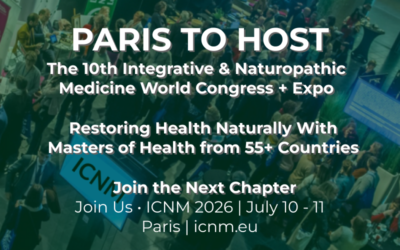
Paris to Host Landmark Global Gathering for Naturopathic Medicine in 2026
10th Integrative & Naturopathic Medicine World Congress & Expo Returns for Its Milestone 10th Edition Paris — July 10–11, 2026 — The global stage is set for one of the most influential events in integrative healthcare as the 10th Integrative &...
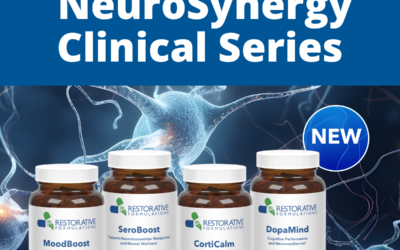
Restorative Formulations Launches the NeuroSynergy Clinical Series
Four professional-grade formulas targeting distinct neurochemical pathways to support mood, stress resilience, and cognitive function are now available exclusively to licensed practitioners. Montpelier, VT, March 27, 2026 — Restorative Formulations has released the...
Never Miss An Issue
