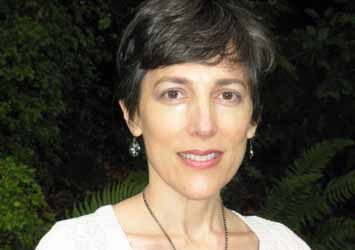
Stacie Deyglio, ND
The study of naturopathic botanical medicine consists of a melting pot of most schools of Western herbal tradition. This tradition encompasses roots of knowledge that span the countries of Europe and the Americas as well as historically from the time of Hippocrates to the eclectic herbalists of the 19th century. Dr. Moore’s book, Classical Formulas in the Western Herbal Tradition, is an introductory work to the scholarly study of Western herbal formulations and traditional botanical prescribing that is based on his extensive research with this vast body of information.
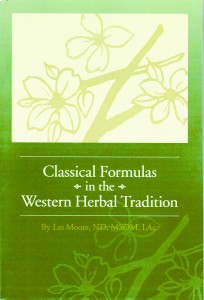 Dr. Moore’s training in herbal tradition began at home with the passage of oral knowledge from father to son. This knowledge sparked a desire to become skilled in the understanding of naturopathic botanical tradition as well as Chinese herbal tradition. In studying the disciples of both a very Eastern and Western approach to herbal medicine, Dr. Moore was able to highlight a unique difference between the two.
Drawing upon the historical advances that Chinese herbal tradition has made in the areas of mastery of herbal discipline (Chinese material medica), scholarly tradition of studying and applying formulas and recorded clinical effectiveness, Dr. Moore was able to see that this depth of recorded information was missing from Western herbal medicine.
“What I found was that the scholarly tradition was sparse and mostly in the past. Nothing was done to bring the schools of thought together. … Most [Western] formulas being used were made up by the practitioner without using any foundation, no body of knowledge to build upon.” This particularly contrasted from Chinese herbal study, as “[the Chinese] were learning the single herbs in detail … This had been practiced in the past in Western herbal medicine, but had been essentially lost to modern medical science.”
The purpose of this book is to re-establish the study of the historical aspects of Western herbal tradition. Dr. Moore accomplishes this by including material that maintains the original function of the individual formulas. He also includes Chinese medical perspectives of assigning tongue and pulse pictures to the formulas as well as categorizing the formulas based on physiological actions. The individual formulas are broken into 10 sections that examine the therapeutic principles; constituents; form; dosage; indications; applications; contradictions; herbs and actions; modifications; and a brief commentary.
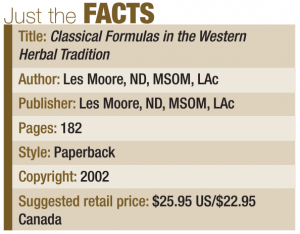 In setting the precedence for the scholarly study of Western herbal tradition, Dr. Moore’s book best aligns to the naturopathic principle of Primum non Nocere. In providing a more complete understanding of common naturopathic botanical formulations, the ND or student in training will be better equipped at understanding the dynamics of the formulations so that they may be appropriately aligned to a successful patient treatment plan.
 Stacie Deyglio, ND received her baccalaureate degree in biology with a minor in chemistry from the College of Mt. St. Vincent in New York. Her personal health issues paved the way to discovering naturopathic medicine in 1999. Resonating with the philosophy and principles of naturopathic medicine, Dr. Deyglio graduated from the University of Bridgeport, College of Naturopathic Medicine in 2003. As a medical student, she was involved in student government, fundraising and the generation of two successful student-run health fairs. Dr. Deyglio’s interests include relating integrative therapeutics to the health of pediatric and geriatric populations. Currently residing in Phoenix, Dr. Deyglio is an avid bookworm, and is actively creating her practice.