Omni-Biotic
Human clinical trials demonstrate that functionally targeted Omni-Biotic AB 10 prevents diarrhea, reduces C. difficile risk, and eliminates multidrug resistant organism colonization in the gut.
Introduction
Antibiotics are among the most common therapeutic agents prescribed in clinical medicine, with an estimated one-third of all patients developing antibiotic-associated diarrhea (AAD) due to disruption of the gut microbiome.¹ AAD varies from mild self-limited symptoms to severe, life-threatening complications such as C. difficile infection (CDI).² Broad-spectrum antibiotics decrease microbial diversity, impair colonization resistance, and create ecological niches that allow pathogenic overgrowth, including resistant organisms.³
Physicians are increasingly recognizing the therapeutic potential of targeted probiotics. Defined as live microorganisms which, when administered in adequate amounts, confer health benefits,⁴ synergistically formulated multispecies blends are demonstrating efficacy in a variety of conditions through gold standard, human clinical research. This article reviews mechanisms of action, clinical evidence for probiotics in AAD, recurrent CDI, and gram-negative infections, highlighting the robust evidence behind Omni-Biotic AB 10, as a best in class probiotic formulation designed to restore the microbiome and enhance host defense mechanisms.
Probiotic Mechanisms in Antibiotic-Associated Dysbiosis
Antibiotics disrupt the gut microbiota by reducing overall diversity and eliminating key commensal organisms that contribute to nutrient metabolism, immune modulation, and pathogen suppression.³ This dysbiosis leads to:
- Loss of colonization resistance, enabling opportunistic pathogens to flourish.⁵
- Altered short-chain fatty acid (SCFA) production, impairing epithelial barrier integrity.⁶
- Immune dysregulation, increasing susceptibility to inflammation and infection.⁷
Probiotics may counteract these changes via multiple mechanisms:
- Microbial Competition and Colonization Resistance
Specific probiotic strains compete with pathogens for nutrients and mucosal adhesion sites, reducing pathogen overgrowth.⁸ - Intestinal Barrier Function Enhancement
Specific probiotic strains increase tight-junction protein expression and SCFA production, strengthening the mucosal barrier and reducing translocation of pathogens and toxins.⁹ - Immune Modulation
Probiotic organisms interact with gut-associated lymphoid tissue (GALT) and pattern recognition receptors (e.g., TLRs) to modulate pro-inflammatory signaling and promote regulatory pathways.¹⁰ - Antimicrobial Production
Many Lactobacilli and Bifidobacteria strains produce bacteriocins, lactic acid, and other inhibitory metabolites that directly suppress pathogen growth.¹¹
These multidimensional defense mechanisms underscore how a targeted multistrain probiotic can help maintain or restore gut microbiome equilibrium during and after antibiotic exposures.
Clinical Evidence
Co-prescribing Omni-Biotic AB 10 Cuts Antibiotic-associated Diarrhea by 37 Percent
Randomized controlled trials and meta-analyses support probiotics for reducing AAD incidence. A systematic meta-analysis of 42 RCTs with >11,000 adult participants found that co-administration of probiotics with antibiotics reduced AAD risk by ~37% compared to controls (RR 0.63; 95% CI 0.54–0.73).¹² Other analyses have consistently found probiotics to significantly reduce the risk of AAD and associated diarrhea across various antibiotic classes and demographic groups.¹³,¹⁴
The biologic plausibility for these benefits lies in probiotics’ ability to attenuate dysbiosis, support SCFA-producing commensals, and compete with pathogenic microbes that expand when antibiotics reduce native flora.
Species-specific evidence has demonstrated protective effects in both pediatric and adult populations, although strain and formulation influence efficacy significantly. Moreover, it is highly clinically relevant to not only understand the mechanistic benefits of individual strains, but more importantly to validate the synergistic value of a multistrain formulation.
Probiotics in Recurrent Infection
Antibiotic use significantly increases CDI risk, and recurrent CDI is a frequent challenge in clinical practice. CDI accounts for an estimated 10–20% of AAD cases and can lead to severe colitis, sepsis, and mortality.¹5
Targeted probiotics may help prevent both initial and recurrent CDI by restoring microbiome diversity and competitive inhibition mechanisms that suppress C. difficile colonization and toxin expression.16 Importantly, clinically validated multistrain probiotics may offer advantages over single strains in covering functional niches within the gut ecosystem.
A growing body of evidence suggests that targeted probiotic blends can also contribute to reducing the incidence and severity of other gram-negative infections precipitated by dysbiosis.17
Strain Variability: Why Precision Matters
Two Probiotic Strains from the Same Species Have Different Capabilities
Probiotic efficacy is strain-specific, even within the same species. Two strains of Lactobacillus acidophilus, for example, can differ markedly in mucosal adhesion, antimicrobial production, and immunomodulation.18
Probiotic Formulation Synergies Drive Efficacy – Borrowed Evidence is Not Reliable
Review articles consistently emphasize that clinical evidence should guide probiotic selection, not genus or species alone.19 Therefore, clinicians should prefer probiotic products with peer-reviewed human trials demonstrating specific health outcomes demonstrated by the final commercial product rather than broad classification claims borrowed from isolated strain evidence.
Omni-Biotic AB 10: Formulation and Focus
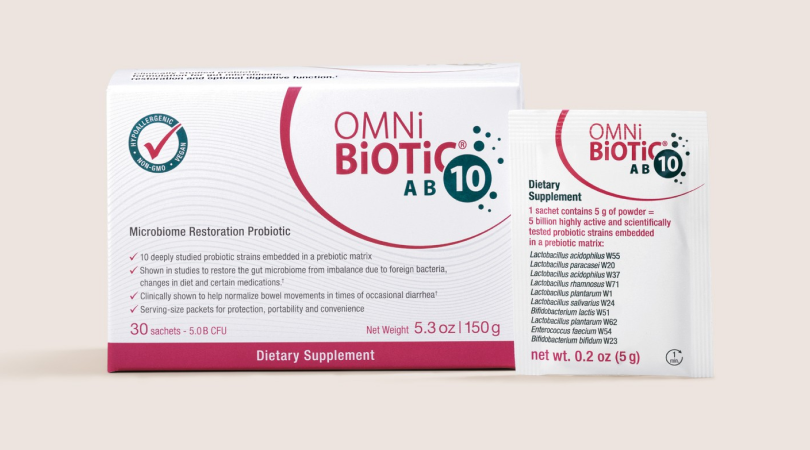
Omni-Biotic AB 10 is a multispecies probiotic formulation designed specifically for patients undergoing antibiotic therapy and those with dysbiosis associated with intestinal infection. It contains ten well-characterized bacterial strains, including Lactobacillus, Bifidobacterium, and Enterococcus species, all naturally occurring keystone species found in the human colon.
Scientific and Clinical Evidence
- Omni-Biotic AB 10 Clears Drug-resistant Bacteria from the Gut in 8 Weeks
Effect of a Multispecies Probiotic on Intestinal and Skin Colonization by Multidrug-Resistant Gram-Negative Bacteria in Patients in a Long-Term Care Facility: A Pilot Study 20
Outcomes:
- Intestinal colonization decreased to ~42% at 8 weeks post AB 10 treatment
indicative that Omni-Biotic AB 10 can modulate colonization resistance
- Inguinal colonization lowest during active AB 10 probiotic therapy indicative of a a gut–skin microbial axis effect
- Significant increase in Enterococcus spp. during AB 10 treatment indicative of strain colonization
- Later increases in other taxa (e.g., Ruminococcaceae) observed post-treatment indicative of active microbiome restructuring, not just transient colonization
- One in Three Antibiotic Patients Gets Diarrhea: Omni-Biotic AB 10 Cuts that Nearly in Half
Probiotics use for antibiotic-associated diarrhea: a pragmatic participatory evaluation in nursing homes 21
Outcomes:
- Significant reduction in antibiotic-associated diarrhea (AAD): 20% with Omni-Biotic AB 10 probiotic vs 36% without demonstrates clinically meaningful risk reduction in a high-risk, elderly population
- Consistent AB 10 effect across antibiotic classes demonstrates broad applicability across antibiotic exposures
- AB 10 protocol successfully implemented across three nursing homes demonstrates translatability of trial evidence into routine clinical workflows
- Omni-Biotic AB 10 Successfully Modulates Gut Microbiome Composition and Function
Dysbiosis in early sepsis can be modulated by a multispecies probiotic: a randomized controlled pilot trial22
Outcomes:
- Omni-Biotic AB 10 probiotic intervention modulates microbiome composition
- Increased abundance of administered probiotic strains with improvement in functional microbial diversity demonstrates that AB 10 microbiome-directed therapy is feasible even in acute illness
- Functional (not just compositional) microbiome improvement
- Enhanced metabolic capacity and diversity of the microbiome indicates Omni-Biotic AB 10 may restore microbial ecosystem function
These outcomes underscore that the multistrain, targeted Omni-Biotic AB 10 probiotic with documented human evidence offers greater clinical confidence than products whose strains and effects are extrapolated from in vitro data or untested combinations.
Unique Clinical Case Uses of Omni-Biotic AB 10
- Chronic Vaginosis
This practitioner case series describes the successful use of AB 10 as part of integrative management for chronic bacterial vaginosis, highlighting the interplay between gut and urogenital microbiota and the role of targeted probiotics in supporting microbial balance.23
- Oral Thrush
This clinical observations reports the benefits of AB 10 in oral thrush (candidiasis), likely mediated by gut-oral axis improvements, immunomodulation, and competitive microbial dynamics.24
While case series are hypothesis-generating, they align with the broader concept that optimizing gut microbiota can yield extra-intestinal benefits.
Safety and Tolerability
Probiotics are generally safe in immunocompetent individuals. Mild gastrointestinal symptoms (bloating, gas) are sometimes reported early in initiation, but serious adverse events are rare. Caution is warranted in patients with severe immunosuppression or central venous access due to rare reports of bacteremia or fungemia with specific strains.25
How to Prescribe Omni-Biotic AB 10 with Antibiotics
| Dosing | Reconstitution | Frequency | Timing |
| 1 AB 10 Sachet |
|
|
|
Formulation Synergy: Omni-Biotic AB 10 Constituent Strains
- Lactobacillus acidophilus W55
- Lactobacillus paracasei W20
- Lactobacillus acidophilus W37
- Lactobacillus rhamnosus W71
- Lactobacillus plantarum W1
- Lactobacillus salivarius W24
- Bifidobacterium lactis W51
- Lactobacillus plantarum W62
- Enterococcus faecium W54
- Bifidobacterium bifidum W23
Omni-Biotic AB 10 Offers Optimal Viability In Vivo
As is the case for all Omni-Biotic formulations, AB 10 is provided as a powder in a single use sachet. This delivery mechanism is a key component of its efficacy. When gastric resistance was evaluated utilizing an artificial gut mechanism, the powder format demonstrated >85% survival and metabolic viability versus <10% for more than a dozen encapsulation options. When reconstituted in water (or neutral liquid), the component keystone stains are activated prior to ingestion which allows for greater resistance to the native, acidic environment.
Conclusion
Probiotics have a well-established role in preventing antibiotic-associated diarrhea and mitigating gut dysbiosis when selected thoughtfully based on high-quality clinical evidence and strain-specific data. Multispecies formulations such as Omni-Biotic AB 10 have demonstrated significant outcomes in reducing AAD and supporting restoration of microbial balance in the context of antibiotic therapy.
Physicians should integrate probiotic therapies into practice with an understanding of microbiome biology, proven clinical efficacy, and patient-specific factors. Ongoing research and precision probiotic formulation promise continued refinement of therapeutic strategies for microbiome support across diverse clinical scenarios.
However, clinical implementation requires thoughtful timing (e.g., separation from antibiotic doses), appropriate targeted formulation selection, with timing and duration tailored to the antibiotic course and patient risk profile.
References
- Goodman C, et al. Probiotics for the prevention of antibiotic-associated diarrhea: a systematic review and meta-analysis. BMJ Open. 2021;11(8):e043054. doi:10.1136/bmjopen-2020-043054.
- Van Wietmarschen H, et al. Probiotics use for antibiotic-associated diarrhea: a pragmatic participatory evaluation in nursing homes. BMC Gastroenterol. 2020;20:151. doi:10.1186/s12876-020-01297-w.
- Lang, F.C. Use of a multi-species probiotic. Nutrafoods 9, 27–31 (2010). https://doi.org/10.1007/BF03223333
- International Scientific Association for Probiotics and Prebiotics (ISAPP) consensus statement. Nat Rev Gastroenterol Hepatol. 2014;11(8):506-514.
- Theriot, C., et al. Antibiotic-induced shifts in the mouse gut microbiome and metabolome increase susceptibility to Clostridium difficile infection. Nat Commun 5, 3114 (2014). https://doi.org/10.1038/ncomms4114
- Pérez-Reytor D, et al. Use of Short-Chain Fatty Acids for the Recovery of the Intestinal Epithelial Barrier Affected by Bacterial Toxins. Front. Physiol. 12:650313 (2021). doi: 10.3389/fphys.2021.650313
- Mekonnen SA, et al. Molecular mechanisms of probiotic prevention of antibiotic-associated diarrhea. Current Opinion in Biotechnology. 2020;61:226–234
- Collado MC, et al. In vitro analysis of probiotic strain combinations to inhibit pathogen adhesion to human intestinal mucus Food Research International (Ottawa, Ont.). 2007 Jun;40(5):629-636. DOI: 10.1016/j.foodres.2006.11.007.
- Abdulqadir, R., et al. Probiotic bacteria Bifidobacterium bifidum upregulation of intestinal epithelial tight junction barrier is mediated by TLR-2/TLR-6 receptor complex activation of occludin gene. npj Biofilms Microbiomes 12, 37 (2026). https://doi.org/10.1038/s41522-025-00903-7
- Rachmilewitz D, et al. Toll-like receptor 9 signaling mediates the anti-inflammatory effects of probiotics in murine experimental colitis. Gastroenterology, 126, 520-528
- Corr SC, et al. Bacteriocin production as a mechanism for the antiinfective activity of Lactobacillus salivarius UCC118. Proc Natl Acad Sci U S A. 2007 May 1;104(18):7617-21. doi: 10.1073/pnas.0700440104. Epub 2007 Apr 24. PMID: 17456596; PMCID: PMC1863472.
- Goodman C, et al. Probiotics for the prevention of antibiotic-associated diarrhoea: a systematic review and meta-analysis. BMJ Open. 2021 Aug 12;11(8):e043054. doi: 10.1136/bmjopen-2020-043054. PMID: 34385227; PMCID: PMC8362734.
- Wanyama H, et al. Probiotic use reduces the incidence of antibiotic-associated diarrhea among adult patients: a meta-analysis. Prz Gastroenterol. 2025;20(1):5-16. doi: 10.5114/pg.2025.148486. Epub 2025 Mar 16. PMID: 40191517; PMCID: PMC11966516.
- Blaabjerg S, et al. Probiotics for the Prevention of Antibiotic-Associated Diarrhea in Outpatients—A Systematic Review and Meta-Analysis. Antibiotics. 2017; 6(4):21. https://doi.org/10.3390/antibiotics6040021
- Ray, M, et al. Influence of Antibiotic Exposure Intensity on the Risk of Clostridioides difficile Infection, Clinical Infectious Diseases, Volume 79, Issue 5, 15 November 2024, Pages 1129–1135, https://doi.org/10.1093/cid/ciae259
- Chen W, et al.Efficacy of probiotic supplementation in preventing Clostridioides difficile infection: an umbrella review of systematic reviews and meta-analysis. Front. Nutr. 13:1699223 (2026). doi: 10.3389/fnut.2026.1699223
- Shuwei Yang, S, et al. Prevention and treatment of antibiotics-associated adverse effects through the use of probiotics: A review, Journal of Advanced Research, Volume 71, 2025. https://doi.org/10.1016/j.jare.2024.06.006.
- Hill, C., et al. The International Scientific Association for Probiotics and Prebiotics consensus statement on the scope and appropriate use of the term probiotic. Nat Rev Gastroenterol Hepatol 11, 506–514 (2014). https://doi.org/10.1038/nrgastro.2014.66
- Sanders, M.E., et al. Probiotics and prebiotics in intestinal health and disease: from biology to the clinic. Nat Rev Gastroenterol Hepatol 16, 605–616 (2019). https://doi.org/10.1038/s41575-019-0173-3
- Zollner-Schwetz I, Set al. Effect of a Multispecies Probiotic on Intestinal and Skin Colonization by Multidrug-Resistant Gram-Negative Bacteria in Patients in a Long-Term Care Facility: A Pilot Study. Nutrients. 2020; 12(6):1586. https://doi.org/10.3390/nu12061586
- van Wietmarschen, et al. Probiotics use for antibiotic-associated diarrhea: a pragmatic participatory evaluation in nursing homes. BMC Gastroenterol 20, 151 (2020). https://doi.org/10.1186/s12876-020-01297-w
- Stadlbauer V, et al. Dysbiosis in early sepsis can be modulated by a multispecies probiotic: a randomised controlled pilot trial. Benef Microbes. 2019 Apr 19;10(3):265-278. doi: 10.3920/BM2018.0067. Epub 2019 Jan 29. PMID: 30694100.
- Case: Omni-Biotic AB 10 for Chronic Vaginosis. https://omnibioticlife.com/blogs/media-library-3/case-study-omni-biotic-ab-10-for-chronic-vaginosis. Accessed 15Apr26.
- Case: Omni-Biotic AB 10 for Oral Thrush: https://omnibioticlife.com/blogs/media-library-3/case-study-omni-biotic-ab-10-for-oral-thrush,. Accessed 15Apr26.
- Doron, S and Snydman, D. Risk and Safety of Probiotics, Clinical Infectious Diseases, Volume 60, Issue suppl_2, May 2015, Pages S129–S134, https://doi.org/10.1093/cid/civ08
† This statement has not been evaluated by the Food and Drug Administration. This product is not intended to diagnose, treat, cure, or prevent any disease.