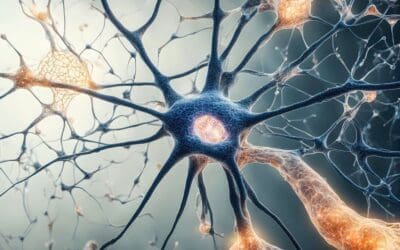

A new study from experts with Georgia State University has achieved a long-standing goal in neuroscience: showing how the brain’s smallest components build the systems that shape thought, emotion and behavior, by demonstrating how specific cell types, chemical messengers and metabolic patterns create the large-scale networks detected in fMRI.
A Multi-Level Map of the Living Brain
The research, published in the journal Nature Communications, could transform how scientists understand cognition and aging, as well as mental health disorders like depression and schizophrenia, because it clarifies the biological steps that link molecular changes to altered network communication.
Cellular Gradients Guiding Network Architecture
By combining brain scans with genetic data and molecular imaging, the researchers have uncovered a detailed biological map linking different levels of the brain and revealing the long-sought bridge between micro- and macro-level brain organization, showing that the same cellular and chemical gradients present at the microscopic level guide the formation and function of whole-brain networks.
Vince Calhoun is a Distinguished University Professor with Georgia State and a Georgia Research Alliance Eminent Scholar with faculty appointments at Georgia Tech and Emory University. He leads the collaborative tri-institutional Center for Translational Research in Neuroimaging and Data Science, or TReNDS Center, and is a senior author on the study.
A Biological Blueprint Underlying fMRI Networks
“We found that the brain’s large-scale networks are built on a hidden biological blueprint. By aligning data from cells, molecules and imaging, we showed that the same architecture seen in fMRI is rooted in cellular and molecular organization,” Calhoun said, describing how the distribution of neurotransmitters, gene expression patterns and mitochondrial density mirrors the structure of functional networks. “Each dataset alone gives part of the story. Together, they reveal how chemical and cellular gradients actually help wire the brain’s networks.”
Calhoun said understanding this connection could help experts better understand mental health conditions and brain disorders. It could also offer new insights, like why some people stay sharp later in life and others don’t, since variations in these biological gradients may determine how stable or vulnerable specific networks are over time.
Dynamic Connectivity Anchored in Biology
The research team combined brain scans that show how regions communicate over time. By capturing shifting patterns of activity called dynamic connectivity with detailed maps of brain cells, chemical messengers like serotonin and dopamine and energy-producing structures such as mitochondria, they were able to build a comprehensive picture of the brain’s inner workings, showing that regions with similar molecular and cellular signatures tend to shift their communication in tandem.
Networks Linking Biology to Cognition
Using a statistical technique called mediation analysis, the researchers showed that these networks do not just correlate with biology and behavior. They actively bridge the two, demonstrating that molecular features influence cognition by shaping how networks coordinate and exchange information.
Networks Translating Molecular Patterns Into Mental Processes
Guozheng Feng, the study’s lead author and a postdoctoral research associate at the TReNDS Center, said the research reveals how certain brain networks act as middlemen, linking the microscopic biology of the brain, such as specific cell types, to complex behaviors and mental processes because these networks translate molecular differences into distinct patterns of coordinated activity.
“This study is bringing us closer to answering one of the most fundamental questions in neuroscience: how microscopic cellular and molecular foundations shape the brain’s networks which, in turn, give rise to complex thought, emotion and behavior,” Feng said.
Identifying Vulnerable Network Systems
“Many mental and neurodegenerative disorders involve both molecular imbalance and network disruption,” Calhoun added. “This work shows these are linked. Understanding the biological foundation of networks could help us pinpoint which systems are most vulnerable in schizophrenia, depression or Alzheimer’s and why,” noting that certain networks may depend on molecular or energy resources that make them more susceptible to disease-related changes.
Gene Activity Shaping Network Architecture
Jiayu Chen is a research assistant professor with the TReNDS Center who was part of the research team. Her work, using advanced brain scans, focuses on studying how genes influence the way the brain looks and works, especially how gene-driven molecular patterns align with and shape the architecture of functional networks.
“This work helps answer a big question in neuroscience: How do cellular and molecular organizations underlie the architecture of functional brain networks, which influence the way we think, feel and behave?” Chen said. “We are now one step closer to those answers.”
Toward Personalized Network Biology
Calhoun said the collaborative TReNDS Center is uniquely equipped for these kinds of discoveries. He hopes to ultimately create a “map” that links each person’s biology with how their brain networks function, allowing researchers and clinicians to see how a person’s unique molecular environment shapes the communication patterns within their networks.
This could help doctors customize treatments specifically to their patients based on how their particular biology influences their brain’s networks, making it possible to target therapies at the molecular and network-level features most affected in each individual.
Advancing Tools for Brain Health
The TReNDS Center, a partnership among Georgia State, Georgia Tech and Emory University, develops advanced tools to turn brain imaging data into meaningful biomarkers. Its goal is to improve understanding and treatment of brain health and disease, using multi-level biological information to guide next-generation diagnostic and therapeutic strategies.
To learn more about the TReNDS Center, visit trendscenter.org.
For more information about Georgia State research, visit research.gsu.edu.
This research was supported by funding from the National Science Foundation (NSF) under Grant #2112455 and the National Institutes of Health (NIH) through Grants #R01MH123610 and #R01MH136665.