Node Smith, ND
The amount of lean muscle a person has may soon be considered a vital sign, similar to blood pressure, pulse and weight. Extensive research has begun to show that muscle mass should be reconsidered as a measurement that is able to give a more robust picture of an individual’s health. A recent paper in the Annals of Medicine confirms the important role that muscle mass plays in health and includes studies showing that people with less muscle mass had more complications when they needed to have surgeries or other procedures, longer hospital stays, lower physical function, poorer quality of life and overall lower survival rate.
Review looked at over 140 different studies of inpatient, outpatient and long-term care situations
The review looked at over 140 different studies of inpatient, outpatient and long-term care situations, and showed a very strong correlation between muscle mass and medical outcomes. The data showed muscle mass can show a lot about an individual’s overall health, especially if they are living with a chronic disease. Examples include:
- Breast cancer – a study from the Journal of the American Medical Association (JAMA) showed that women with breast cancer had a 60 percent better chance of survival if they had more muscle mass.
- Intensive Care – Patients with more muscle were seen to spent less time on a ventilator in ICU scenarios, as well as simply spending less time in intensive care, and have a better chance of survival.
- Chronic disease – People with chronic obstructive pulmonary disease (COPD) who had more muscle were seen to have better respiratory outcomes as well as less occurences of osteopenia and osteoporosis.
- Alzheimer’s Disease – In a study looking at individuals in a long-term care situation, individuals with lower muscle mass suffered from more severe AD
A new vital sign
“Muscle mass should be looked at as a new vital sign,” said Carla Prado, Ph.D., R.D., associate professor at the University of Alberta and principal author of the paper. “If healthcare professionals identify and treat low muscle mass, they can significantly improve their patients’ health outcomes. Fortunately, advances in technology are making it easier for practitioners to measure muscle mass.”
Current anthropomorphic measurements can be misleading
Current anthropomorphic measurements, such as body mass index (BMI), and hip-to-waist ratio are easy to calculate, but can be misleading because they do not distinguish between muscle and fat mass. Low muscle mass can occur at any body weight. This means that an individual can appear to have a normal weight and appear healthy, but actually may lack muscle mass. There are body composition tools that enable health care professionals to measure muscle mass, which likely will be used more routinely in health care settings, but there may be other simpler methods of assessing muscle mass that physicians should not discount, such as the firmness of a handshake, or muscular tone observed during physical exam.
“Muscle may be skin deep, but it should be top of mind based on the growing body of science,” said Suzette Pereira, Ph.D., research scientist at Abbott and one of the paper authors. “Something as simple as the firmness of a person’s handshake can give a lot of insight into their overall health, and it’s never too late to rebuild muscle with good nutrition, including protein, and proper exercise.”
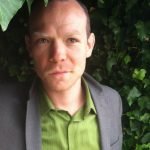 Node Smith, ND, is a naturopathic physician in Portland, OR and associate editor for NDNR. He has been instrumental in maintaining a firm connection to the philosophy and heritage of naturopathic medicine among the next generation of docs. He helped found the first multi-generational experiential retreat, which brings elders, alumni, and students together for a weekend camp-out where naturopathic medicine and medical philosophy are experienced in nature. Four years ago he helped found the non-profit, Association for Naturopathic ReVitalization (ANR), for which he serves as the board chairman. ANR has a mission to inspire health practitioners to embody the naturopathic principles through experiential education. Node also has a firm belief that the next era of naturopathic medicine will see a resurgence of in-patient facilities which use fasting, earthing, hydrotherapy and homeopathy to bring people back from chronic diseases of modern living; he is involved in numerous conversations and projects to bring about this vision.