

A...
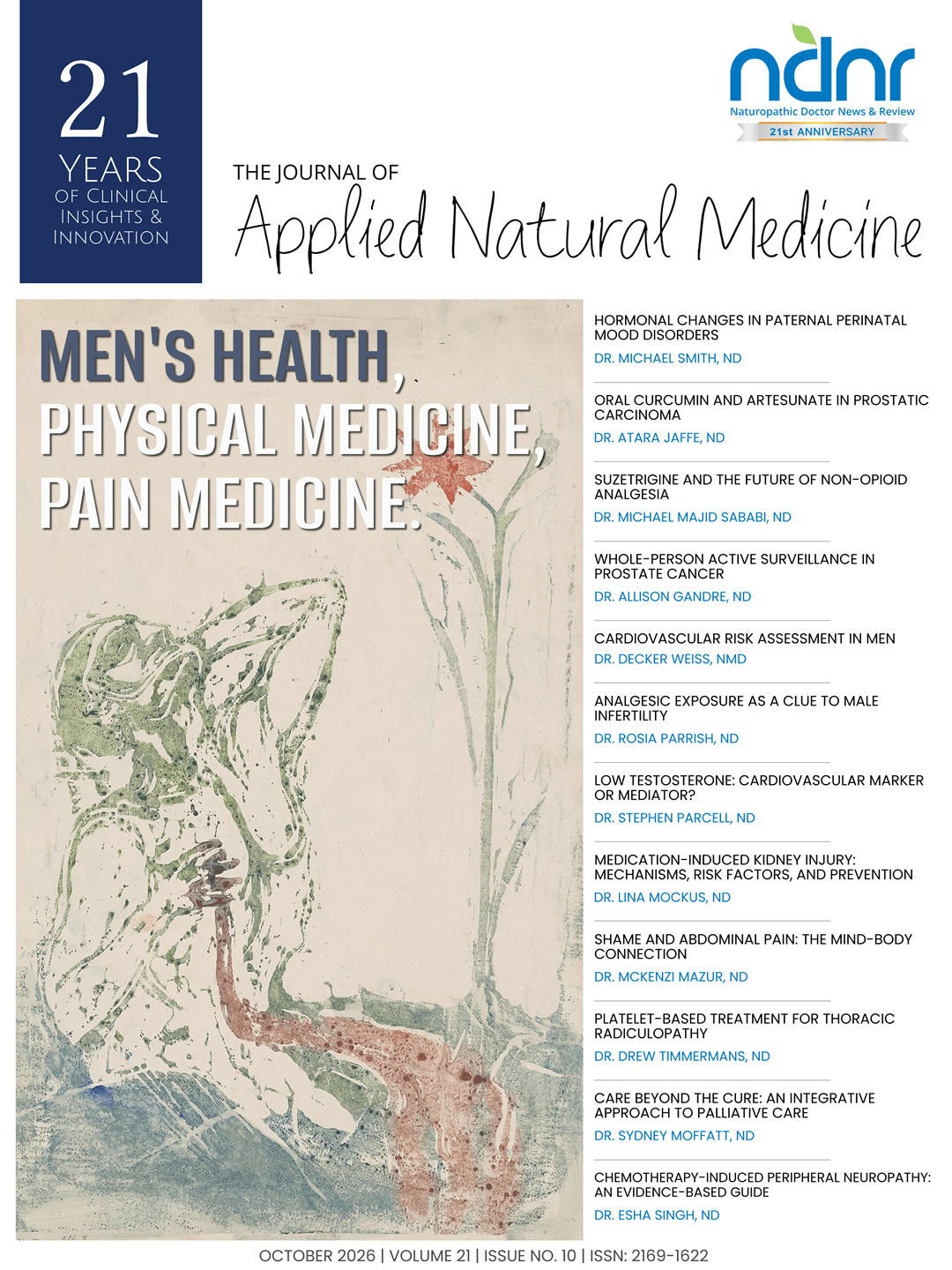
Chemotherapy-Induced Peripheral Neuropathy: An Evidence-Based Guide for Naturopathic Physicians
read more

Dr. Emmalyn Pratt, ND
Two fertility case reports exploring the potential role of ovarian platelet-rich plasma (PRP) alongside naturopathic interventions in women with diminished ovarian reserve, recurrent pregnancy loss, and failed assisted reproductive treatments.
This case report examines two women with longstanding infertility who achieved natural conception following comprehensive naturopathic fertility care and ovarian platelet-rich plasma (PRP) therapy after unsuccessful IVF and IUI attempts. These cases highlight the emerging potential of regenerative reproductive medicine as an adjunctive strategy in complex fertility presentations.
Ovarian platelet-rich plasma (PRP) therapy has emerged as a novel approach in reproductive medicine, proposed to enhance ovarian function and improve fertility potential through regenerative mechanisms. This report describes two cases of women with a history of infertility who achieved natural conception following naturopathic treatments and ovarian PRP administration. Both patients had undergone prior fertility treatments, including in vitro fertilization (IVF), without success. After PRP therapy, each demonstrated a return of menstrual regularity and subsequent natural conception within months. No complications related to PRP administration were observed. These cases highlight the potential of ovarian PRP to restore reproductive function in patients with diminished ovarian activity or unexplained infertility. While causality cannot be established from isolated reports, the association between PRP treatment and natural conception supports the need for further controlled studies. Ovarian PRP therapy may represent a promising adjunct to naturopathic care in the management of infertility, offering hope for natural conception in select patients who have exhausted conventional options or exhibit preference for more natural conception support.
Platelet-rich plasma has gained increasing attention in reproductive medicine due to its potential regenerative properties. PRP contains a concentration of platelets and associated growth factors—including platelet-derived growth factor (PDGF), vascular endothelial growth factor (VEGF), and transforming growth factor-β (TGF-β)—which may contribute to tissue repair, angiogenesis, and cellular signaling.¹ Within ovarian tissue, these mechanisms have been hypothesized to support follicular activation, improve ovarian microcirculation, and enhance the ovarian microenvironment.² While the exact biological pathways remain under investigation, these proposed mechanisms provide a theoretical framework for the observed improvements in menstrual regularity and fertility potential following treatment.
Case #1
A 35-year-old nulligravida female presented to an outpatient naturopathic clinic seeking fertility support. Several months prior, six oocytes had been retrieved and cryopreserved in preparation for in vitro fertilization (IVF). A second egg retrieval, performed one month prior to her initial visit, yielded two oocytes, neither of which developed into viable embryos. The patient also noted a poor ovarian response to stimulation medications during the most recent cycle despite maximal dosing. She sought naturopathic care due to growing frustration with her fertility experience and lack of progress.
Her menses were described as painless but irregular, progressively shorter and lighter, with dark red menstrual flow rather than bright red. She also reported vaginal dryness and post-coital spotting without associated dyspareunia. Premenstrual symptoms included bloating, mood swings, irritability, brain fog, and uterine cramping.
Her medical history included Hashimoto’s thyroiditis, ovarian cysts, high-risk human papilloma virus (HPV), lichen planus, recurrent urinary tract infections, candidal infections, and bacterial vaginosis. Current medications included levothyroxine, vaginal estradiol cream (10 mcg), fluconazole weekly for candidiasis prevention, and topical clobetasol and hydrocortisone for management of vulvovaginal lichen planus.
Comprehensive laboratory testing was ordered to assess ovarian reserve, follicular hormones, thyroid and metabolic function, cardiovascular risk, oxidative stress, and nutrient status. Panels included: follicular reproductive hormones, thyroid function tests, metabolic markers, cardiovascular risk and oxidative stress markers, and nutrient levels. Midluteal progesterone and total estrogens were not drawn due to irregular menstrual cycle.
Pertinent findings included elevated thyroid peroxidase and thyroglobulin antibodies, consistent with autoimmune thyroid disease. TSH was suboptimal for conception at 3.36 mIU/L. A Homeostatic Model Assessment for Insulin Resistance (HOMA-IR) score of 1.9 approached the threshold of 2.0 for insulin resistance. Cycle day 2 hormone levels revealed diminished ovarian reserve, with FSH at 18.3 mIU/mL, estradiol at 72 pg/mL, and anti-mullerian hormone of 0.38 ng/mL. Therefore, indicating a low likelihood of natural conception. Hypercholesterolemia and evidence of cardiovascular inflammation were also noted, likely influenced by genetic factors.
Overall, clinical presentation and laboratory findings indicated diminished ovarian reserve, suboptimal thyroid function, hypercholesterolemia, systemic inflammation, and oxidative stress. Based on these findings, the treatment plan moving forward involved mini–in vitro fertilization (mini-IVF), or minimal stimulation IVF, in conjunction with naturopathic support to optimize reproductive health.
Initial recommendations emphasized nutritional and lifestyle strategies to improve antioxidant status and reduce inflammation. The patient was advised to increase consumption of antioxidant-rich foods such as colorful fruits and vegetables, spices, herbs, nuts, seeds, legumes, dark chocolate, and organic teas, while minimizing environmental toxin exposure. A supplement regimen including myo-inositol daily was initiated, and the comprehensive laboratory panel outlined above was ordered.
One month later, the patient returned for follow-up and laboratory review. To further support oocyte quality, additional antioxidants including quercetin, turmeric, and CoQ10 were introduced. Herbal hormonal support was initiated at that time, including maca and a Traditional Chinese Medicine (TCM) formula targeting ovarian function. Oral and vaginal DHEA supplementation were also recommended to enhance ovarian reserve and potentially increase anti-mullerian hormone levels. Additionally, the use of ovarian platelet-rich plasma (PRP) was discussed as a novel adjunct prior to her next IVF cycle.
The patient subsequently underwent ovarian PRP therapy, and less than 3 months later, she achieved a natural conception—a natural pregnancy following multiple unsuccessful assisted reproductive attempts. The patient is 39 weeks gestation at the time of writing this case study.
Case #2
A 37-year-old female presented to an outpatient naturopathic clinic with concerns of Hashimoto’s thyroiditis, secondary infertility, and recurrent pregnancy loss. She had previously experienced a healthy pregnancy resulting in a son and reported no difficulty conceiving at that time. She had a prior diagnosis of anti-phospholipid syndrome. On her initial visit, she had been trying to conceive for three years, with one miscarriage occurring each year.
After discontinuing care at our clinic for 1.5 years and undergoing two unsuccessful intrauterine insemination (IUI) cycles during that period, she returned at age 39 following initiation of in vitro fertilization (IVF). She reported that her first egg retrieval trial failed to produce any embryos, while the second cycle resulted in retrieval of two oocytes but again yielded no viable embryos.
She reported irregular menstrual cycles, dysmenorrhea, large clots, vaginal dryness, decreased libido, hirsutism, night sweats, and dyspareunia. Premenstrual symptoms included bloating, cyclical migraines, acne, mood swings, fluid retention, food cravings, back pain, breast tenderness, and pelvic tension. Medications included progesterone, aspirin, and letrozole with intrauterine insemination. Additionally, persistent irritable bowel symptoms were noted at the first visit.
The patient had previously undergone hysteroscopy, ruling out anatomical issues as a cause for infertility. Recent laboratory results revealed an anti-mullerian hormone level of 1.73 ng/mL, which is favorable despite advanced maternal age. Extensive workups had been completed by fertility specialists without a definitive etiology for infertility.
Initial recommendations focused on ovarian support with N-acetylcysteine, myoinositol, vitamin D, CoQ10, and a prenatal as she continued fertility treatments with specialists. Dietary modification to eliminate food sensitivities was recommended and resulted in significant improvements in digestion. The patient also began low-dose naltrexone (LDN) under the care of another provider, and in conjunction with diet modifications, her Hashimoto’s thyroiditis showed remission, demonstrated by normalization of thyroid peroxidase antibodies.
Following recurrent failed intrauterine insemination and two unsuccessful egg retrievals for in vitro fertilization, the patient returned to the clinic after an 18-month absence, seeking naturopathic support before another IVF cycle. Her supplement protocol was updated to include nicotinamide, a prenatal multivitamin, myo-inositol, acetyl-L-carnitine, N-acetyl cysteine, CoQ10, alpha-lipoic acid, and additional antioxidants. Dietary recommendations emphasizing antioxidant rich, high-fiber, and protein-dense foods were reinforced, alongside stress reduction strategies including acupuncture. She was also encouraged to consider ovarian platelet-rich plasma (PRP) therapy for ovarian rejuvenation.
Eight months later, the patient returned to report a natural conception, confirmed at approximately 6 weeks gestation. She had undergone two ovarian platelet-rich plasma procedures just 3 months to and again 1 month prior to conceiving naturally. Between these treatments, she completed another IVF cycle that resulted in 5 oocytes, 4 of which were fertilized, but again, yielded no viable embryos. At the time of visit, first trimester nutrient requirements were reviewed, and her supplement plan was adjusted appropriately for pregnancy.
At 38 weeks’ gestation, the patient delivered a healthy male infant, just 11 months after initiating ovarian platelet-rich plasma therapy—following six years of infertility marked by multiple unsuccessful intrauterine insemination (IUI) and in vitro fertilization (IVF) attempts.
These two cases describe patients with histories of infertility who achieved natural conception following a combination of naturopathic interventions and ovarian platelet-rich plasma (PRP) therapy. Both patients had previously undergone multiple assisted reproductive treatments without success, including in vitro fertilization (IVF) and intrauterine insemination (IUI). In each case, natural conception occurred within months of PRP treatment alongside ongoing lifestyle, nutritional, and supplement-based naturopathic care.
It is important to acknowledge that both patients received multifaceted treatment approaches, including dietary modification, targeted nutritional supplementation, hormonal support, and lifestyle interventions aimed at reducing inflammation and oxidative stress. These therapies may independently influence reproductive health through improved metabolic function, endocrine balance, and mitochondrial support. Therefore, it is not possible to attribute the observed outcomes solely to PRP therapy. The temporal relationship between PRP administration and natural conception in both cases, however, raises the possibility that PRP may have contributed to improved ovarian function or reproductive environment.
These cases contribute to the growing body of preliminary evidence suggesting that ovarian PRP may represent a promising adjunctive therapy for individuals with infertility, particularly those with diminished ovarian reserve or repeated failed assisted reproductive attempts. Future research should include larger controlled trials to evaluate treatment protocols, patient selection criteria, and long-term reproductive outcomes.
In conclusion, these patient experiences suggest that ovarian PRP, when combined with comprehensive naturopathic support, may offer a potential avenue for restoring reproductive function and achieving natural conception in select patients with infertility. These findings highlight the importance of continued exploration of regenerative therapies within integrative reproductive medicine.
 Emmalyn Pratt, ND is a graduate of Sonoran University of Health Sciences in Tempe, Arizona. She is currently practicing at Kansas City Integrative Health in Overland Park, Kansas as a first-year women’s health resident. Dr. Pratt’s clinical focus includes general women’s health, male and female fertility and infertility, conjunctive care for IUI and IVF, and acupuncture for women’s health and fertility.
Instagram: @dr.emmalyn