ARCADIA TALLMAN
The thymus peptide upregulated 1,198 genes tied to energy metabolism, DNA repair, and cell cycle regulation.
The Thymus Shrinks With Age and Takes Immune Function With It
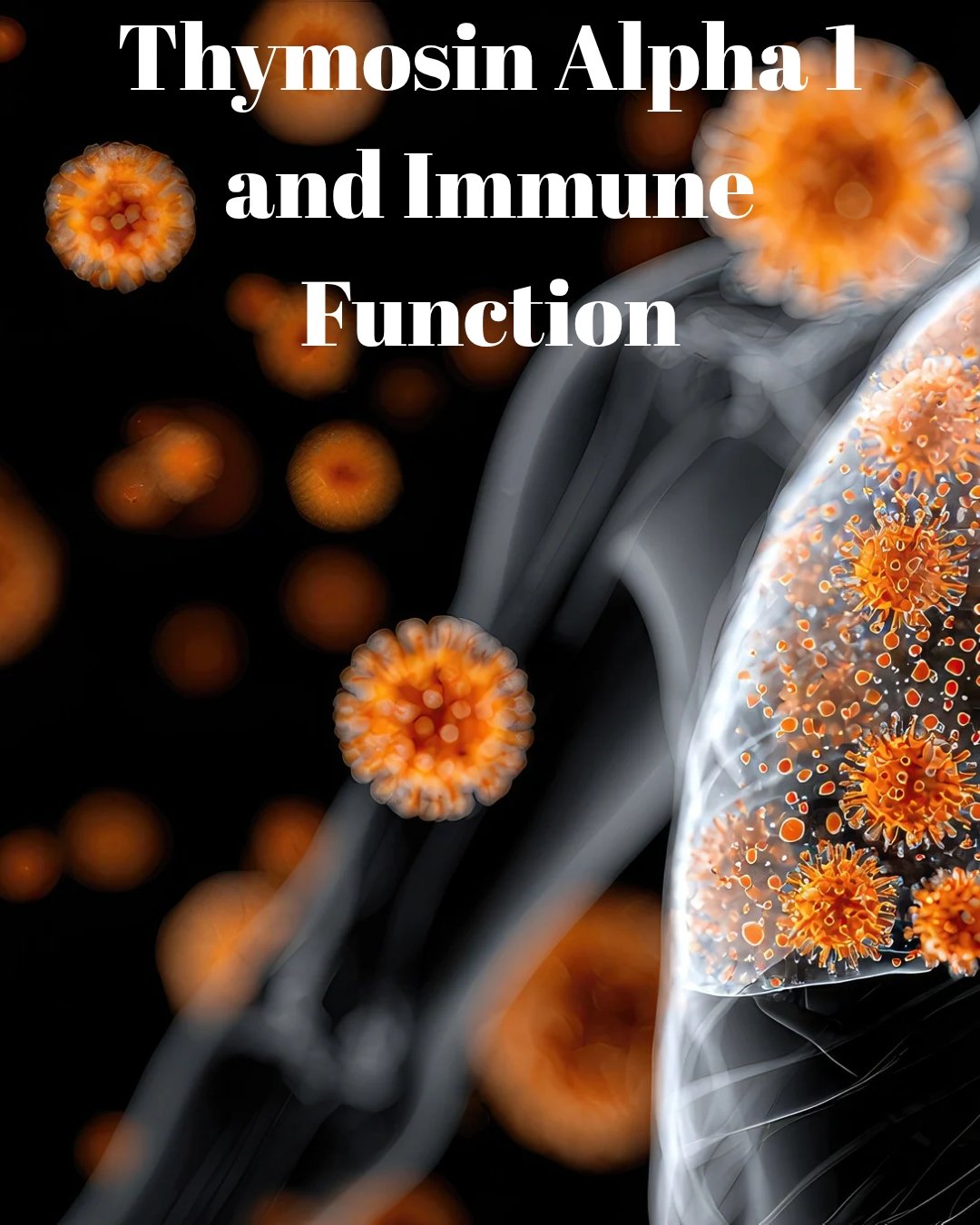
The thymus gland loses 95% of its immature immune cells with age, and the peptide it produces to maintain immune function disappears with it. Thymosin alpha-1 (Ta1) restored that function. Across decades of preclinical and clinical evidence, Ta1 stimulated new T-cell production, reduced three major inflammatory cytokines, protected brain tissue from oxidative damage, and inhibited the same enzyme targeted by ACE-inhibitor blood pressure medications. Published in the International Journal of Molecular Sciences (November 2025), the review compiled evidence from immunology, neuroscience, and cardiovascular research into a single case for Ta1 as an anti-aging intervention.
Ta1 Stimulated the Thymus to Produce New Immune Cells
The thymus begins shrinking after puberty, and by old age its functional tissue has been largely replaced by fat. This process, called thymic involution, is the central driver of immune aging because the thymus is the only organ that trains immature stem cells into functional T cells. Once the thymus shrinks, the body’s supply of new T cells drops and keeps dropping.
Ta1 directly counteracted this decline at two separate production sites. In thymic tissue, it increased expression of interleukin-7 (a growth signal critical for T-cell survival at every stage of maturation), enhanced the conversion of stem cells into new T cells, and prevented immature immune cells from dying prematurely. In bone marrow, Ta1 enhanced cell proliferation in the presence of growth-stimulating factors, which means it boosted immune cell production at the source where all blood cells originate.
Ta1 Reprogrammed the Immune System’s Inflammatory Set Point
Aging immune systems shift toward constant low-grade inflammation (sometimes called inflammaging) that drives atherosclerosis, neurodegeneration, and metabolic disease. Ta1 addressed this by reprogramming dendritic cells, the immune cells that decide whether the body mounts an inflammatory attack or maintains tolerance. Under Ta1’s influence, dendritic cells increased their anti-inflammatory output (interleukin-10) and their T-cell activation signal (interleukin-12), while dialing down PD-1L, a brake molecule that suppresses T-cell activity in aging patients.
Ta1 also activated regulatory T cells (Tregs), the immune cells responsible for preventing the body from attacking itself. In macrophages, Ta1 reduced production of three major inflammatory drivers (TNF-alpha, IL-1-beta, and IL-6) while boosting anti-inflammatory IL-10. It achieved this by suppressing the NF-kB inflammatory pathway and increasing Nrf-2, which is the body’s master switch for antioxidant defense.
Ta1 Protected the Brain, Heart, and Stressed Cells From Oxidative Damage
In a clinical study of patients with immune deficiency complicated by major depressive disorder, Ta1 administration stabilized immune markers and reduced depressive symptoms. This is consistent with the preclinical evidence: Ta1 stimulated new neuron growth, improved cognitive function, restored nerve growth factor levels in the brain after thymus removal, and modulated synaptic transmission in the hippocampus (the brain region most critical for memory). Ta1 also suppressed neuroinflammatory signaling through the same Wnt/beta-catenin pathway that protects against age-related neurodegeneration.
As a direct antioxidant, Ta1 reduced reactive oxygen species in four different cell types (macrophages, thymocytes, spleen cells, and brain astrocytes) and neutralized hydrogen peroxide and superoxide radicals in laboratory solutions. In animal models, it increased the body’s own antioxidant enzyme activity in liver disease and reduced the lipid damage that drives atherosclerosis. Ta1 also inhibited angiotensin-converting enzyme (ACE), meaning it may regulate blood pressure through the same pathway as ACE-inhibitor medications.
Ta1 Acts on Five Systems From a Single Peptide
The thymus produces Ta1 endogenously, and its decline with age represents a direct loss of the body’s innate healing capacity (vis medicatrix naturae). Practitioners can assess thymic function through T-cell subsets (CD4+, CD8+, CD4/CD8 ratio) and T-cell receptor excision circles (TRECs), which indicate whether the thymus is still producing new T cells. Ta1 (thymalfasin/Zadaxin) is administered as 1.6mg subcutaneously twice weekly in approved clinical protocols and is FDA-approved for hepatitis B with orphan drug status for melanoma.
Androgens Accelerate Thymic Decline and Autoimmune Patients Need Monitoring
Patients over 60 with declining T-cell counts, recurrent infections, or slow wound healing are the primary candidates for thymic support strategies, as these signs indicate advanced thymic involution. Sex hormones influence thymic involution directly: androgens accelerate thymic atrophy, and patients on testosterone replacement therapy may experience faster immune decline and should be monitored accordingly. Patients on immunosuppressive medications, including corticosteroids, may have compounded thymic suppression beyond normal aging.
Patients with autoimmune conditions require careful monitoring because Ta1 both enhances immune surveillance and activates regulatory T cells that suppress autoimmunity, so tracking inflammatory markers and autoantibody levels is essential during any thymic support protocol. The review noted that Ta1 blood levels decline with age and drop further in inflammatory and autoimmune diseases, but the research on age-related blood level changes is mixed, with one study confirming the decline and another finding no significant change.
The Thymus Is an Endocrine Organ That Regulates Far More Than Immunity
The naturopathic principle of treating the whole person (tolle totum) applies directly to thymic health because the thymus is both an immune organ and an endocrine organ. It produces its own hormones and also synthesizes hormones typically associated with other glands, including glucocorticoids, prolactin, oxytocin, vasopressin, and insulin. Ta1 itself interacts with the hypothalamic-pituitary system, stimulating secretion of adrenocorticotropic hormone, thyroid-stimulating hormone, and luteinizing hormone.
Thymic involution disrupts neuroendocrine signaling across the entire body, contributing to the cognitive decline, hormonal imbalance, and metabolic dysfunction that characterize aging. The review also noted that a decrease in prothymosin-alpha (the precursor protein from which Ta1 is cleaved) in microglial cells exposed to beta-amyloid suggests a potential connection to Alzheimer’s disease pathology. The immunological theory of aging positions the thymus as the body’s internal clock of decline, and this review provides evidence that restoring thymic peptide levels may slow multiple dimensions of that clock simultaneously.
Further Reading
-
“Chronic Inflammation: The ‘Hallmark’ of Aging,” NDNR.com: https://ndnr.com/anti-aging/chronic-inflammation-the-hallmark-of-aging/
-
“The Anti-Aging Effects of DHEA,” NDNR.com: https://ndnr.com/anti-aging/the-anti-aging-effects-of-dhea/
-
“Mechanisms of Aging and Neurodegeneration,” NDNR.com: https://ndnr.com/geriatrics/mechanisms-of-aging-and-neurodegeneration/
-
“Endocrinology and Aging,” NDNR.com: https://ndnr.com/anti-aging/endocrinology-and-aging/
Citation: Simonova MA, Ivanov I, Shoshina NS, et al. Aging and Thymosin Alpha-1. Int J Mol Sci. 2025;26(23):11470. Published 2025 Nov 27. doi:10.3390/ijms262311470