Guru Sandesh Singh Khalsa, ND
The College of Naturopathic Medicine of the University of Bridgeport (UB) is the first college of naturopathic medicine to be founded in a comprehensive university. Following five years of candidacy for accreditation, the college was granted accreditation by the Council on Naturopathic Medical Education on March 25, 2006. The New England Association of Schools and Colleges (NEASC) accredits the university, which is located on Long Island Sound about 60 miles northeast of New York City. To better understand the environment in which the college exists, a brief history of the university will be helpful.
The university was founded in 1927 as a private, nonsectarian two-year college and grew into a university after the end of World War II. In the 1970s and early 1980s the university had almost 10,000 students enrolled in wide variety of graduate and undergraduate schools and colleges. Economic decline in the Bridgeport area, a weak administration at the university, and a faculty strike combined to see the institution hit a low of 1300 students and near collapse in the early 1990s. Help came in the form of the Professors World Peace Academy (PWPA), an educational organization founded by the Unification Church. The PWPA contributed tens of millions of dollars to the university over 10 years to support a turnaround in exchange for the ability to nominate a number of seats on the Board of Trustees. And while the existence of a number of programs at the university, including the College of Naturopathic Medicine, came into being because of PWPA influence, it should be noted that the institution remains nonsectarian and not-for-profit and people of many faiths and nationalities are represented in the student body, administration, and faculty. The PWPA no longer subsidizes the operations of the university, and does not own it, but does continue to nominate a number of the trustees. The finances of the institution are currently sound, the infrastructure is being upgraded, and the total student body is about 3600. The College of Naturopathic Medicine currently has 126 students, with modest growth to approximately 150 expected over the next two years as smaller classes graduate and are replaced by larger ones.
The growth of the health sciences at UB began with the Fones School of Dental Hygiene joining the institution, the first school of dental hygiene in the country. The College of Chiropractic was founded in 1990, and was followed by the College of Naturopathic Medicine, which admitted its first class in 1997. A desire to develop a strong presence in alternative and allied health education became manifest as a major goal and was supported by the PWPA. The Institutes of Nutrition (offering an MS in nutrition) and Acupuncture (offering a Master of Acupuncture degree) came into existence over the next few years. UB now has a unique mix of health science programs under one roof.
Unlike the other naturopathic colleges, the College of Naturopathic Medicine at UB is not at the center of the institution as a whole. The university offers many services, such as financial aid and admissions, for all the programs so that these responsibilities are not required of each college. This creates and economy of scale and relieves the colleges of certain responsibilities, but it does demand increased attention to interdepartmental cooperation and the need for the dean of each school to work with various university departments.
Each college is overseen by a dean, and each institute by a director. These individuals oversee all activities within their college or institute, and report to the provost of the university, who in turn reports to the president. The deans and directors are responsible for external relations for their programs, including fundraising, accreditation, external and governmental relations, and program development. In many ways, the deans are like the president of a stand-alone college, but report to a provost instead of a board of directors. The College of Naturopathic Medicine has two associate deans, one for academic and one for clinical education.
There are full-time and part-time faculty members at the naturopathic college who have graduated from NCNM, SWCNM, CCNM, and Bastyr University as well as those with backgrounds in the biomedical sciences. The director of research, who is also the instructor for pathology and biochemistry, holds doctoral degrees in medicine and biochemistry. While still young, the research department at the college is currently conducting clinical research, gathering resources for a research laboratory, and looking to establish joint ventures with other institutions in the region. The college continues to increase the size of its full-time faculty on a yearly basis, while valuing the contributions of those who teach part time.
The student teaching clinic is located on campus and is very busy. There are six community clinics where students have the opportunity to work with underserved and special populations, such as those with HIV/AIDS, substance abuse, and low income. The college is committed to careful planning for growth, and the current goal of admitting approximately 40 students per freshman class will remain in place until adequate planning for larger classes has been completed in two to three years.
There is an active and well-organized student government that works to coordinate student activities and to communicate student concerns with the administration. The student population is very diverse with respect to ethnic and geographical origin in both the college and the university. As in all the naturopathic colleges, the students are idealistic, dedicated, and energetic. A dozen students attended the AANP convention in Phoenix last summer, a testament to their interest in the profession at large and its future success.
The College of Naturopathic Medicine at UB encountered many of the growing pains that are common to new schools. But there is an enthusiasm in the college community that is building on the realization of accreditation and the changes that are occurring within the institution. The university administration is very supportive of the college and provides the resources necessary for its development. The college looks to the future and the role it will play in education, research, and public relations for the naturopathic medical profession.
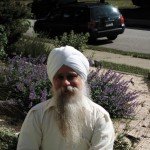 Guru Sandesh Singh Khalsa, ND graduated from National College of Naturopathic Medicine in 1978. He also holds bachelor’s degrees in physics from Occidental College and in human biology from Kansas Newman College. He is the University of Bridgeport’s current dean of naturopathic medicine. His past positions with NCNM include faculty positions for 23 years, interim president (2001-2002), chief academic officer (1997-2002), dean of academic affairs (1996-2001), and associate dean of academic affairs (1994-1996).