How common prescription and over-the-counter medications can disrupt renal blood flow, damage tubular cells, and trigger inflammation—and how clinicians can identify vulnerable patients before preventable kidney injury occurs.
The kidneys filter approximately 180 L of plasma daily while regulating fluid and electrolyte balance, blood pressure, acid-base homeostasis, and waste elimination. Their high metabolic activity and constant exposure to circulating medications make them particularly vulnerable to drug-induced injury. Although clinicians often focus on hepatotoxicity, medications account for an estimated 20% of community- and hospital-acquired cases of acute kidney injury (AKI). Older adults and patients with chronic kidney disease (CKD), diabetes, hypertension, heart failure, or volume depletion are especially susceptible.1 Even medications considered safe when used appropriately can become nephrotoxic when combined with dehydration, reduced renal perfusion, or other nephrotoxic agents.2
Many patients are surprised to learn that over-the-counter (OTC) medications such as ibuprofen or naproxen may pose risks comparable to prescription drugs. Likewise, medications that protect kidney function in one setting, such as angiotensin-converting enzyme (ACE) inhibitors, may contribute to AKI in another setting. For naturopathic doctors, understanding the mechanisms of medication-induced kidney injury provides an opportunity to identify at-risk patients, educate them about safer medication use, and collaborate with prescribing clinicians to reduce preventable kidney damage.
Why the Kidneys Are Especially Vulnerable
Despite accounting for less than 1% of body weight, the kidneys receive approximately 20–25% of cardiac output.3 After filtration, medications become concentrated within the renal tubules as water is reabsorbed, exposing tubular epithelial cells to drug concentrations far higher than those in the systemic circulation.4
The proximal tubule is particularly vulnerable because it actively transports medications into epithelial cells for excretion (Figure 1). These cells have high energy demands and abundant mitochondria, making them susceptible to oxidative stress, mitochondrial dysfunction, and apoptosis when exposed to nephrotoxic drugs. In addition, renal blood flow depends on a delicate balance between vasodilatory prostaglandins and the renin-angiotensin-aldosterone system (RAAS). RAAS is the homeostatic system that integrates renal, endocrine, and cardiovascular signals to maintain fluid balance, electrolyte stability, and blood pressure. Medications that disrupt either pathway can significantly impair glomerular filtration, particularly in patients with reduced renal perfusion.5
Although hundreds of medications have been associated with nephrotoxicity, most produce injury through a limited number of common pathophysiological mechanisms.
Figure 1 Anatomy of a Nephron
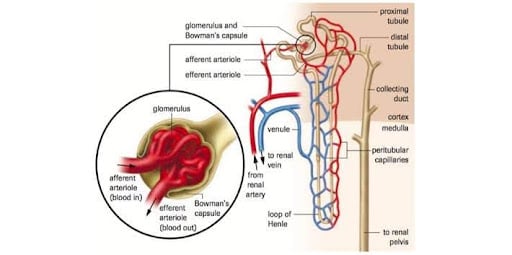
Source: Diagram Of Nephron .png – Science – Free PDF Download 2026
Mechanisms of Drug-Induced Kidney Injury
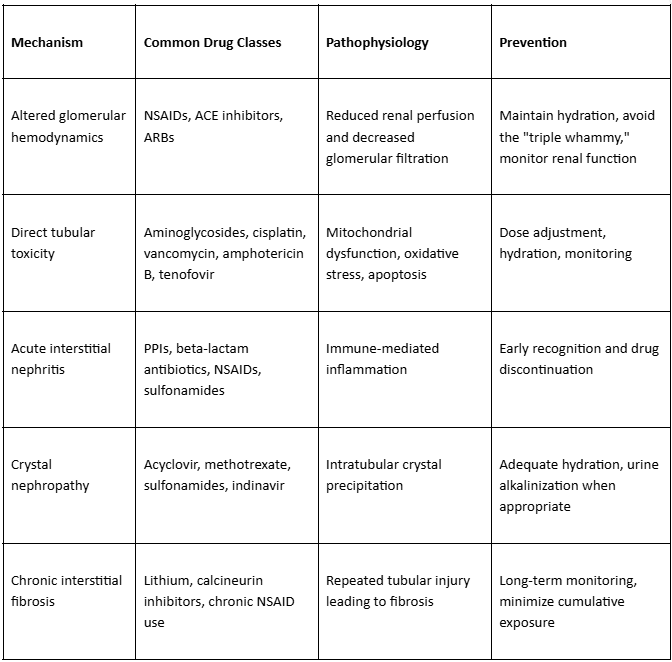
Altered Glomerular Hemodynamics
One of the most common mechanisms of medication-induced kidney injury involves disruption of normal renal blood flow.
Under physiological conditions, prostaglandins dilate the afferent arteriole, maintaining renal perfusion during dehydration, blood loss, heart failure, or cirrhosis. Angiotensin II constricts the efferent arteriole, preserving intraglomerular pressure and glomerular filtration rate (GFR).
NSAIDs inhibit cyclooxygenase (COX)-1 and COX-2, reducing prostaglandin synthesis. In healthy, well-hydrated individuals this usually has little effect; however, when renal perfusion is compromised, loss of prostaglandin-mediated vasodilation constricts the afferent arteriole, reducing renal blood flow and GFR. Acute kidney injury may develop within days.6
ACE inhibitors and angiotensin receptor blockers (ARBs) reduce angiotensin II activity, dilating the efferent arteriole and lowering intraglomerular pressure. While this protects the kidneys in patients with diabetes or proteinuric CKD, it may precipitate AKI in patients who depend on angiotensin II to maintain filtration, such as those with bilateral renal artery stenosis, severe dehydration, or advanced heart failure.7
Particularly concerning is the “triple whammy” combination of an ACE inhibitor or ARB, a diuretic, and an NSAID. Diuretics reduce circulating volume, NSAIDs constrict the afferent arteriole, and ACE inhibitors dilate the efferent arteriole, together markedly reducing glomerular filtration. Patients frequently create this combination unknowingly by self-treating pain with OTC NSAIDs.8
Direct Tubular Toxicity
Some medications injure the kidneys not by altering blood flow but by directly damaging tubular epithelial cells.
Aminoglycoside antibiotics accumulate within proximal tubular cells, disrupting phospholipid metabolism, impairing mitochondrial respiration, generating reactive oxygen species (ROS), and activating apoptosis. Continued exposure may lead to acute tubular necrosis (ATN). Fortunately, renal function often recovers if the drug is discontinued promptly.9
Cisplatin produces similar injury after entering tubular cells through organic cation transporters. It damages mitochondrial DNA, impairs ATP production, generates oxidative stress, and activates inflammatory pathways that culminate in apoptosis and necrosis. Modern oncology protocols therefore incorporate aggressive hydration to reduce nephrotoxicity.10
Other medications associated with direct tubular injury include amphotericin B, vancomycin, and tenofovir.
Acute Interstitial Nephritis
Acute interstitial nephritis (AIN) is an immune-mediated hypersensitivity reaction affecting the renal interstitium rather than a direct toxic effect. Numerous medications have been implicated, including beta-lactam antibiotics, sulfonamides, rifampin, allopurinol, NSAIDs, and proton pump inhibitors (PPIs).11
Inflammatory cells infiltrate the renal interstitium, releasing cytokines that damage tubular cells and impair renal function. Persistent inflammation may progress to irreversible interstitial fibrosis if the offending medication is not discontinued.
Although the classic triad of fever, rash, and eosinophilia is well known, most patients present with nonspecific symptoms such as fatigue, malaise, nausea, or an unexplained increase in serum creatinine. Urinalysis may demonstrate sterile pyuria, white blood cell casts, mild proteinuria, or microscopic hematuria. Early recognition and prompt withdrawal of the causative medication substantially improve the likelihood of renal recovery.12
Crystalline Nephropathy
Some medications damage the kidneys by precipitating within the renal tubules as microscopic crystals. Tubular obstruction and local inflammation impair urine flow and may rapidly reduce kidney function.
Drugs commonly associated with crystal nephropathy include acyclovir, sulfonamide antibiotics, methotrexate, indinavir, atazanavir, ciprofloxacin, levofloxacin, and orlistat.
Most cases are preventable through adequate hydration, dose adjustment in patients with impaired kidney function, maintenance of urine flow, and, when appropriate, urinary alkalinization.2
Oxidative Stress and Mitochondrial Dysfunction
Although nephrotoxic medications act through diverse molecular pathways, many converge on two common mechanisms: oxidative stress and mitochondrial dysfunction.
Renal tubular epithelial cells have exceptionally high energy demands because they actively transport electrolytes, glucose, amino acids, and many medications. As a result, they contain abundant mitochondria and are highly susceptible to mitochondrial injury. Excessive production of reactive oxygen species (ROS) damages lipids, proteins, and mitochondrial DNA, impairing ATP production and triggering apoptosis or necrosis of tubular epithelial cells.13
These shared pathways help explain why chemically diverse medications—including aminoglycosides, cisplatin, amphotericin B, vancomycin, and iodinated contrast media—produce similar patterns of kidney injury. Although antioxidants have shown promise in experimental models, evidence remains insufficient to recommend antioxidant supplementation specifically for preventing medication-induced nephrotoxicity. At present, minimizing exposure to nephrotoxic medications and maintaining adequate hydration remain the most effective preventive strategies.14
“Medication-induced kidney injury is common, yet often preventable.”
Chronic Interstitial Fibrosis
While AKI is often reversible, repeated or persistent tubular injury may lead to chronic interstitial fibrosis and irreversible nephron loss. Persistent inflammation and RAAS activation contribute to progression from AKI to CKD, with RAAS inhibition potentially reducing CKD progression. Following AKI, nephron loss, immune-cell infiltration, capillary loss and renal hypoxia, tubular cell dysfunction, and maladaptive repair promote fibroblast activation and interstitial fibrosis, driving further nephron loss and CKD progression.15
Lithium is a classic example of cumulative nephrotoxicity, with long-term use associated with chronic tubulointerstitial nephritis, nephrogenic diabetes insipidus, and progressive declines in kidney function.16 Calcineurin inhibitors, including cyclosporine and tacrolimus, similarly promote chronic vasoconstriction and interstitial fibrosis.17 Chronic NSAID overuse may also contribute to CKD through repeated ischemic injury and papillary necrosis.6
Which Patients Are Most at Risk?
Medication-induced kidney injury rarely depends on the medication alone. Risk is substantially increased by patient-specific factors including older age, CKD, diabetes, hypertension, heart failure, liver disease, dehydration, sepsis, polypharmacy, concurrent use of multiple nephrotoxic medications, and repeated exposure to iodinated contrast media.18
Even mild volume depletion can significantly reduce renal perfusion. Patients experiencing vomiting, diarrhea, prolonged exercise, or heat exposure are particularly vulnerable, making temporary interruption of nephrotoxic medications an important preventive strategy in selected patients.
Practical Clinical Pearls for Naturopathic Doctors
Naturopathic doctors are well positioned to identify patients at increased risk for medication-induced kidney injury through comprehensive medication reviews and patient education.
Ask specifically about OTC NSAIDs, proton pump inhibitors, herbal medicines, supplements, and intermittent medications, as patients frequently omit these when discussing their prescriptions. Assess hydration status, particularly during acute illness, hot weather, or strenuous physical activity, and identify patients taking the “triple whammy” combination of an ACE inhibitor or ARB, a diuretic, and an NSAID.
For patients at higher risk, periodic monitoring of serum creatinine, estimated glomerular filtration rate (eGFR), electrolytes, and urinalysis can help detect kidney injury before symptoms develop. Equally important is educating patients that OTC medications are not inherently safe and that dehydration can substantially increase nephrotoxic risk.
The Naturopathic Perspective
Naturopathic medicine can complement conventional care by addressing lifestyle factors that contribute to chronic disease and long-term medication use. Evidence-informed interventions—including anti-inflammatory nutrition, weight management, exercise, acupuncture, and stress reduction—may improve chronic pain, metabolic dysfunction, hypertension, and gastroesophageal reflux disease, potentially reducing reliance on medications associated with nephrotoxicity.
Medication stewardship does not mean discouraging appropriate pharmacotherapy. Rather, it involves ensuring medications are used safely while optimizing the underlying determinants of health. By collaborating with prescribing clinicians, reviewing medication use, reinforcing hydration and “sick-day” precautions, and encouraging appropriate monitoring, naturopathic doctors can play an important role in preserving long-term kidney function.
Conclusion
Medication-induced kidney injury is common, yet often preventable. Because the kidneys receive a large proportion of cardiac output, concentrate medications within the renal tubules, and depend on high levels of mitochondrial energy production, they are uniquely susceptible to toxic injury. Despite the wide range of nephrotoxic medications, most produce injury through a limited number of mechanisms, including altered glomerular hemodynamics, direct tubular toxicity, immune-mediated interstitial nephritis, crystal deposition, oxidative stress, and chronic fibrosis.
Understanding these mechanisms enables naturopathic doctors to recognize patients at increased risk, promote safer medication use, and collaborate effectively with other healthcare providers. Through careful medication review, patient education, attention to hydration, and appropriate monitoring, clinicians can help prevent avoidable kidney injury while supporting safe and effective pharmacotherapy.
Table 1. Common Mechanisms of Drug-Induced Kidney Injury