

A...
Chemotherapy-Induced Peripheral Neuropathy: An Evidence-Based Guide for Naturopathic Physicians
read more
Pauline Crouch (Baumann), ND
This month’s Education column features guest columnist Pauline Crouch (Baumann), ND, president of Natural Doctors International. Dr. Schleich’s column will return in the August issue.
I recently returned from a trip to Zambia where, as president of Natural Doctors International (NDI), a licensed naturopathic physician, and former naturopathic college vice president, I was invited to provide on-the-ground assessment and technical assistance for the Zambia Institute of Natural Medicine and Research (ZINARE). I also spent a lot of my time watching and listening to those around me—all Zambian nationals—and I received quite an education.
During my stay I lived with a Zambian family and experienced the typical challenges of life regarding transportation (including the infamous minibuses), education, employment or lack thereof, and the impact of HIV/AIDS. Seventeen people share this home, including John and Privy, their six children, numerous nieces, nephews and cousins, including an AIDS orphan. Sharing daily life with this family provided critical context for me in understanding people’s viewpoints and behaviors.
I came face-to-face with what the media calls “the ravages of AIDS” in the oldest member of the household—a 102-year-old grandfather named Medicine. Late one night, lying in the dark in a shared room, I brought up the subject of AIDS with his daughter. The dark made it easier to speak of the heavy price this family has paid—one of her sisters had lost all 15 of her adult children to AIDS, finally dying of a broken heart herself; and among her father’s direct descendants they had buried almost 100 people since the pandemic began.
Zambia is a politically stable and peaceful country, located on central southern Africa that transitioned from colonial rule to independence in1962 with little bloodshed. Over seventy languages are spoken in Zambia with English as the official language of business and education. Religion is important to Zambians and adherents are distributed among the Catholic, Pentecostal and Seventh-day Adventist faiths.
Zambians are some of the warmest people I have ever met and have strong family, tribal and religious ties. A greeting of “Mulishani?” or “How are you?” is invariably met with a brilliant smile and warm shaking of hands—and a stranger becomes a friend.
I discovered that I was in an unusual position in that I was from a non-profit that was invited to Zambia by a local organization, and even more unusual was that I was actively listening to the needs that people expressed around me. I found the people of Zambia to have insightful ideas and passionate commitment.
The Zambia Institute of Natural Medicine and Research was founded by a very visionary and committed group of people to bridge the chasm between conventional medicine and traditional African medicine that continues to plague the continent. Zambia has several hundred medical doctors and over 60,000 registered traditional health practitioners (THPs). More than 70% of the population sees THPs for their primary care. However, these two groups are barely on speaking terms. ZINARE and NDI see naturopathic medicine as a much-needed bridge between these two groups.
With the encouragement of the WHO-African Region, ZINARE is establishing the first accredited naturopathic medical school in Africa. Riverside Farm Institute in Zambia had a naturopathic program that was founded by Dr. Foster from Yuchi Pines Institute in Alabama. Riverside Farm was a rural nature cure inpatient facility that operated for over 40 years from 1950 to 1992.
One of the last graduates of the program, Dr. Lawrence Chanza, has dreamed of starting a naturopathic school in Zambia for over a decade. To this end, he and a small cadre of committed people have worked behind the scenes to educate politicians and researchers on the value of natural medicine. This tireless work bore fruit with the official launch of ZINARE on April 17, 2009 in Lusaka, the capital of Zambia. Featured speakers at the launch included the Honorable Minister of Health, officials from the World Health Organization (WHO), and myself as a representative of NDI and NCNM.
As a result, ZINARE now has an official relationship with the Ministry of Health, including a budget line for the institute that is guaranteed by Parliament. ZINARE has also been granted the exclusive right to license NDs in Zambia as well as to review natural medicines on behalf of the Pharmaceutical Regulatory Authority (Zambian FDA) to be included in the registry of medicines and allowed for import.
Political will such as this on the side of naturopathic medicine has never before been seen on any continent. ZINARE is positioned to be the naturopathic college for other southern African countries, and eventually it could become the premier naturopathic institution for all of Africa.
In 2001 the WHO embarked on a 10-year Strategic Plan for Traditional Medicine which included developing many policies on educational standards, intellectual property, and legal recognition of traditional medicine, etc. They even supported ZINARE to begin developing naturopathic curriculum with a small grant.
Dr. Ossy Kasilo, advisor on the traditional medicine program at the WHO African regional office in Congo-Brazzaville, sees the development of the naturopathic college as the crowning achievement of this decade of traditional medicine. As a result of our work together, Dr. Kasilo is actively promoting naturopathic medicine as a bridge between conventional and traditional practitioners within the WHO.
However, whereas ZINARE has clear vision, steadfast commitment, enormous political will, and even some funding on their side, they lack the organizational capacity to create the college. They need qualified NDs with at least 10 years experience in private practice along with teaching experience to fill several core faculty positions.
They also need a founding dean who can commit several years to one of the most exciting opportunities in naturopathic history–developing an afrocentric naturopathic program (incorporating African herbs and practices) to CNME accreditation standards. The first stage is the development of a high-end naturopathic clinic to be the focal center of the program, in addition to satellite community clinics.
With few exceptions, the developing world is very receptive to natural medicine and there is a tremendous opportunity for the naturopathic profession to grow exponentially. ZINARE is reaching out to us to support their vision until they are able to graduate enough doctors to satisfy their organizational needs. The opportunities for research and community projects are extraordinary and funding that could never be obtained in North America is apparently readily available in Africa.
I invite you to support this project financially through NDI and I urge the entire North American profession and all of the colleges to enthusiastically support this venture. I also invite interested NDs and faculty to contact me regarding how they might participate in this new and exciting chapter in naturopathic history.
Natural Doctors International is a US-based non-profit organization that promotes equal access to natural medicine in collaboration with international health practitioners, communities, and governments. We do this through healthcare delivery, by advocating for shifts in global health policy, conducting research in natural medicine, and promoting socially responsible volunteerism. (www.ndimed,org)
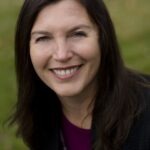 Pauline Crouch (Baumann), ND (NCNM ’85) now practices in Nova Scotia, Canada. She lived in Oregon for 25 years with a focus on teaching and practicing energy medicine. She was Vice President Academic at National College, a board member and later Board Chair. Her passion for international medicine has led her to Nicaragua and Zambia on behalf of NDI, to join the board of NDI, and to advocate for naturopathic medicine to the World Health Organization.