

A...
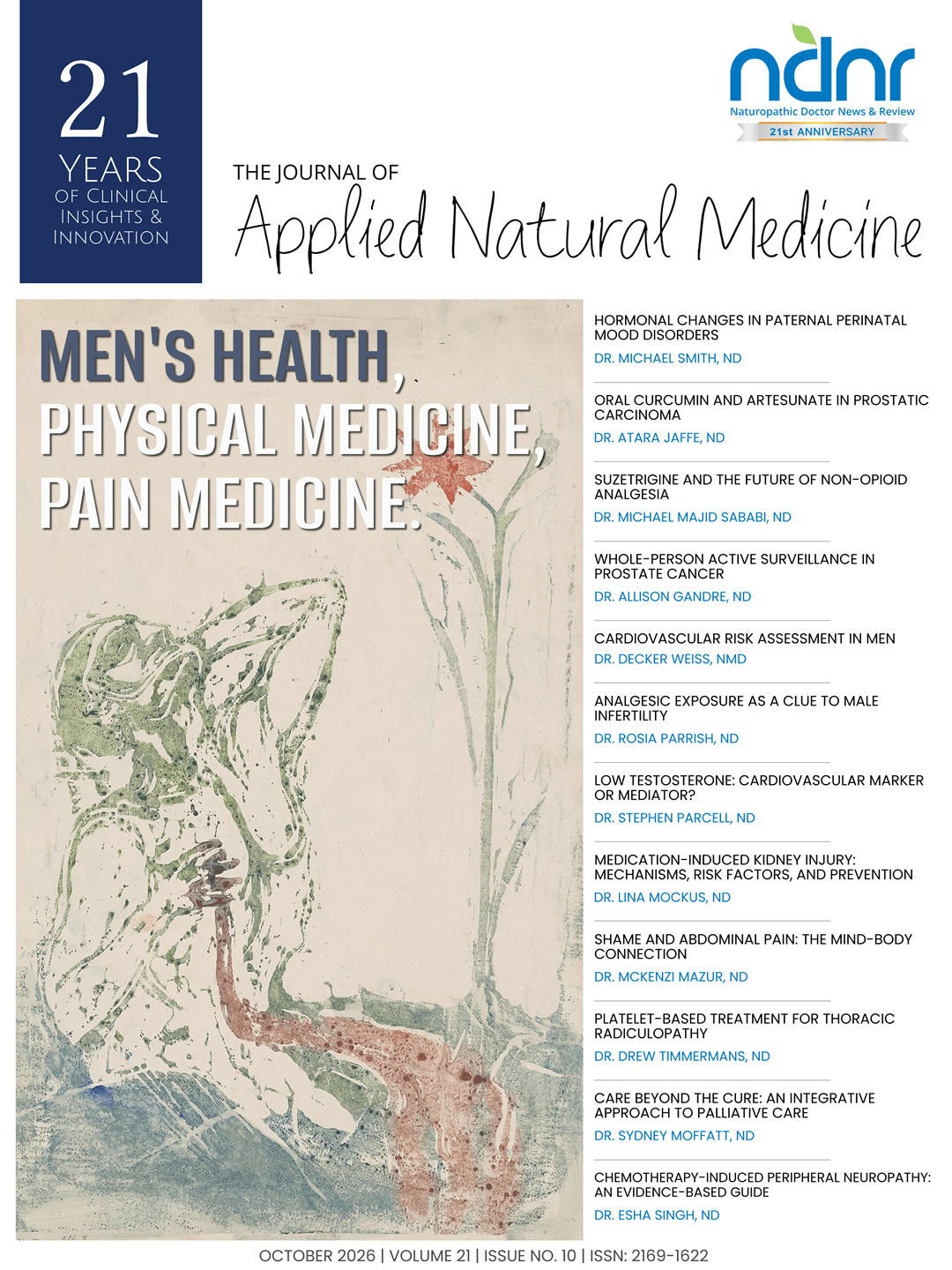
Chemotherapy-Induced Peripheral Neuropathy: An Evidence-Based Guide for Naturopathic Physicians
read more
Node Smith, ND
Natural health products are used by many people, but almost half of naturopathic patients do not let their primary physician know, says a survey conducted by McMaster University.
The survey also indicates the number of patients not sharing this information – 42 per cent – has not changed in the past 15 years.
The findings were published in the journal Complementary Therapies in Clinical Practice.
“We were surprised to find there has been no change in disclosure over 15 years when we did the last survey,” said study senior author Jason Busse, associate professor of anesthesia, and of health research methods, evidence, and impact at McMaster. He is also associate director of the Michael G. DeGroote Centre for Medicinal Cannabis Research.
The research team conducted the patient survey between November 2018 and February 2019 at the Robert Schad Naturopathic Clinic in Toronto.
Based on 277 completed questionnaires, 99 per cent of the patients surveyed were using natural health products, and 46 per cent were using natural health products and prescription medications concurrently. Of those using natural health products, 42 per cent did not disclose use to their primary care physician.
The disclosure statistic is identical to the outcome of a survey led by Busse that looked at the same issue at the same clinic in 2003. Those results were published in Mayo Clinic Proceedings at the time.
When we did the original survey, we concluded there should be more effort by primary care physicians to inquire about natural product use, because it is part of what their patients are engaged in and there is the possibility of interactions with prescriptions,” said Jason Busse, Study Senior Author and Associate Professor, Department of Anesthesia, McMaster University.
“We ran the survey again to see if there had been any shift in the proportion of disclosure by patients from the same clinic. It seems there has no change whatsoever in the disclosure of natural health products to primary care physicians.”
The two top reasons patients cited in the new survey for not disclosing natural health products to their physician were: That medical doctors do not approve of complementary and alternative medicine use, and that medical doctors would not understand.
Busse suggests this failure to disclose may have implications for a patient’s health.
“Patients may believe that these products can’t harm them because they are ‘natural’; however, there are cases where people can get into trouble through either taking very high doses of some of these products which can cause toxicity or, in some cases, having interactions with some of the prescriptions that they are taking.”
“Others may be substituting prescriptions with a natural health product claiming to have the same effect.”
The 2018-19 survey included questions about medicinal cannabis, noted Busse, with nine per cent of patients reporting use.
Busse said that future research should explore primary care physicians’ hesitancy to inquire about patients’ natural health product use.
“Clearly in order for things to change, there needs to be more work done to not only recognize that the rate of disclosure is very low, but to figure out how to address the barriers,” Busse said.
1. Jeremy, Y.Ng., et al. (2020) No improvement in disclosure of natural health product use to primary care medical doctors in the last 15 years: A survey of naturopathic patients. Elsevier. doi.org/10.1016/j.ctcp.2020.101106.
ost half of naturopathic patients do not let their primary physician know, says a survey conducted by McMaster University.
The survey also indicates the number of patients not sharing this information – 42 per cent – has not changed in the past 15 years.
The findings were published in the journal Complementary Therapies in Clinical Practice.
“We were surprised to find there has been no change in disclosure over 15 years when we did the last survey,” said study senior author Jason Busse, associate professor of anesthesia, and of health research methods, evidence, and impact at McMaster. He is also associate director of the Michael G. DeGroote Centre for Medicinal Cannabis Research.
The research team conducted the patient survey between November 2018 and February 2019 at the Robert Schad Naturopathic Clinic in Toronto.
Based on 277 completed questionnaires, 99 per cent of the patients surveyed were using natural health products, and 46 per cent were using natural health products and prescription medications concurrently. Of those using natural health products, 42 per cent did not disclose use to their primary care physician.
The disclosure statistic is identical to the outcome of a survey led by Busse that looked at the same issue at the same clinic in 2003. Those results were published in Mayo Clinic Proceedings at the time.
When we did the original survey, we concluded there should be more effort by primary care physicians to inquire about natural product use, because it is part of what their patients are engaged in and there is the possibility of interactions with prescriptions,” said Jason Busse, Study Senior Author and Associate Professor, Department of Anesthesia, McMaster University.
“We ran the survey again to see if there had been any shift in the proportion of disclosure by patients from the same clinic. It seems there has no change whatsoever in the disclosure of natural health products to primary care physicians.”
The two top reasons patients cited in the new survey for not disclosing natural health products to their physician were: That medical doctors do not approve of complementary and alternative medicine use, and that medical doctors would not understand.
Busse suggests this failure to disclose may have implications for a patient’s health.
“Patients may believe that these products can’t harm them because they are ‘natural’; however, there are cases where people can get into trouble through either taking very high doses of some of these products which can cause toxicity or, in some cases, having interactions with some of the prescriptions that they are taking.”
“Others may be substituting prescriptions with a natural health product claiming to have the same effect.”
The 2018-19 survey included questions about medicinal cannabis, noted Busse, with nine per cent of patients reporting use.
Busse said that future research should explore primary care physicians’ hesitancy to inquire about patients’ natural health product use.
“Clearly in order for things to change, there needs to be more work done to not only recognize that the rate of disclosure is very low, but to figure out how to address the barriers,” Busse said.
1. Jeremy, Y.Ng., et al. (2020) No improvement in disclosure of natural health product use to primary care medical doctors in the last 15 years: A survey of naturopathic patients. Elsevier. doi.org/10.1016/j.ctcp.2020.101106.
Node Smith, ND, is a naturopathic physician in Humboldt, Saskatchewan and associate editor and continuing education director for NDNR. His mission is serving relationships that support the process of transformation, and that ultimately lead to healthier people, businesses and communities. His primary therapeutic tools include counselling, homeopathy, diet and the use of cold water combined with exercise. Node considers health to be a reflection of the relationships a person or a business has with themselves, with God and with those around them. In order to cure disease and to heal, these relationships must be specifically considered. Node has worked intimately with many groups and organizations within the naturopathic profession, and helped found the non-profit, Association for Naturopathic Revitalization (ANR), which works to promote and facilitate experiential education in vitalism.