

A...
Chemotherapy-Induced Peripheral Neuropathy: An Evidence-Based Guide for Naturopathic Physicians
read more

Glenn B. Gero, ND, DSc, M.E.S., R.H. (AHG), EndoANP
Kareem Kandil, MD, ND
A case study demonstrating how a simple occupational history uncovered chronic heavy metal exposure as a likely contributor to severe hypogonadism, highlighting the critical role of environmental medicine in evaluating unexplained endocrine dysfunction.
A 25-year-old man with severe testosterone deficiency, gynecomastia, fatigue, and depression had seen multiple physicians before one overlooked question revealed the underlying cause. This case explores the relationship between occupational heavy metal exposure, endocrine disruption, and the importance of investigating environmental toxicants as part of a root-cause approach to hormonal dysfunction
Hormonal dysfunction in young men is increasingly common, yet investigations often focus primarily on endocrine replacement rather than identifying potential underlying causes. This case study describes a 25-year-old male who presented with severe testosterone deficiency, gynecomastia, erectile dysfunction, fatigue, anxiety, depression, alopecia and loss of interest in normal activities. Despite consultations with numerous physicians and subsequent testosterone replacement therapy, little attention had been given to environmental or occupational factors that may have contributed to his condition.
A comprehensive naturopathic assessment revealed a significant occupational exposure history that had previously gone unexplored. Subsequent testing demonstrated substantial heavy metal accumulation, including elevated lead, cadmium and uranium. This case highlights the importance of environmental medicine principles in the evaluation of unexplained endocrine dysfunction.
The prevalence of testosterone deficiency among younger men has risen significantly over the past several decades. Contributing factors may include obesity, chronic stress, sleep disturbances, metabolic dysfunction, endocrine-disrupting chemicals and environmental toxicants.
Heavy metals are known to interfere with numerous physiological processes, including hormone production, endocrine signaling, mitochondrial function and neurological health. Despite growing evidence linking environmental toxicants to reproductive dysfunction, occupational exposure histories are often overlooked during routine medical evaluations.
This case illustrates how a single question, one that had never been asked during multiple prior medical consultations, revealed a potentially significant contributor to a young man’s declining health.
“Mitch” (name changed for privacy) is a 25-year-old male who presented with a complex constellation of symptoms including:
Prior laboratory testing had demonstrated markedly low testosterone levels. Over several years, he had consulted no fewer than twelve medical physicians, including primary care providers and specialists. The primary recommendation he received was testosterone replacement therapy. While testosterone therapy may be appropriate in selected cases, an important question remained unanswered:
Why would a 25-year-old male develop severe testosterone deficiency in the first place?
During our initial consultation, I reviewed his symptoms, prior testing, medical history and treatment recommendations. Before discussing additional laboratory investigations, I asked a simple question:
“What do you do for a living?”
His response immediately changed the direction of the case. “I fabricate stained glass.”
Stained glass fabrication frequently involves handling lead-containing materials. Depending upon workplace conditions, individuals may also be exposed to cadmium and other potentially toxic metals through cutting, soldering, grinding, polishing, painting and dust inhalation.
On learning his occupation, my immediate concern became environmental toxicity and its potential relationship to endocrine dysfunction. While not every stained-glass worker develops toxicity, occupational exposure represents a recognized risk factor for heavy metal accumulation, particularly when appropriate protective measures are not consistently employed. Given the severity of his symptoms and occupational history, further investigation was warranted.
A comprehensive hair mineral analysis was performed to evaluate long-term mineral patterns and potential toxic element accumulation.
The results demonstrated:
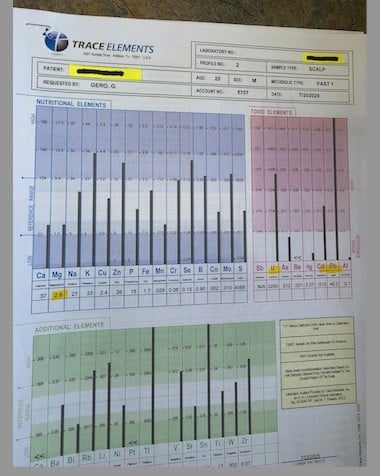
The findings were striking and strongly supported the clinical suspicion of chronic toxic metal exposure. Although hair analysis should not be viewed as a standalone diagnostic tool, the laboratory findings correlated closely with the patient’s occupational history and clinical presentation.
Heavy metals can adversely affect hormone production through multiple mechanisms.
Lead is among the most extensively studied environmental toxicants. Research has demonstrated that lead exposure may impair testicular function, reduce testosterone production, increase oxidative stress and disrupt the hypothalamic-pituitary-gonadal (HPG) axis.
Lead may also interfere with Leydig cell activity within the testes. These specialized cells are responsible for testosterone synthesis. Damage to these cells can result in reduced androgen production and subsequent hormonal imbalance.
Cadmium has been associated with reproductive toxicity in both animal and human studies.
Cadmium exposure may:
Because cadmium accumulates over time, even relatively low levels of chronic exposure may contribute to physiological dysfunction.
Although uranium is most commonly associated with nephrotoxicity, emerging evidence suggests that chronic exposure may also affect endocrine function through oxidative stress, mitochondrial dysfunction and cellular damage.
The combined burden of multiple toxic metals may create additive or synergistic effects that further compromise hormone production and overall health.
Mitch’s symptoms extended far beyond reproductive dysfunction. He also experienced anxiety, fatigue, reduced motivation and mild depressive symptoms. Heavy metals are known to affect neurological function through several mechanisms:
These mechanisms may contribute to many of the neuropsychological symptoms frequently observed in individuals with elevated toxic metal burdens.
Additionally, low testosterone itself can contribute to fatigue, depression, decreased motivation, reduced confidence and diminished quality of life.
The result is often a vicious cycle in which toxic exposure contributes to hormonal dysfunction and hormonal dysfunction further amplifies emotional and physical symptoms.
Several important lessons emerge from this case.
Occupational history remains one of the most underutilized components of clinical assessment.
A detailed environmental history may reveal exposures involving:
In this case, the occupational history provided a critical clue that had been overlooked during multiple previous evaluations.
When a young male presents with severe testosterone deficiency, clinicians should consider potential contributing factors rather than assuming the condition is simply idiopathic.
Potential causes may include:
Identifying and addressing these factors may improve outcomes and potentially reduce reliance on long-term hormone replacement.
Environmental toxicants can influence virtually every physiological system. Hormonal dysfunction, anxiety, fatigue, infertility, cognitive impairment and metabolic disturbances may all have environmental contributors that deserve investigation. As clinicians, we must remain vigilant for exposures that may otherwise go unnoticed.
Following identification of the toxic burden, a comprehensive strategy was implemented to support detoxification pathways, reduce ongoing exposure, improve nutritional status and address endocrine function.
Following identification of the elevated toxic metal burden, a comprehensive naturopathic treatment strategy was implemented with three primary goals:
The patient was educated regarding the likely relationship between occupational exposure and his hormonal dysfunction. Strategies to reduce exposure were discussed, including improved workplace ventilation, use of personal protective equipment, enhanced hygiene practices, avoidance of eating or drinking in contaminated work areas and changing his career.
A significant challenge emerged early in treatment.
Although the patient acknowledged the potential health consequences of his occupation, he was unwilling to discontinue his work as a stained-glass fabricator. The profession represented a substantial source of income and he expressed no interest in changing careers. As a result, treatment was undertaken with the understanding that meaningful reductions in toxic burden would be more difficult to achieve while ongoing exposure continued.
The patient was placed on a comprehensive nutritional and detoxification support program that included antioxidant therapy, mineral repletion, gastrointestinal support and interventions designed to promote biotransformation and elimination of toxic metals. Particular attention was given to supporting glutathione production, reducing oxidative stress, optimizing liver function, supporting gastrointestinal elimination and replenishing nutrients commonly depleted by heavy metal exposure. The patient was also encouraged to maintain adequate hydration, engage in regular exercise and utilize sauna therapy to support detoxification.
Over the ensuing months, the patient reported gradual but noticeable improvements in several areas.
Reported improvements included:
Follow-up laboratory evaluation demonstrated modest improvements in testosterone status, although values remained below what would typically be expected for a healthy male of his age.
Repeat toxic element testing revealed some reduction in heavy metal burden; however, elevated levels persisted. This outcome was not unexpected. The patient’s continued occupational exposure created an ongoing toxic load that effectively competed against the body’s attempts to eliminate accumulated metals.
I explained the situation to the patient using a simple analogy: “Attempting to detoxify while continuing daily exposure is somewhat like trying to fill a colander with water. Some progress can be made, but maintaining gains becomes significantly more difficult when the source of exposure remains active.”
While complete remission was not achieved, the patient experienced clinically meaningful improvements in both symptoms and quality of life. The case underscores an important reality in environmental medicine: reducing or eliminating exposure often represents the most powerful intervention available.
This case highlights the distinction between symptom management and root-cause medicine. The patient’s prior treatment focused primarily on replacing testosterone. While such therapy may be appropriate in selected cases, it did not address the underlying factors contributing to endocrine dysfunction. Identification of significant occupational toxicant exposure provided a plausible mechanism linking the patient’s symptoms, hormonal abnormalities and psychological complaints.
The case also illustrates the limitations clinicians may encounter when environmental exposures cannot be fully eliminated. In such situations, treatment goals may shift from complete resolution to risk reduction, symptom improvement and preservation of function.
Even when the source cannot be entirely removed, identifying the source remains critically important because it allows both patient and practitioner to make informed decisions regarding mitigation strategies and long-term health management. Future follow-up will continue to evaluate changes in symptoms, hormonal markers, toxic metal burden and overall quality of life.
This case highlights the importance of looking beyond symptoms and laboratory values to uncover potential underlying causes of disease. A 25-year-old male with severe testosterone deficiency, gynecomastia, erectile dysfunction, fatigue, anxiety and depression had consulted numerous physicians and received testosterone replacement recommendations. Yet one fundamental question had never been asked.
“What do you do for a living?”
The answer revealed a significant occupational exposure history that ultimately led to the discovery of substantial heavy metal accumulation. Equally important, it revealed a likely explanation for why a healthy young man had developed profound hormonal dysfunction decades before such decline would ordinarily be expected.
While testosterone replacement may alleviate symptoms, clinicians should also investigate why hormonal dysfunction developed in the first place. Environmental toxicants represent an often-overlooked contributor to endocrine imbalance and may be particularly relevant in younger patients presenting with otherwise unexplained hormonal abnormalities. Sometimes the most important diagnostic tool is not an advanced laboratory test. Sometimes it is simply asking the right questions and having enough time to make the correct diagnosis.
 Author Bio:
Glenn B. Gero, ND, DSc, M.E.S., R.H. (AHG), EndoANP is a board-certified naturopath with over 25 years of clinical experience. He holds advanced degrees in nutrition, botanical medicine and business and has completed extensive post-graduate training at Harvard Medical School and the Institute of Lifestyle Medicine. Dr. Gero specializes in environmental medicine, endocrinology, anxiety disorders, metabolic health and chronic disease management. He is the author of The Health Paradox: Why We Struggle to Stay Well and How to Beat the Odds and Stress and Anxiety Unlocked. He practices at Holistic Naturopathic Center in Clifton, New Jersey. www.holisticnaturopath.com
Disclosure: Dr. Gero reports no financial conflicts of interest related to this article.