“The work of the naturopathic physician is to elicit healing by helping the patients to create or recreate conditions for health to exist within them. Health will occur where the conditions for health exist. Disease is the product of conditions which allow for it.”
Jared Zeff, ND[i]
“Disease is primarily nature’s effort to eliminate morbid matter and to restore the normal functions of the body”…“It is the natural and inevitable result of violations of nature’s laws. It is instructive and corrective in purpose, and will remain with us only as long as we need its salutary lessons.”
Henry Lindlahr, MD[ii]
We are told that perspective comes only with experience. Prior to that, there is only theory to hold onto, someone else’s perspective to occupy the place of your own. This is adequate for a time, but soon there is a stirring need for something more. Something deeper. The new clinician desires the confidence and reassurance that is earned by the accumulation of experience and knowledge over time. Without a frame of reference from which to make clinical decisions, the new graduate feels adrift, floating freely in what appears to be a rather intimidating expanse of uncertainty, and a vast quantity of information. I write from my own experience, as well as that of my colleagues and peers, as a student and a recent graduate beginning a both promising and daunting clinical career.
Within the naturopathic profession, this is a matter of paramount concern. Many recently licensed naturopathic doctors report a distinct feeling of “unrootedness.” After being lectured for countless hours on pathology, diagnostics, and therapeutics, the new practitioner is left to his or her own devices, armed with a catalog of natural treatment options, each indicated for a different malady. These tools in hand, we repeat our oath: to rely on the healing power of nature, to treat the whole person, to do no harm, etc. We know the principles of the medicine well enough, as we’ve been seeing them written out in various places for four plus years. Yet, it soon becomes glaringly obvious that something is missing from this equation. Certainly, naturopathic medicine is more than a relatively arbitrary selection of natural treatment options. What is the context within which we will put our medicine into practice? We are lacking education in an applied philosophy or clinical theory to guide our clinical hand. As doctors and healers, we are in need of a coherence of theory and principle to inform our clinical actions.
We, as naturopathic physicians, take pride in our diversity. The scope and breadth of our medicine is deep and wide. So then, what is it that truly unites us, apart from the letters that follow our names? As students, we begin the process of identifying ourselves within the teaching clinics at our colleges. Here, we work under different doctors with different philosophies, each of which practices a different version of naturopathic medicine. Faced with this dizzying reality, the lucky students find a doctor with whom they resonate, and absorb that version as their own. The rest wander from shift to shift, continually varying their method to correspond with each new supervising physician. Is it really possible that a thread of continuity does not exist with each doctor, across the profession, outside of his or her enthusiasm for natural therapeutics?
Here we should consider the deceptively simple question of how we define ourselves as naturopathic physicians. There is the tendency, both inside and outside of the profession, to identify naturopathic physicians as alternative medical doctors and complementary healers. I certainly am not alone in my unwillingness to accept such a designation. I did not enter into four years of medical training to be alternative to anything. I chose this profession because I felt deeply in my core that this medicine was the highest manifestation of a health care and healing practices discipline that exists. In the autumn of 1989, the AANP adopted its first official definition of our medicine. It identified naturopathic medicine as “a distinct system of primary care – an art, science, philosophy and practice of diagnosis, treatment and prevention of illness” which is “distinguished by the principles upon which its practice is based.”[iii] These principles are the very statements that make up our oath. The question that remains is how, if at all, do these principles inform our clinical practice?
To this day, anyone interested in a written account of naturopathic philosophy is directed to Nature Cure, the seminal text by Henry Lindlahr that first gave concise voice to our medicine (with the wonders of modern technology, the entire book is freely available online in electronic form). As we approach the centennial anniversary of its publication, the contents are startlingly applicable to modern naturopathic medicine. In an age when it is so easy to be wooed and wowed by the latest and greatest in nutraceutical therapy, let us regain a frame of historical reference. Lindlahr identified the highest methods of cure as those which:
- Establish normal surroundings and natural habits of life in accord with Nature’s laws.
- Economize vital force.
- Build up the blood on a natural basis, that is, supply the blood with its natural constituents in right proportions.
- Promote the elimination of waste matter and poisons without in any way injuring the human body.
- Arouse the individual in the highest possible degree to the consciousness of personal accountability and the necessity of intelligent personal effort and self-help.ii
So many years later, these edicts continue to provide an appropriate framework in determining a truly naturopathic approach.
To help guide our clinical hand further, we can rely on The Therapeutic Order, as described by Drs. Zeff, Snider, & Myers. It is here, for the first time, that we have direct modern instruction in how to appropriately make use of our immense chest of naturopathic treatment options. The authors describe the critical issue and address it head on. They affirm that, “the value of naturopathic medicine in our culture is not that naturopathic physicians can function almost like medical doctors, with a ‘natural’ formulary instead of drugs. It is that they offer a fundamentally different approach, one based on the restoration of health rather than the treatment of pathology.”[iv] From here, they proceed to illustrate a clear and logical approach to that highest aspiration of healing and cure, while simultaneously elucidating a clinically applicable naturopathic philosophy:
Address acute concerns
- Establish the conditions for health
- Identify and remove disturbing factors
- Institute a more healthful regimen
- Stimulate the healing power of nature (vis medicatrix naturae)
- Address weakened or damaged systems or organs
- Correct structural integrity
- Address pathology using specific natural substances
- Address pathology using specific pharmacologic or synthetic substances
- Suppress or surgically remove pathology
Finally, now, by applying this model to help prioritize therapeutic approaches befitting each unique patient, we begin to feel grounded, rooted, in the establishment of a clinical context – to treat disease (and people) by restoring health. This instruction informs what it truly means to be a naturopathic physician, clearly identifying the profession by supplying a foundational platform from which to practice.
It is from these initial stages of professional development that the current Foundations of Naturopathic Medicine textbook project has been born. This is a tremendous project – epic in nature, slow and steady in manifestation. With well over two hundred authors, it is the solution for how to finally converge the many philosophical perspectives within the profession, and bring a common thread to the diversity of naturopathic medicine. It is the fulfillment of a widespread need and desire for a mutual point of reference from which the entire profession can proceed. From this stake in the ground, I believe the profession can grow. We will continue to evolve by engaging in the respectful proposal and publication of diverse views of modern clinical and scientific applications with roots in traditional naturopathic concepts. Playing a small role in this project has opened my eyes to the potentially tremendous benefit of its application. Making use of this text, I imagine how a consistent immersion of applied clinical philosophy and theory running through the entirety of academic training will lend itself to a deepening of self-understanding and self-identification among new practitioners. This is the common coherence that we all so desperately need. There is strength in our diversity, but not until we all speak a common language will our profession be fully recognized by the larger medical community. This consistency of thought will help us to rigorously communicate our diversity to each other in clinically and scientifically useful ways. Most importantly, it is this common language that will allow each individual practitioner to proceed with a confidently guided hand, best able to manifest the full potency of our medicine.
For more information regarding the Foundations of Naturopathic Medicine Project, contact Pamela Snider, ND at foundationsproject@comcast.net or visit www.foundationsproject.com. At NCNM, the FNM Project’s academic home, contact Susan Hunter, at shunter@ncnm.edu or visit www.ncnm.edu.
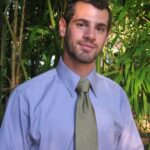 Dr. Craig Fasullo was born in a small town outside of New York City. He attended Cornell University, followed by an intensive botanical medicine program with a renowned herbalist in Ithaca, NY. He is a graduate of NCNM and recently completed a one-year residency with Dr. Jared Zeff. He is passionate about maintaining the strong roots of naturopathic medicine and is a supporting author of the Foundations of Naturopathic Medicine textbook.
References
[i] Zeff, J. (1997). The Process of Healing: A Unifying Theory of Naturopathic Medicine. Journal of Naturopathic Medicine, 7, 122-125.
[ii] Lindlahr, H. (1914). Nature Cure: Philosophy & Practice Based on the
Unity of Disease & Cure. Chicago, IL: Nature Cure Publishing.
[iii] American Association of Naturopathic Physicians. (1989). AANP Definition of Naturopathic Medicine Position Paper. Rippling River, OR.
[iv] Zeff, J, Snider, P & Myers, SP. (2006). A Hierarchy of Healing: The Therapeutic Order, in J Pizzorno & MT Murray, Textbook of Natural Medicine: volume 1, 3rd ed. St Louis, MO: Elsevier.