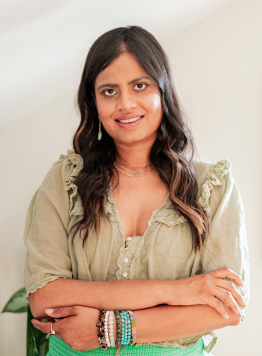

A...
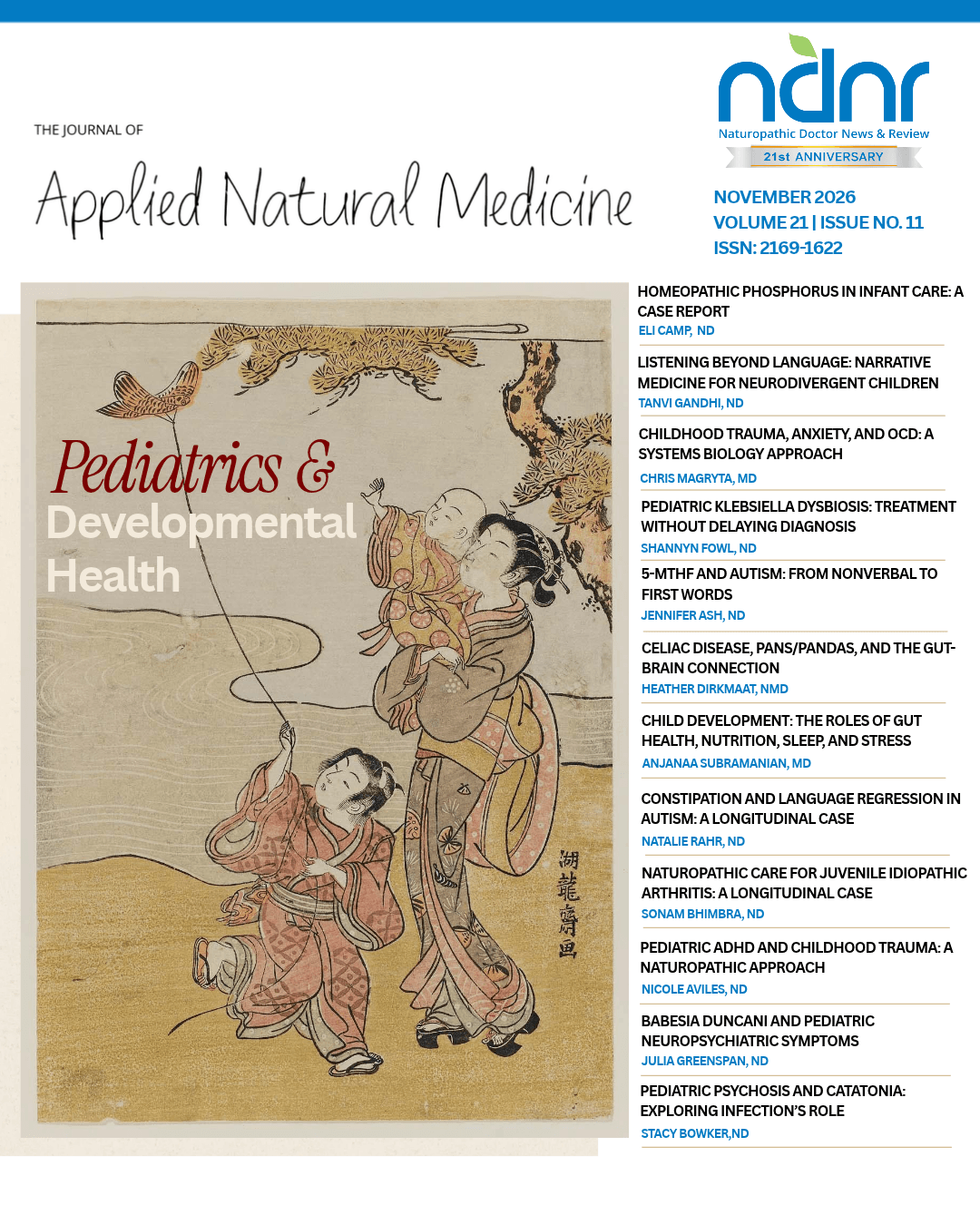
Chemotherapy-Induced Peripheral Neuropathy: An Evidence-Based Guide for Naturopathic Physicians
read more
A neurodiversity-affirming case explores how storytelling, metaphor, sensory awareness, and caregiver co-regulation can help children with autism and ADHD communicate emotions, navigate overwhelm, and develop a stronger sense of agency.
Neurodivergent children often enter clinical and educational settings with narratives already attached to them: inattentive, dysregulated, oppositional, anxious, rigid, delayed, or difficult to reach. Such descriptors may capture observable behavior, but they rarely convey lived experience. A child who leaves the group circle may be seeking sensory relief. A child who refuses to answer may be protected against shame, auditory overload, or performance pressure. A child who speaks primarily about foxes, storms, trains, maps, or imaginary worlds may be offering the clinician a doorway into meaning. Narrative medicine provides a different point of entry. Rather than beginning with the deficit label, it asks what the child is communicating, what conditions support nervous-system safety, and what strengths, metaphors, images, interests, and relationships are already present. This case study describes a neurodiversity-affirming narrative medicine group for children with autism, ADHD, sensory processing differences, and related developmental profiles. The model integrates storytelling, image-based prompts, poetry, drawing, close reading, caregiver reflection, and nervous-system-informed facilitation to support verbal and nonverbal expression.
For naturopathic and integrative clinicians, this approach is relevant because it situates developmental and behavioral concerns within the context of the whole child. Sleep, nutrition, sensory load, family stress, school fit, environmental exposures, trauma history, gut health, immune burden, and the child’s developing sense of self may all influence presentation. Narrative medicine does not replace diagnostic assessment, occupational therapy, speech-language support, counseling, educational accommodations, or medical care. It adds disciplined practice of listening to metaphor, gestures, silence, repetition, caregiver language, body cues, and the child’s preferred symbols of safety and distress.
“M” is a de-identified composite case drawn from recurring clinical and educational patterns observed in neurodivergent children participating in narrative-based group work. Identifying details have been altered to protect privacy while preserving clinically relevant themes. M is presented as an 11-year-old prepubescent boy with autistic and ADHD features, sensory sensitivity, school-related anxiety, and difficulty describing internal states. Caregivers reported that M often shut down during direct questioning but became animated when discussing animals, weather, maps, and imagined worlds. M’s school day included predictable points of distress: cafeteria noise, classroom transitions, unexpected schedule changes, and group activities requiring stillness while processing verbal instructions. At home, M could speak with sophistication about animal habitats and weather systems; however, when asked, “How was school?” he often responded with silence, tears, or “I don’t know.”
In group settings, M initially avoided eye contact, spoke in short phrases, and frequently moved away from the circle when auditory stimulation increased. Previous attempts to encourage participation through direct questioning had increased withdrawal. The clinical task was therefore not to produce neurotypical participation, but to create a therapeutic container in which M could communicate through preferred expressive modes. The working hypothesis was that narrative, metaphor, and sensory-aware choice could support sufficient safety for M to communicate affective and relational experience indirectly before doing so directly.
Narrative medicine is commonly associated with close reading, reflective writing, and bearing witness to illness experience. In pediatric developmental care, these tools can be adapted beyond conventional writing. For neurodivergent children, narrative may emerge through drawing, movement, metaphor, repeated interests, sensory description, co-created stories, or caregiver-supported reflection. This approach aligns strengths-based, neurodiversity-affirming care by helping the child be understood as more than a diagnosis, behavior plan, or symptom checklist. Recent pediatric narrative medicine work has emphasized movement from fragmented to holistic care, from transactional encounters to relational connection, and from isolated care to community-based understanding.1 These shifts are especially important for children whose communication is often misunderstood or reduced to compliance.
The intervention was designed to support voice, agency, emotional literacy, and connection while avoiding coercive demands for disclosure, eye contact, stillness, or “correct” participation.
Narrative therapy literature in ADHD also cautions that diagnostic labels can be both useful and limiting. A label may provide access to services and reduce blame, yet it can also become a story of incapacity. Narrative approaches externalize the problem, identify moments of competence, and invite the child and family to co-author a “health-side” story centered on strengths, values, relationships, and agency.2 For M, the goal was not to erase neurodivergence, but to create language that allowed sensory experience, anxiety, and competence to coexist.
The group met weekly and began with predictable rituals: a visual schedule, a brief grounding exercise, a choice-based check-in, and an invitation to select writing or art materials. Children were not required to speak first. Each session included a short poem, picture book excerpt, artwork, nature image, or sensory object as a shared prompt. Participants could respond by writing, drawing, dictating to a caregiver, selecting images, building a symbolic scene, moving to a designated sensory area, or listening. Facilitators modeled curiosity rather than interpretation, using prompts such as, “What does this character need?” “Where does the story feel loud or quiet?” “If this feeling had a color or weather pattern, what would it be?” and “Where would this character go to feel safe?”
A typical 45-minute session followed a consistent arc: arrival and sensory settling; opening ritual; shared text or image; individual response through writing, drawing, dictation, movement, or symbolic play; optional sharing; caregiver reflection; and closing ritual. The group culture emphasized consent and choice. Passing was allowed. Drawing counted as writing. Silence counted as participation. A child could speak through a caregiver, an object, a character, or an image. This structure reduced performance pressure while preserving the clinical elements of narrative medicine: attention, representation, affiliation, and reflection.
The facilitation model was informed by nervous-system regulation principles and the clinical observation that children communicate more fully when they experience felt safety. Autonomic state influences attention, social engagement, language access, and tolerance of uncertainty. For M, support included movement, headphones, a quiet corner, visual choices, and permission to participate from the edge of the group. Grounding practices included paced breathing, orienting to the room, noticing sensory details, gentle hand pressure, and naming a preferred animal or place of safety. These practices were framed not as compliance tools, but as invitations to help the body prepare for connection.4
Sensory-aware facilitation also changed how behavior was interpreted. Leaving the circle was treated as information, not defiance. Repetition was understood as regulation and meaning-making, not perseveration alone. A special interest became a bridge rather than a barrier. Caregivers were coached to notice body cues before asking for verbal explanation. This allowed the group to remain clinically structured without becoming behaviorally coercive.
“The clinical question shifts from ‘How do we stop this behavior?’ to ‘What story is the body telling, and what conditions help the child feel safe enough to author the next chapter?’”
Polyvagal theory provides an additional framework for understanding fluctuations in narrative access among neurodivergent children. The model describes autonomic states associated with safety, mobilization, and shutdown, each of which can influence attention, social engagement, prosody, listening, facial expression, and language availability. When ventral vagal pathways support felt safety, the child is more likely to show curiosity, play, reciprocity, and flexible communication. During sympathetic mobilization, the child may appear restless, reactive, avoidant, or controlling. During dorsal vagal shutdown, the child may become quiet, compliant, disconnected, fatigued, or unable to retrieve words. These patterns are best understood as adaptive responses to perceived safety or threat, not as characterological resistance.5,6
Neuroception—the nervous system’s largely unconscious detection of safety, danger, or life threat is especially relevant for children with autism, ADHD, sensory processing differences, trauma histories, or chronic school stress. Sound, light, odor, proximity, facial expression, uncertainty, transitions, interoceptive discomfort, or prior relational experiences may shape whether an environment is experienced as safe. Thus, narrative medicine begins before the prompt itself. Clinician tone, pacing, posture, predictability, sensory conditions, and respect for refusal all contribute to the therapeutic field.
Coregulation translates this framework into practice. Children develop self-regulatory capacity through repeated experiences with attuned adults and peers, including regulated voice prosody, predictable rhythm, shared attention, and respectful proximity. In the group, facilitators supported coregulation by slowing language, reducing demand, offering choices, mirroring the child’s metaphor without taking it over, and remaining steady when a child moved away, repeated a phrase, or declined to speak. Caregivers practiced serving as “safe anchors” rather than interrogators, using the child’s symbolic language to support connection: “Do you need a cave, a bridge, or a quiet tree?”
A polyvagal-informed lens also helps clinicians avoid mislabeling dysregulation as noncompliance. Leaving the circle may reflect mobilization away from threat; silence may reflect conservation in shutdown; repetition of a preferred topic may provide predictability and autonomic organization. The clinical goal is not immediate return to task, but restoration of cues of safety. In narrative medicine, this may include side-by-side drawing, a visual choice board, a sensory break, a co-authored sentence, or permission for a character to speak first.
For M, the fox story functioned as both narrative expression and autonomic map. The fox who could “hear electricity” represented heightened sensory detection and the protective wisdom of seeking refuge before overwhelm became collapse. Caves, bridges, quiet trees, and weather systems became shared coregulatory language. This allowed adults to track state without requiring direct emotional labeling and allowed M to request support without shame.
In the initial sessions, M drew maps of imaginary islands and declined to share aloud. Facilitators treated the maps as narrative material rather than avoidance. When asked what helped the island remain safe during storms, M added caves, bridges, and “quiet trees.” These images gradually became a language for school-related overwhelm: storms represented cafeteria noise, broken bridges represented transitions, flooded paths represented substitute teachers, and quiet trees represented adults who permitted sensory distance. By the fourth session, M dictated a brief story about “a fox who could hear electricity” and described the fox as brave because it knew when to hide and when to ask for help.
Caregiver language shifted in parallel. Rather than asking M to explain feelings directly, the caregiver used story-based prompts such as, “Is this a fox moment?” “Do you need a cave or a bridge?” and “Is the storm outside you, inside you, or both?” These prompts allowed M to communicate distress without the added demand of naming an emotion. The narrative language became portable across settings, moving from group to home and later to school consultation, where staff could better anticipate sensory and transition-related stressors.
Observed outcomes were qualitative. M increased voluntary participation, tolerated brief shared attention around poems and images, and used metaphor to describe sensory overload. Caregivers reported that “weather map” language supported more precise questions at home, such as, “is this a drizzle, thunder, or lightning feeling?” M also showed greater flexibility in self-description, shifting from “I am bad at groups” to “I need a quiet bridge before I talk.” Sensory sensitivity and anxiety persisted, but the explanatory frame changed: M was not the problem; the storm, broken bridge, and too-loud room became conditions to understand and navigate.
These observations align with literature suggesting that narrative-based approaches can help children externalize problems, identify strengths, and build meaning around diagnosis and difference.2 Narrative intervention research in autistic children also supports attention to oral narration, story structure, listening comprehension, and visual strategies for communication and academic participation.3 In this case, therapeutic value did not depend on polished writing, but on a safer symbolic language for experience.
Limitations include the composite nature of the case, the absence of standardized measures, and reliance on caregiver report, facilitator observation, and participation changes. The case is intended for clinical reflection and privacy protection rather than proof of efficacy. Future work could pair narrative medicine groups with pre- and post-measures of emotional vocabulary, caregiver-child communication, school participation, sensory self-advocacy, and quality of life. Even so, case-based observation can illuminate mechanisms of care that may be missed by symptom checklists.
For naturopathic and integrative clinicians, this case underscores the importance of whole-child care, including sensory environment, nervous-system regulation, caregiver attunement, developmental stage, sleep, nutrition, school stress, family systems, and the child’s own meaning-making. Narrative medicine can complement clinical care by helping practitioners listen for the child’s preferred language of distress and resilience. In practice, this may mean asking a child to draw the stomachache, map the school day, choose a weather pattern for anxiety, write a letter from the worried part, or create a story in which a character discovers what helps. The clinical question shifts from “How do we stop this behavior?” to “What story is the body telling, and what conditions help the child feel safe enough to author the next chapter?”
In this way, narrative medicine becomes more than an expressive arts activity. It becomes a clinical stance that recognizes behavior as communication, protects dignity, and invites the child into authorship. For neurodivergent children, whose stories are too often dominated by deficits, the opportunity to name the storm, build the bridge, and choose the next scene may itself be therapeutic.