Vitamin C Treatment For Septic Shock

Naturopathic News

Septic shock is one of the main causes of death in critically ill patients following infections. Septic shock causes refractory hypotension, where the treatment is often fluid resuscitation and catecholamine vasopressors. Exogenous norepinephrine given as treatment is processed by the copper-containing enzymes dopamine B-hydroxylase and peptidyglycine a-amidating monooxygenase. Both of these enzymes require ascobate, or vitamin C, as a cofactor. Due to this, patients in septic shock often present with hypovitaminosis C. To date studies have shown that treatment with high-dose ascorbate decreases pro-inflammatory biomarkers and improves haemodynamic markers.

In healthy individuals, levels of ascorbate are usually around 50-70 umol/l. Levels <23 umol/l are considered to be deficient or hypovitaminosis C, where as <11 umol/l would be considered severely deficient. Past research has shown that ascorbate levels are severely deficient in critically ill patients, as in the case with sepsis. A recent study examined the effects of intravenous ascorbate in patients suffering from severe sepsis. Intravenous infusions of ascorbate of 0, 50, or 200 mg/kg/24hr were administered. The results showed rapid reductions in pro-inflammatory biomarkers C-reactive protein and procalcitonin. Furthermore, no adverse effects were found in this trial. These findings are important as these treatments of intravenous ascorbate could eliminate or minimize the need for exogenously administered vasopressors.

http://www.ncbi.nlm.nih.gov/pmc/articles/PMC4661979/

Razi Ann Berry
Author: Razi Ann Berry

Current Issue

NDNR Spring 2026 of July issue

Table of Contents

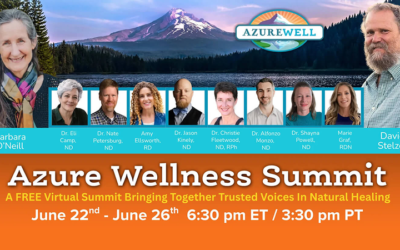
The 2026 AzureWellness Summit

The 2026 AzureWellness Summit

Building a Community of Practitioners to Inspire Healthier Families  June 22–26 Five Day Virtual Event of Education, Insight, and Whole-Person Wellness AzureWell is pleased to announce the Azure Wellness Summit, a free five-day virtual event taking place June 22–26,...

Trending Articles

Restorative Formulations Launches the NeuroSynergy Clinical Series

Restorative Formulations Launches the NeuroSynergy Clinical Series

Four professional-grade formulas targeting distinct neurochemical pathways to support  mood, stress resilience, and cognitive function are now available exclusively to licensed  practitioners.  Montpelier, VT, March 27, 2026 — Restorative Formulations has released the...

Allergy Research News Release

Allergy Research News Release

RAZI BERRY Allergy Research Group Announces Peer-Reviewed Publication Advancing Thyroid and Endocrine Integration Science Collaborative research led by ARG’s Medical Affairs and Scientific Advisory Board reinforces the company’s commitment to thyroid category...

Custom Publishing

Quantum Energy Effects on Cell Recovery Rates

Quantum Energy Effects on Cell Recovery Rates

Author: Robert Sheaff, PhD, and Ian Mitchell Abstract This study investigated whether quantum field exposure generated by Leela Quantum Bloc Technology influences cell recovery rates in human cell lines. A series of double-blind experiments were conducted using Human...

Featured News

The 2026 AzureWellness Summit

The 2026 AzureWellness Summit

Building a Community of Practitioners to Inspire Healthier Families  June 22–26 Five Day Virtual Event of Education, Insight, and Whole-Person Wellness AzureWell is pleased to announce the Azure Wellness Summit, a free five-day virtual event taking place June 22–26,...