

A...
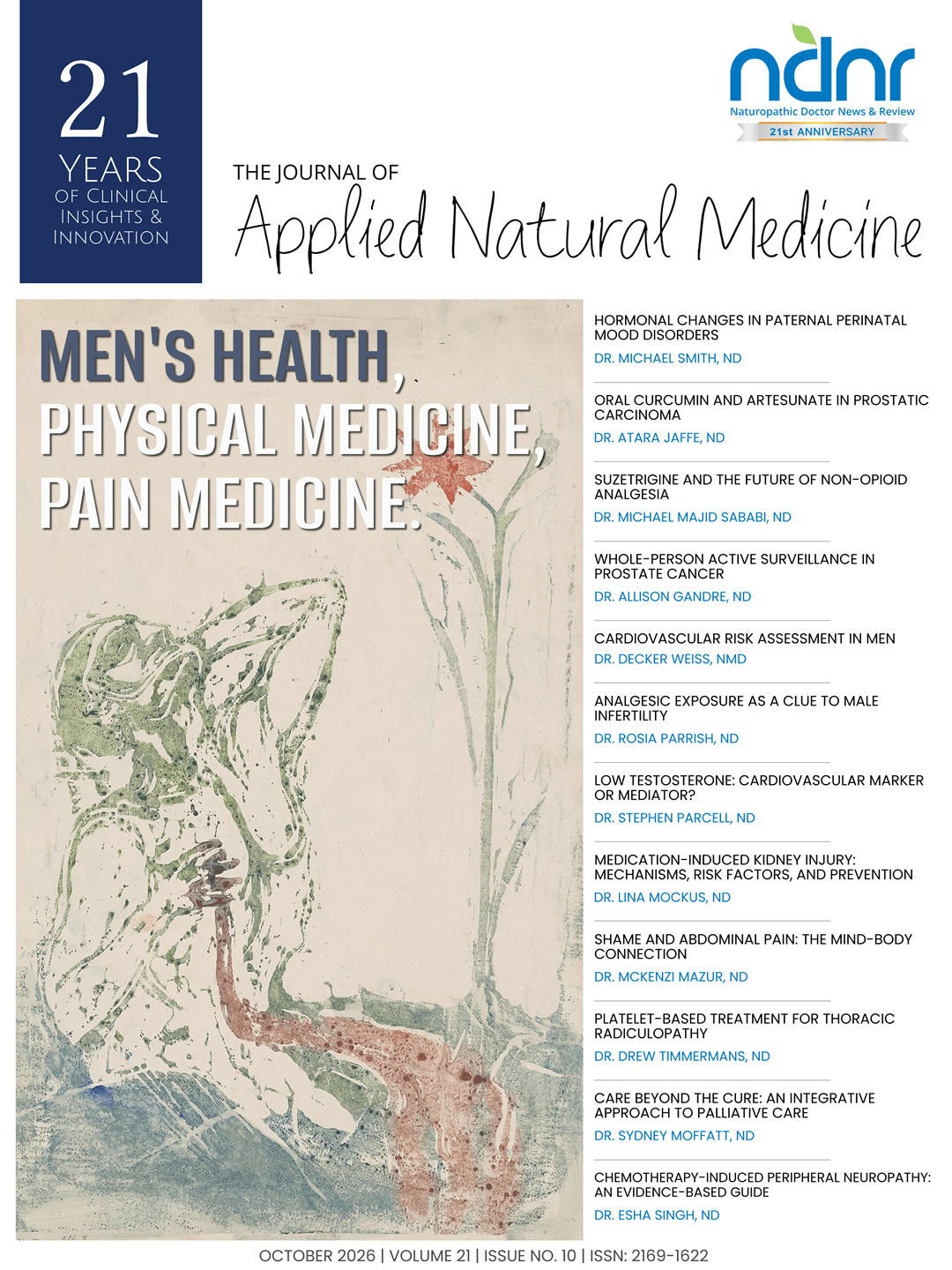
Chemotherapy-Induced Peripheral Neuropathy: An Evidence-Based Guide for Naturopathic Physicians
read more

At doses that are low enough for most people not to experience a “high,” the psychoactive compound in marijuana, tetrahydrocannabinol (THC), was shown to cause significant relaxation and anxiolytic effects.1 There is a cultural stigma surrounding marijuana, that the drug creates a state of calmness when used, and many people use the drug to “relieve stress,” however, many users may actually be creating a state of anxiousness and perpetuating their stress cycle. This study uncovers the dose dependent nature of THC on anxiety.
Researchers at the University of Illinois at Chicago and the University of Chicago studied the effects of THC on anxiety with 42 healthy participants. All participants had some experience with marijuana use, but were not daily users. Participants were separated into 3 groups: a low-dose group receiving 7.5 mg of THC; a moderate group receiving 12.5 mg THC; a control group receiving a placebo with no THC. These doses of THC are the equivalent to only a couple of puffs of a cannabis cigarette.
Participants were studied at 2 separate 4-hour sessions, which were separated by 5 days in between. The THC pill was given, and then participants were asked to relax for 2 hours while the THC absorbed into the bloodstream. The participants then were asked to spend time preparing for a mock job interview, and then were subjected to a job interview. After the job interview they were asked to count backwards from a 5-digit number by subtracting 13, for 5 minutes – a reliably stress-inducing task. At the second session, participants were asked to talk to lab assistance about a favorite book or movie for 5 minutes, and then play solitaire for 5 minutes. Before, during and after each activity, stress level was subjectively rated, and blood pressure, heart rate and cortisol were measured.
Participants who took the 7.5 mg of THC reported less stress after the psychosocial testing than did the other 2 groups, and their stress relieved faster after the test. The 12.5 mg group reported more negative mood effects before and throughout all tasks, and more often rated the psychosocial task as “challenging” or “threatening.” The 12.5 mg group also had more pauses during the mock interview compared to the other 2 groups. There were no significant differences in metabolic markers for any of the groups.
These findings help explain the commonly found phenomenon that cannabis can both ease stress and anxiety, and promote it.
 Node Smith, associate editor for NDNR, is a fifth year naturopathic medical student at NUNM, where he has been instrumental in maintaining a firm connection to the philosophy and heritage of naturopathic medicine amongst the next generation of docs. He helped found the first multi-generational experiential retreat, which brings elders, alumni, and students together for a weekend campout where naturopathic medicine and medical philosophy are experienced in nature. Three years ago he helped found the non-profit, Association for Naturopathic ReVitalization (ANR), for which he serves as the board chairman. ANR has a mission to inspire health practitioners to embody the naturopathic principles through experiential education. Node also has a firm belief that the next era of naturopathic medicine will see a resurgence of in-patient facilities which use fasting, earthing, hydrotherapy and homeopathy to bring people back from chronic diseases of modern living; he is involved in numerous conversations and projects to bring about this vision.