

A...
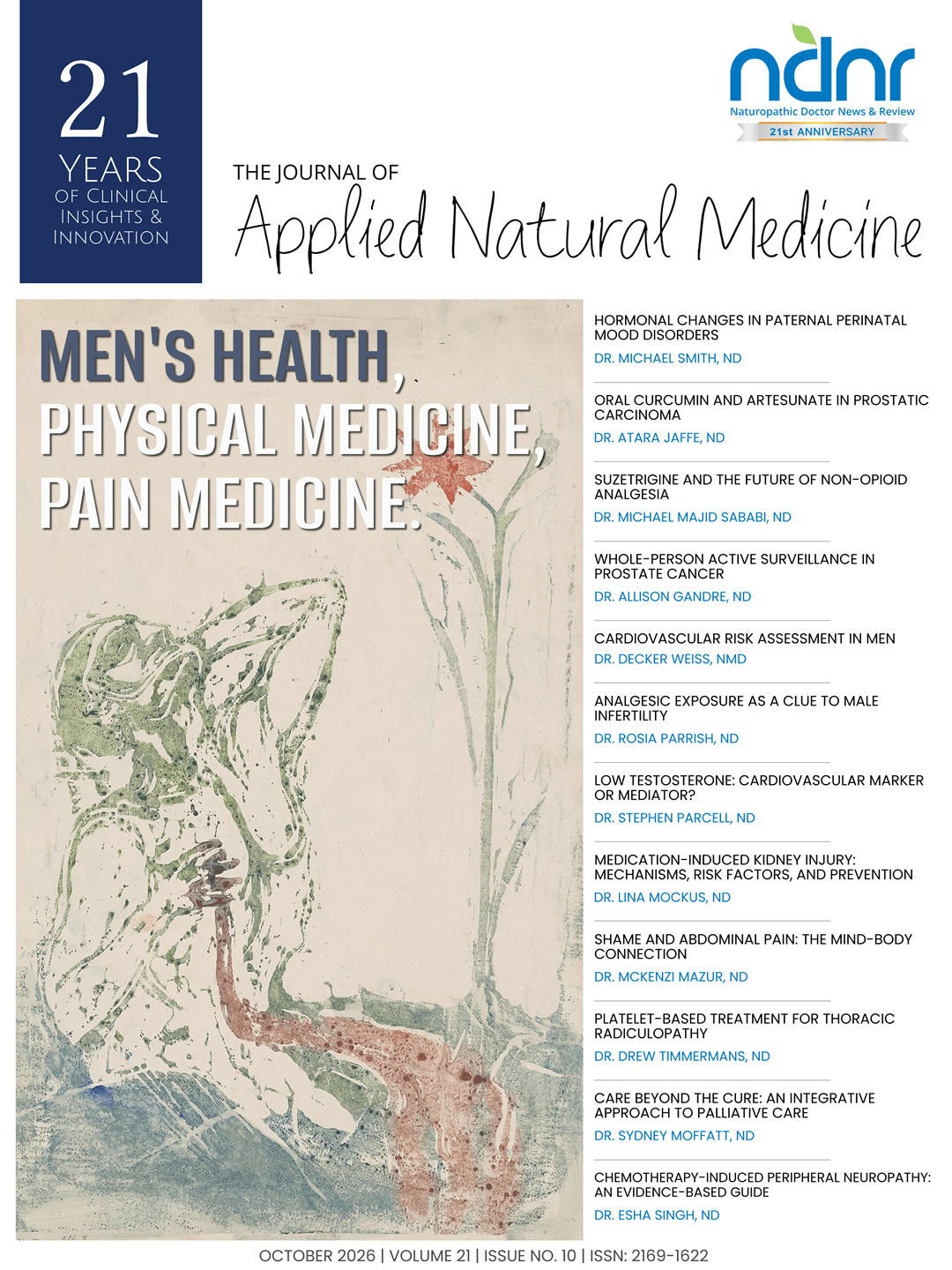
Chemotherapy-Induced Peripheral Neuropathy: An Evidence-Based Guide for Naturopathic Physicians
read more
A team of researchers from Beth Israel Deaconess Medical Center (BIDMC) identified a neuro-pathway by which the brain regulates hunger, and influences inclination to act on environmental cues to seek out food, and how this changes depending on physiological hunger or satiation state.1 It is well documented that many environmental cues influence perceived hunger, but the specific brain regions have not been implicated. The current research here, has been conducted using a mouse model, so the human correlation is still debatable, though it points us in a direction. The hope is that these findings could lead to targeted therapies that lower food cue-evoked cravings in obese patients.
Brain imaging studies are indicating that the insular cortex plays a key role in dictating whether a food source is worth pursuing or not. Insular cortex activity increases in response to food cues, but only when a subject is hungry, but not following a meal. Studies further suggest that this pathway goes awry in patients with obesity and other eating disorders. These findings indicate that dysfunctional eating patterns, addictions, and disorders are likely due to altered brain activity, not a lack of discipline.
In this murine study, researchers looked at the response of the insular cortex in alive, and awake mice, as they responded to food cues while both satiated (after meals) and in hungry states. The experiments showed that visual stimuli which were normally correlated with food (food cues) specifically activated a group of neurons located in the insular cortex in hungry mice, and that this activity was required for mice to respond behaviorally to the cues. After satiation, these regions did not show any activity, and behavior was not influenced by the cues. However, when certain genes were ‘turned on’ in the hypothalamus (neurons that express Agouti-related protein; AGRP) restored feeding behaviours in sated mice. Activating the AgRP neurons also lead to restored visual cue responses within the insular cortex.
This seems to indicate that the AgRP neurons do ‘cause hunger.’ Based on this research it seems likely that researchers will be able to decrease the pathway from AgRP neurons to the insular cortex, whereby reducing food cue attention. This could lead to a reduced impact of food related environmental cues without changing conscious mealtime eating.
Source
 Node Smith, associate editor for NDNR, is a fifth year naturopathic medical student at NUNM, where he has been instrumental in maintaining a firm connection to the philosophy and heritage of naturopathic medicine amongst the next generation of docs. He helped found the first multi-generational experiential retreat, which brings elders, alumni, and students together for a weekend campout where naturopathic medicine and medical philosophy are experienced in nature. Three years ago he helped found the non-profit, Association for Naturopathic ReVitalization (ANR), for which he serves as the board chairman. ANR has a mission to inspire health practitioners to embody the naturopathic principles through experiential education. Node also has a firm belief that the next era of naturopathic medicine will see a resurgence of in-patient facilities which use fasting, earthing, hydrotherapy and homeopathy to bring people back from chronic diseases of modern living; he is involved in numerous conversations and projects to bring about this vision.