

A...
Chemotherapy-Induced Peripheral Neuropathy: An Evidence-Based Guide for Naturopathic Physicians
read more

An eight-year-old’s worsening attention, anxiety, and insomnia following exposure to community violence highlights the importance of recognizing adverse childhood experiences and addressing nutrition, sleep, and stress through individualized naturopathic care.
Early childhood is a formative period for cognitive, emotional, social, and physical development. During this period, neurodevelopment is particularly vulnerable to the environment in which children live. According to the Neurosequential Model of Therapeutics, neurodevelopment occurs hierarchically 1; regions required for immediate survival, such as the brainstem, are prioritized, while more dispensable regions, such as those involved in higher executive functioning (emotional and behavioral regulation), require longer periods to develop fully. Interactions with caregivers, peers, authority figures, and the broader community throughout childhood therefore support the development of these higher-order functions, such as emotional and behavioral regulation and the capacity to adapt to stress.
Adverse childhood experiences, or ACEs, refers to the potential traumatic life events experienced in childhood that may influence health across the lifespan. The landmark ACE study conducted by Kaiser Permanente and the Centers for Disease Control & Prevention demonstrated associations between cumulative adverse childhood experiences and risk factors for several leading causes of death (smoking, obesity, physical inactivity, depressed mood, suicide attempt), as well as adult disease (ischemic heart disease, cancer, chronic lung disease, skeletal fractures, and liver disease).2 Additionally, the study identified 3 major categories of adversity: abuse (psychological, physical, and/or sexual), neglect (psychological and/or physical), and/or household dysfunctions (domestic violence, substance use, mental illness, parental separation or loss, and/or incarceration). Expanded public health research has since recognized community and external violence, including bullying, community violence, and collective violence such as systemic oppression or war, as an additional category.3
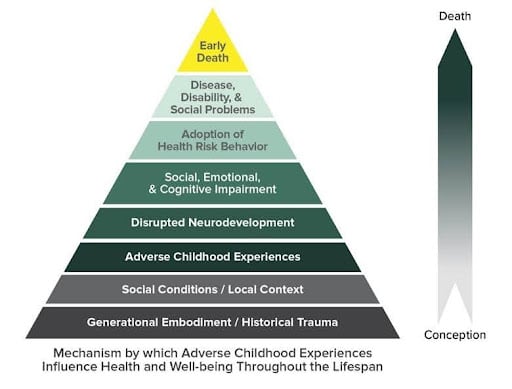
Image 1.
Center for Disease Control & Prevention. About the CDC-Kaiser ACE Study. CDC Web site. https://www.cdc.gov/violenceprevention/aces/about.html. Accessed October, 02, 2026.
Despite its limitations, the ACE study offered data-supported insight into the relationship between adversities experienced in childhood and both emotional and physical health outcomes manifested into adulthood. Albeit with mixed results, subsequent research has grown to examine the impact of specific ACEs on early developmental health outcomes, including relationships between household dysfunction and anxiety, material hardship and depression, and childhood exposure to violence and hypothalamic-pituitary-adrenal (HPA) axis dysfunction.4-6 Early-life “toxic stress,” particularly in the absence of supportive relationships, has also been proposed to interfere with the development of neural connections necessary for healthy brain architecture.7
The relationship between childhood adversity and neurodevelopmental health is particularly relevant in children presenting with symptoms of ADHD. ADHD and anxiety often coexist, and anxiety-related hyperarousal, sleep disturbance, and concentration difficulty may complicate the clinical presentation of ADHD. Changes in executive functioning should therefore not be attributed solely to ADHD; new or ongoing environmental stressors may contribute to symptom exacerbation and recognition of this influence is an important component of a comprehensive pediatric assessment. This case illustrates the potential value of a trauma-informed approach to managing symptoms associated with pediatric ADHD and anxiety.
An 8-year-old male presented to my office with his mother seeking naturopathic management of symptoms of a pre-existing diagnosis of ADHD. At the time of his diagnosis at age 4, he was exhibiting hyperactive and impulsive behaviors, including fighting with his peers and siblings.
Behavior therapy, or parent/caregiver training in behavior management (PTBM), and psychosocial therapy were initiated. Despite therapy, his symptoms persisted but had remained relatively well managed until recently, when they began impacting his academic performance.
At the same time, he developed new difficulty initiating and maintaining sleep, accompanied by anxiety that was most pronounced at night, when meeting new people, and when family members left the home. His mother described him during pregnancy as a “busy-body.” He was born full-term, breastfed, and had otherwise been healthy and developmentally well. Although his mother reported high caffeine intake during pregnancy, there was no reported prenatal exposure to tobacco, drugs, or alcohol. His history was also negative for perinatal complications, central nervous system or recurring infections, head trauma, or medication exposure. No other family member had been diagnosed with ADHD.
His diet consisted primarily of simple carbohydrates and highly processed foods, and physical activity was minimal. Recently, he had been prescribed a non-stimulant medication by his primary pediatrician to manage his worsening symptoms but did not yet initiate. He was supplementing a popular children’s multivitamin inconsistently.
Further discussion of his psychosocial history revealed recent community violence committed against a loved one. The temporal relationship between this event and the subsequent onset of anxiety, sleep disturbance, and worsening concentration raised concern that the experience may have been contributing to his current clinical presentation.
Upon physical examination, he appeared overweight and calculated BMI was elevated. Vital signs were within normal range. Neurologic examination, including vision and hearing assessment, and coordination, was normal. In-office he was enthusiastic, and cooperative, but often disruptive and loquacious.
While deferred at the time, initial laboratory testing that may help guide management includes CBC, ferritin, RBC Zinc, TSH, vitamin B12, 25-OH vitamin D, and random or fasting serum glucose. A sleep study, comprehensive digestive stool analysis (CDSA), & evaluation for food sensitivities could also be considered if clinically indicated.
Management goals established with the patient and his mother included reducing core ADHD symptoms, addressing comorbid anxiety and insomnia, improving academic success and behavior at home, and, at his mother’s request, minimizing his need for the newly prescribed non-stimulant medication.
With consideration of the Therapeutic Order of Naturopathic Medicine, interventions were selected to establish a stronger foundation for optimal health and to support neurodevelopment by addressing nutritional adequacy, sleep quality, and stress management.
“Changes in executive functioning should therefore not be attributed solely to ADHD; new or ongoing environmental stressors may contribute to symptom exacerbation.”
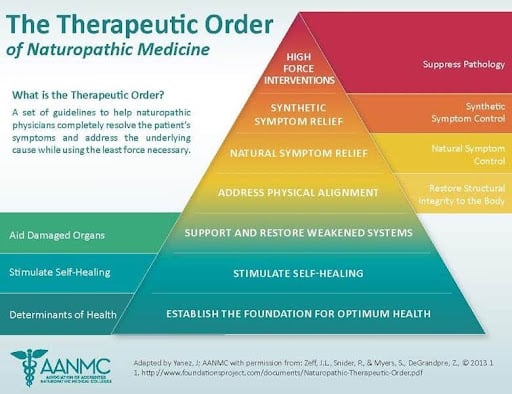
Image 2.
AANMC. The Therapeutic Order. AANMC Web site. https://aanmc.org/featured-articles/therapeutic-order/. Accessed October 02, 2026
Dietary intervention focused on incorporating more omega-3-rich foods and exploring more nutrient-dense snack options. Additionally, an omega-3 supplement containing phosphatidylserine was recommended. Research indicates that omega-3 supplementation, particularly of EPA, improves cognitive function in adolescents with ADHD, especially if baseline endogenous levels are low or deficient.8 Phosphatodylserine (PS), a glycerophospholipid and key structural component of cell membranes, is particularly abundant in the brain and nervous system and often touted for its cognitive health benefits. While PS has shown limited efficacy in decreasing core ADHD symptoms (attention deficit, hyperactivity/impulsivity), it has been associated with reducing internalizing (anxiety, depression) and externalizing behavioral problems in children, particularly in reducing aggression, with good tolerability and safety.9 PS has also been observed to normalize stress-induced HPA axis dysregulation.10
Better sleep hygiene, including screen-time restrictions and maintaining a consistent bedtime routine and wake schedule, was encouraged. L-theanine was employed to aid in promoting sleep. Small studies have shown improvements in sleep quality and efficiency when supplemented with L-theanine, particularly in those with ADHD.11
Finally, an alternative high-quality multivitamin containing P5P and methyltetrahydrofolate was recommended to replace his current multivitamin. At their follow-up visit 4 weeks later, the patient reported that he felt calmer and less anxious. Mom reported noticeable improvement in attention, focus, and timely completion of tasks. His sleep had also improved; he was falling asleep earlier and waking to walk the family dog with mom every morning. His therapist had also reported improvements in his ability to focus during their weekly sessions.
Awareness of adverse childhood experiences is an important component of evaluating pediatric neurodevelopmental health. This case describes an 8-year-old male with ADHD who developed new anxiety, insomnia, and worsening concentration following exposure to community violence. The temporal association does not establish causation, but it highlights the importance of considering psychosocial stressors when a child with previously stable ADHD experiences a change in symptoms.
A trauma-informed approach encourages clinicians to look beyond the diagnosis and consider the broader developmental, environmental, nutritional, behavioral, and psychosocial context. In this case, naturopathic care focused on foundational interventions addressing nutrition, sleep, and stress while supporting the child’s existing therapeutic relationships. This case illustrates how individualized naturopathic care may serve as a supportive component of a multidisciplinary approach to children experiencing complex neurodevelopmental and behavioral symptoms.