
A...
Chemotherapy-Induced Peripheral Neuropathy: An Evidence-Based Guide for Naturopathic Physicians
read more



Tina Kaczor, ND, FABNO When a patient presents with peripheral neuropathy, the prevailing challenge for any practitioner is finding the cause of the condition. In naturopathic oncology, the culprit is often obvious, being the patient’s treatment itself. The challenge...
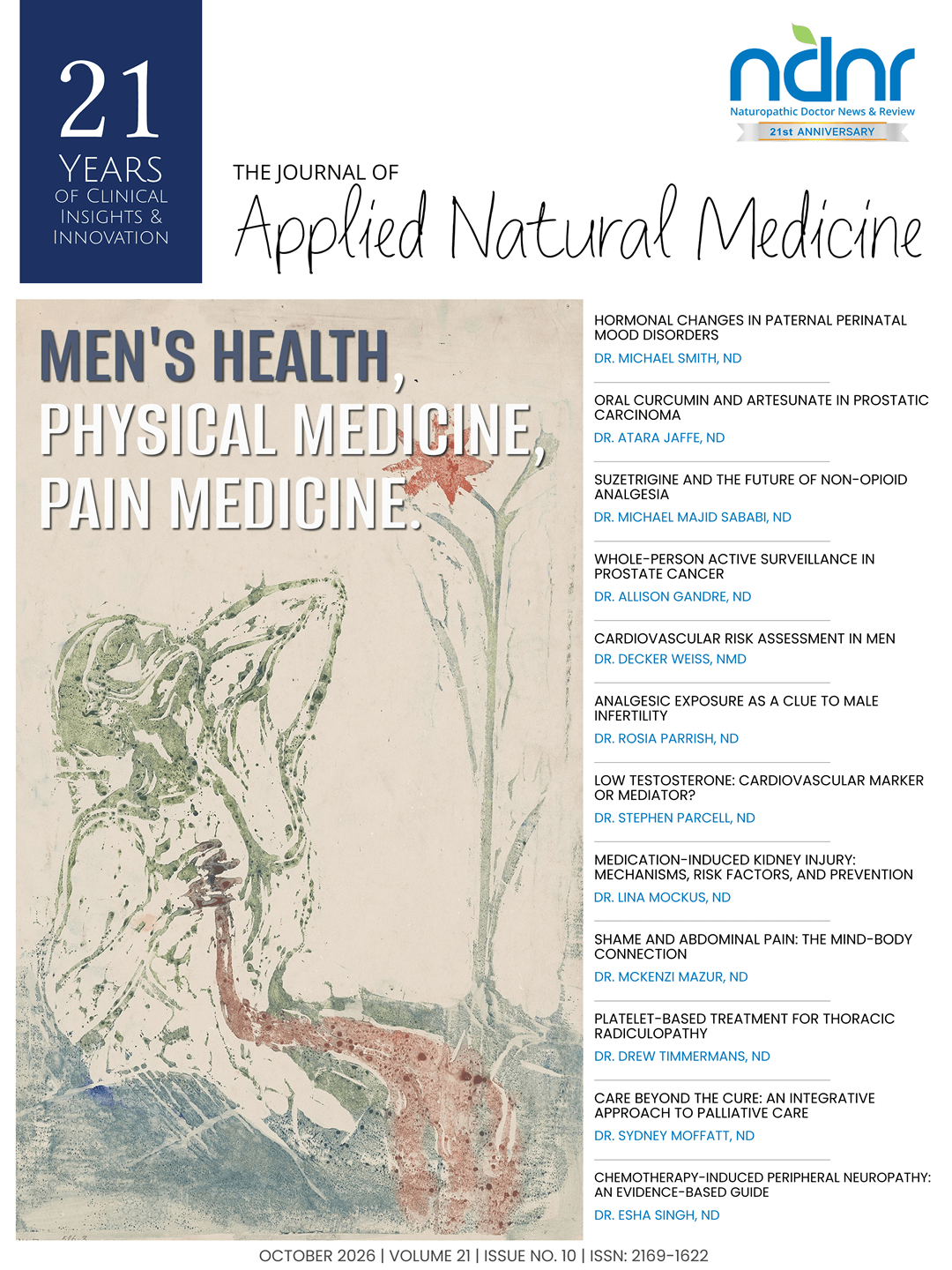
Naturopathic Treatments for Traumatic Brain Injury...................................>> cover Alicia Gonzalez, ND Chemotherapy-Induced Peripheral Neuropathy State of the clinical evidence for prevention/treatment......................>> bottom of cover...
Shandor Weiss, ND One of the main principles of naturopathic medicine is Tolle Causam. To treat the cause a doctor has to find the cause … or causes. There is always a cause, and the cause can always be found, and the cause is always different than the diagnosis of...
Joseph Kellerstein, DC, ND Jane is a pleasant, elegant, 60-year-old lady. She presented with a big, warm smile. Her chief complaints, however, were a concomitant history of vestibular and headache issues dating from the mid-1990s. There was also a past history of a...
Jacob Schor, ND, FABNO With spring fast approaching, I’m already dreading the shock of switching back to Daylight Saving Time (DST). This leads me to ponder why we still bother switching the clocks like this. I can never remember when we do it and which way we are...
David Schleich, PhD Everyone talks in our world about how the naturopathic profession has momentum, now more than ever. Some feel that the momentum is fragile and has been long in the works, requiring diligence and caution; others experience it has unstoppable. For a...
Alicia Gonzalez, ND My saga with brain injuries began when a soccer teammate fell during a game and suffered a traumatic brain injury (TBI). He was rushed to the nearest trauma center and received top-notch care in the ER and ICU. Unfortunately, once he was discharged...
Trina Doerfler, ND, DC Discussion of the brain is everywhere these days … it’s on the cover of leading news magazines; public television has a series entitled “The Brain Fitness Program”; and more than a few books are being written on how to better understand and work...
Robin DiPasquale, ND, RH(AHG) At a certain level, anxiety can be normal and useful, stimulating one to purposeful action. When in excess, however, it can interfere with one’s ability to function. Abnormal expressions of anxiety can range from a feeling of uneasiness,...
Nita Bishop, ND and Rowan Hamilton, MNIMH Have antibiotics been designed around the wrong premise? More than 100 years ago, Robert Koch made an important breakthrough in the history of microbiology by developing methods to create a solid nutrient media to...

Childhood adversity may leave lasting physiological effects that extend beyond psychological symptoms. Through a case of a 19-year-old woman with persistent anxiety, OCD, emotional eating, and hyperandrogenic metabolic dysfunction, this article examines how neuroendocrine, metabolic, immune, nutritional, and gut-brain pathways may interact—and how a systems biology approach can complement conventional psychiatric care.
When an 8-month-old developed sudden distress whenever his mother left the room, the choice between Phosphorus and Pulsatilla initially appeared uncertain. Through direct observation, a previously overlooked response to physical touch became the defining symptom guiding a Phosphorus prescription, followed by reported improvement within one week.
For neurodivergent children, communication extends beyond spoken language. Through a composite pediatric case, this article explores how narrative medicine, creative expression, sensory-aware facilitation, and caregiver co-regulation can support emotional communication, self-advocacy, and connection in children with autism, ADHD, and related developmental differences.

A young child with recurrent abdominal pain, bloating, constipation, sleep disturbances, and behavioral changes experienced repeated symptom improvement during integrative treatment targeting intestinal dysbiosis. This case examines the challenges of managing suspected Klebsiella-associated symptoms while navigating inconsistent treatment across two households, parental hesitation toward additional testing, and the possibility of an underlying inflammatory bowel disorder.
Medications may account for an estimated 20% of community- and hospital-acquired acute kidney injury, with risk amplified by CKD, older age, chronic disease, dehydration, and polypharmacy. This review examines the major mechanisms of drug-induced nephrotoxicity and practical strategies for medication review, hydration, renal monitoring, and prevention.
Low testosterone is consistently associated with adverse cardiovascular outcomes, but whether it is a cause of vascular disease or a marker of underlying metabolic and inflammatory dysfunction remains unresolved. This review examines the epidemiology, vascular mechanisms, hypertension and atherosclerosis data, TRAVERSE findings, and the cardiovascular implications of TRT-induced erythrocytosis.
Could overlooked pain-medication use provide an important clue in male infertility? This case follows a 40-year-old man with oligoasthenoteratozoospermia whose total motile sperm count increased from 2.72 million to 26.5 million over 111 days following analgesic discontinuation and a multicomponent integrative fertility plan.
Cardiovascular risk extends beyond LDL cholesterol and the standard lipid panel. This review explores how plaque biology, inflammation, oxidation, metabolic and hormonal health, advanced biomarkers, CGM, and cardiovascular imaging can complement established therapies to create a more individualized approach to cardiovascular risk assessment in men.
Approximately 1 in 10 fathers experience a perinatal mood or anxiety disorder, yet paternal PMADs remain frequently overlooked. This review explores the hormonal and psychosocial changes accompanying fatherhood and their implications for recognizing, screening, and supporting paternal mental health.
Can curcumin and artesunate play a role in integrative prostate cancer care? This two-patient case series examines PSA trajectories and pathology during an oral botanical protocol incorporating curcumin and artesunate, while highlighting potential mechanisms, iron-related adverse effects, and the need for further clinical investigation.
Suzetrigine introduces a novel mechanism for treating moderate to severe acute pain by selectively inhibiting NaV1.8 channels on peripheral nociceptors. This review examines its mechanism, clinical efficacy, safety, and potential role within multimodal naturopathic and integrative pain management.
Active surveillance does not have to mean simply “watching and waiting.” This case follows a man with localized intermediate-risk prostate cancer over approximately 20 months, integrating conventional oncologic monitoring with serial assessment and individualized management of metabolic health, inflammation, gastrointestinal dysbiosis, environmental exposures, nutrition, and lifestyle.
The 2026 American Association of Naturopathic Physicians (AANP) Convention arrived in Madison, Wisconsin, under unusual skies. Wildfire smoke had drifted across the region, leaving the city enveloped in smoke and fog as naturopathic physicians, students, educators,...
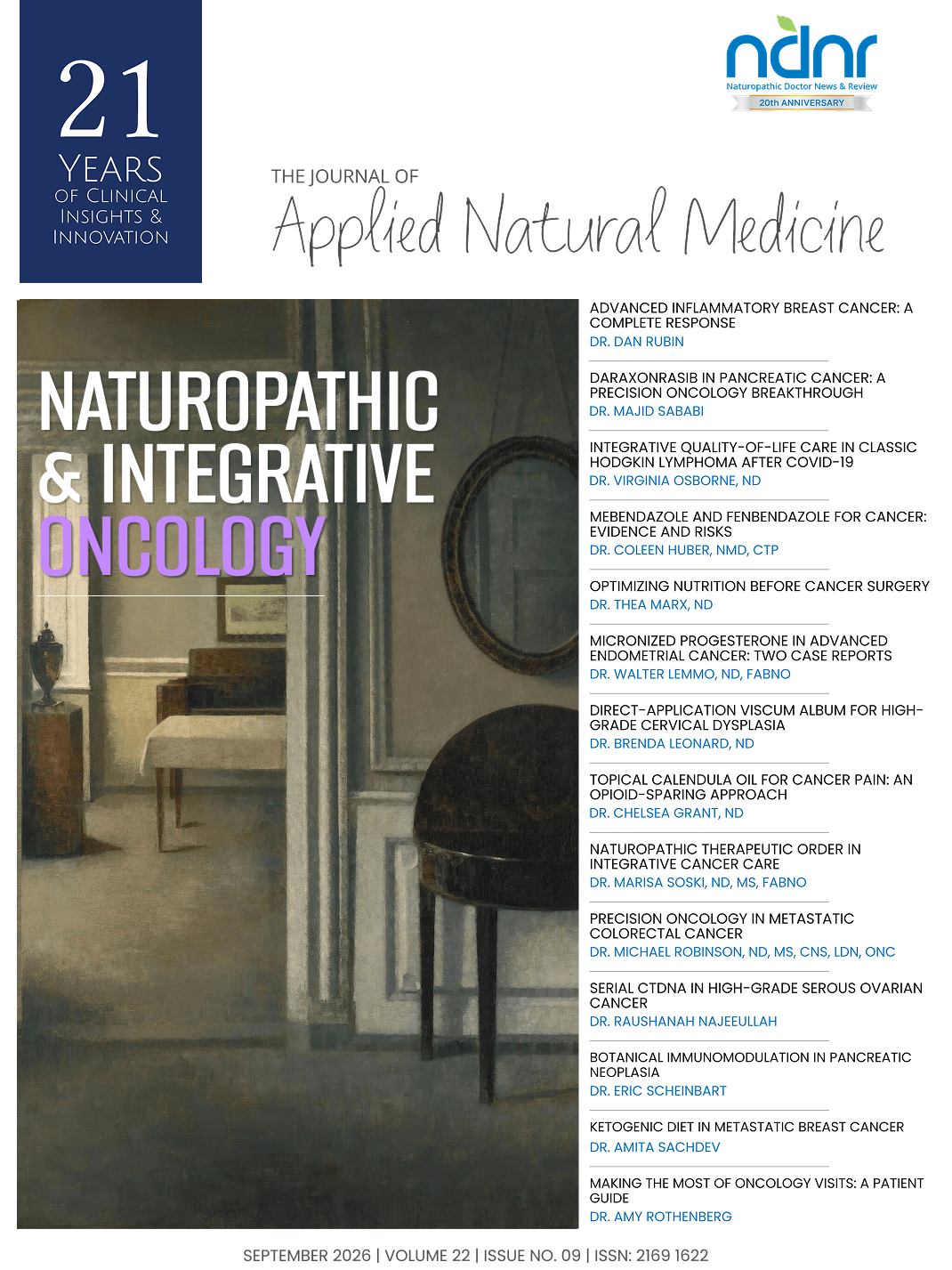
Daraxonrasib is reshaping the therapeutic landscape of RAS-driven pancreatic cancer and raising new considerations for integrative clinicians. This article explores pan-RAS inhibition alongside practical strategies for nutrition, exercise, symptom management, and careful evaluation of botanical and nutrient interactions within a precision integrative oncology framework.
This case follows a 44-year-old woman with inflammatory breast cancer that progressed to osseous metastatic disease and was managed through a multimodal naturopathic, immune-directed, and conventional oncology strategy. Serial imaging and molecular surveillance ultimately demonstrated complete metabolic response, zero circulating tumor cells, and repeatedly undetectable ctDNA, highlighting the potential value of adaptive, interdisciplinary integrative oncology care.
Can a ketogenic diet play a supportive role during treatment for advanced breast cancer? This case follows a 34-year-old woman with metastatic HER2-positive breast cancer who adopted a ketogenic diet and broader lifestyle changes alongside chemotherapy and HER2-targeted therapy, while examining the evolving evidence, potential metabolic benefits, and limitations of ketogenic diets in cancer care.
Cancer care can be complex and overwhelming, but preparation can make medical appointments more productive and less stressful. This practical checklist offers 18 strategies to help patients communicate effectively with providers, organize their care, explore treatment options, and build a collaborative medical “dream team.”
Can botanical immunomodulation play a supportive role in patients with pancreatic neoplasia? This case report describes the clinical course of a patient who declined surgery, chemotherapy, and radiation and pursued a physician-directed botanical regimen alongside nutrition, exercise, meditation, and other lifestyle measures, with subsequent imaging reportedly demonstrating stabilization followed by reduction in lesion size.
Serial ctDNA testing provided an evolving molecular picture of advanced ovarian cancer, helping inform treatment decisions as the patient moved between naturopathic and conventional care. This case illustrates how multiple liquid-biopsy platforms can complement CA-125 while adding molecular detail relevant to treatment response and progression.
Essential oils contain complex compounds with antimicrobial, antibiofilm, anti-inflammatory, and other biological activities. Dr. Sarah LoBisco explores how essential oil chemistry, formulation, and route of administration inform targeted applications for microbiome balance across the gastrointestinal, respiratory, and urinary systems.
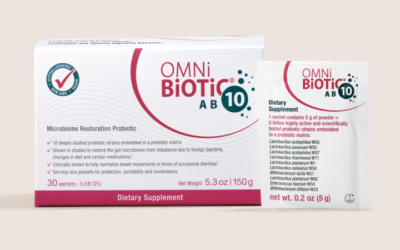
Omni-Biotic Human clinical trials demonstrate that functionally targeted Omni-Biotic AB 10 prevents diarrhea, reduces C. difficile risk, and eliminates multidrug resistant organism colonization in the gut. Introduction Antibiotics are among the most...

Robert Sheaff, PhD, and Ian Mitchell This study investigated whether quantum field exposure generated by Leela Quantum Bloc Technology influences cell recovery rates in human cell lines. A series of double-blind experiments were conducted using Human Dermal...
ClarityTx, a healthcare technology company, announced the launch of its clinical decision-support platform designed specifically for integrative and functional medicine practitioners. Created by a multidisciplinary team of clinicians, the platform helps practitioners...
Colleen Huber, NMD April 9 2026 The following is a comparison of my conventional medical education and subsequent naturopathic medical education. I wrote this in 2015, and now update it in April 2026, only with updated curriculum links and screenshots from the various...