

Kristen...
Practice Building: Social Media Your Best Source for Passive Income
read more



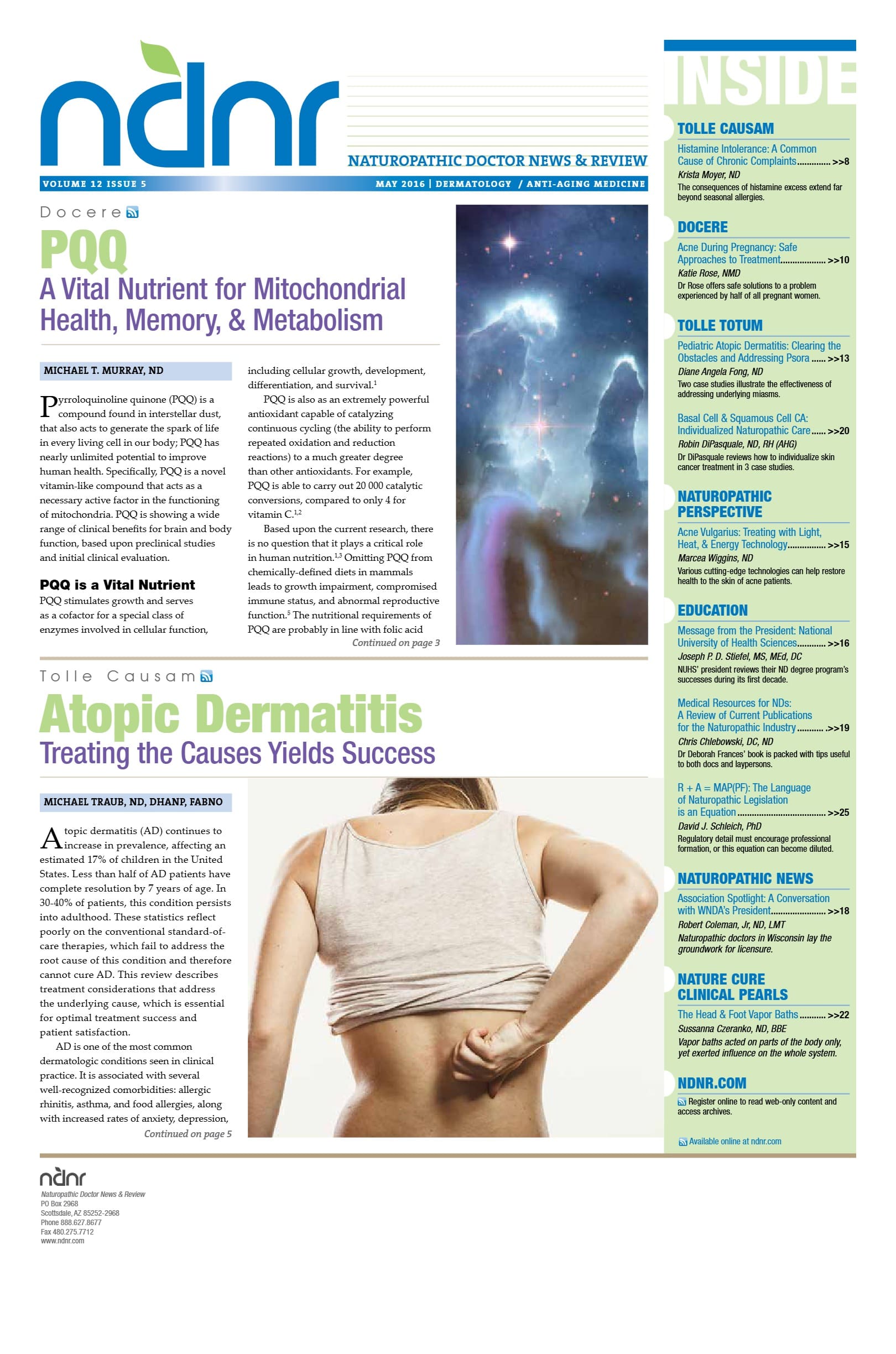
Kristen McElveen, ND A common question from naturopathic doctors in private practice is how to keep a consistent referral stream coming in. And while that is important, I feel it is also important to prepare for what happens when you do want some time off, or when you...
Diane Angela Fong, ND “Miasm” is the term Hahnemann used to describe an inherited predisposition for certain physical and/or mental dysfunctions.1 Just as biological genes are carried down from parent to child, miasms can be inherited in a similar fashion. In infants...
Marcea Wiggins, ND Acne vulgaris is a proliferative and difficult-to-treat condition that affects millions of teenagers and adults alike. Naturopathic medicine offers patients a deeper perspective into their condition and addresses the underlying causes, which in the...
Annie Salsberg, ND While anecdotal information on the clinical benefits associated with goat milk is common among naturopathic doctors, systematic documentation of its effects is limited. This report primarily describes the improvement of symptoms associated with...
Michael Traub, ND, DHANP, FABNO AD is one of the most common dermatologic conditions seen in clinical practice. It is associated with several well-recognized comorbidities: allergic rhinitis, asthma, and food allergies, along with increased rates of anxiety,...
David J. Schleich, PhD Helpful in this exercise was the eloquent work of Yon Maley (1987), whose pioneering analysis of the characteristics of the language used in legislation gave us a lens through which to look. So much of the language (words, paragraph structure,...
Katie Rose, NMD The management of acne during pregnancy poses a challenge to many practitioners, due to the fact that many over-the-counter and prescription medications are contraindicated as a result of the high risk of birth defects. Rather than focusing on treating...
Krista Moyer, ND Abstract Histamine intolerance is an underrecognized contributor to a wide range of chronic, multisystem symptoms often misattributed to other conditions. Impaired activity of the diamine oxidase (DAO) enzyme in the gastrointestinal tract can lead to...
Michael T. Murray, ND Pyrroloquinoline quinone (PQQ) is a compound found in interstellar dust, that also acts to generate the spark of life in every living cell in our body; PQQ has nearly unlimited potential to improve human health. Specifically, PQQ is a novel...
Robin DiPasquale, ND, RH (AHG) ADC is a 59-year-old woman with a 3x4 cm scaly lesion on her lower right arm that has been there for the past 10 years. A dermatologist diagnosed it as actinic keratosis. More recently, during a visit with a rheumatologist, a biopsy was...

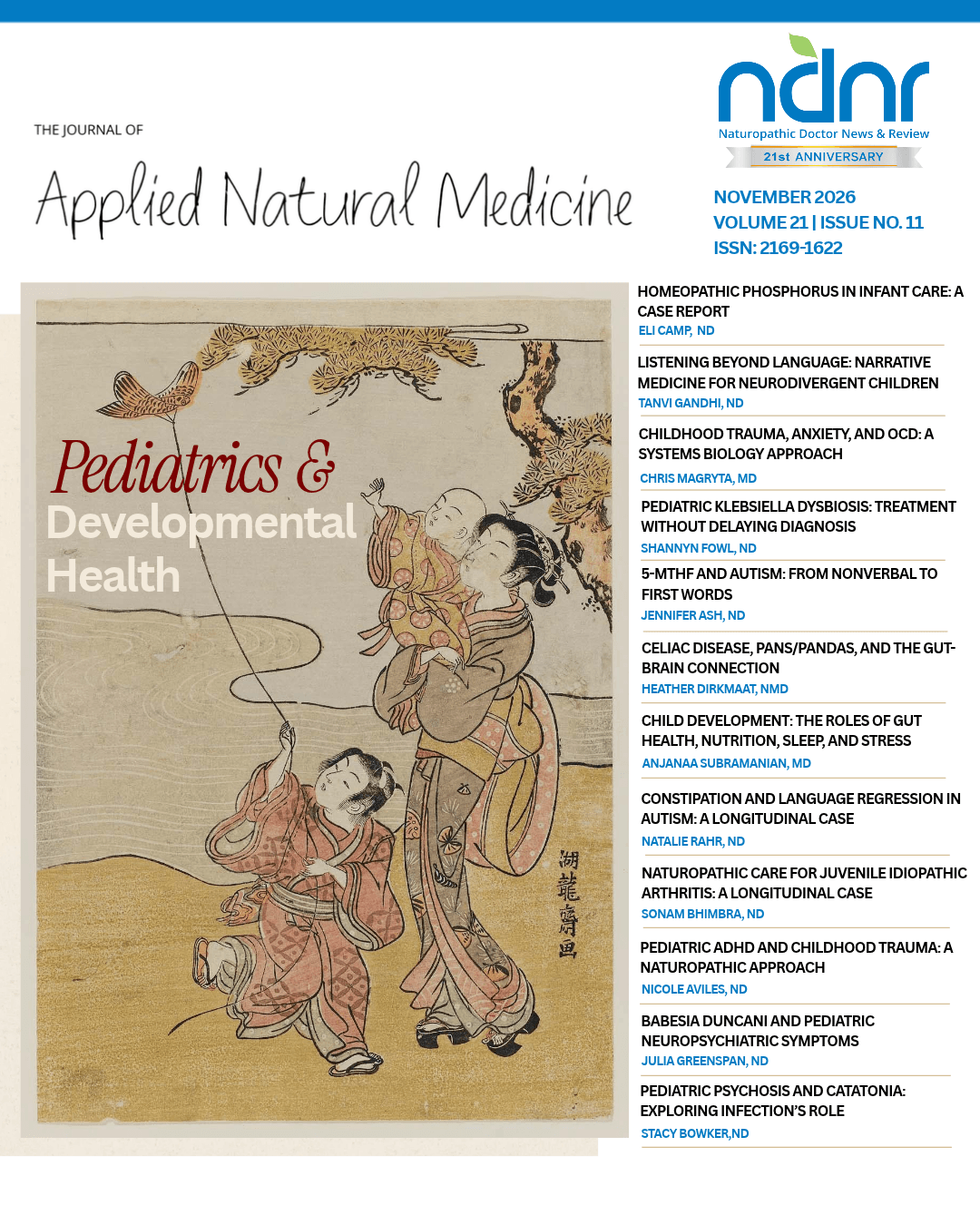
Childhood adversity may leave lasting physiological effects that extend beyond psychological symptoms. Through a case of a 19-year-old woman with persistent anxiety, OCD, emotional eating, and hyperandrogenic metabolic dysfunction, this article examines how neuroendocrine, metabolic, immune, nutritional, and gut-brain pathways may interact—and how a systems biology approach can complement conventional psychiatric care.

When an 8-month-old developed sudden distress whenever his mother left the room, the choice between Phosphorus and Pulsatilla initially appeared uncertain. Through direct observation, a previously overlooked response to physical touch became the defining symptom guiding a Phosphorus prescription, followed by reported improvement within one week.
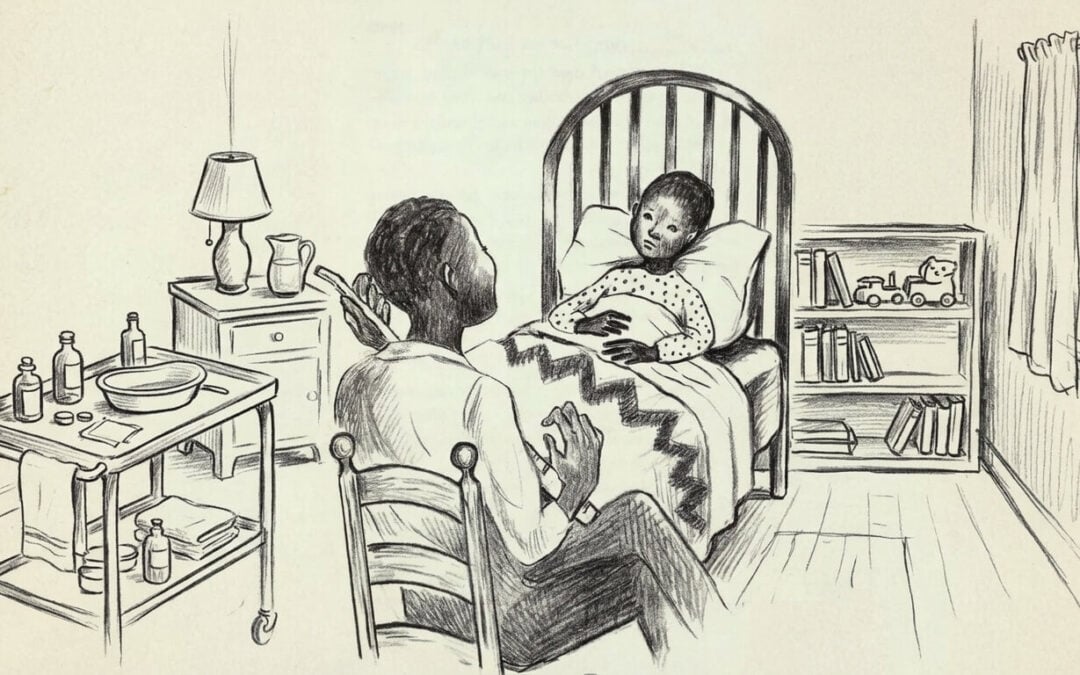
For neurodivergent children, communication extends beyond spoken language. Through a composite pediatric case, this article explores how narrative medicine, creative expression, sensory-aware facilitation, and caregiver co-regulation can support emotional communication, self-advocacy, and connection in children with autism, ADHD, and related developmental differences.

A young child with recurrent abdominal pain, bloating, constipation, sleep disturbances, and behavioral changes experienced repeated symptom improvement during integrative treatment targeting intestinal dysbiosis. This case examines the challenges of managing suspected Klebsiella-associated symptoms while navigating inconsistent treatment across two households, parental hesitation toward additional testing, and the possibility of an underlying inflammatory bowel disorder.
Medications may account for an estimated 20% of community- and hospital-acquired acute kidney injury, with risk amplified by CKD, older age, chronic disease, dehydration, and polypharmacy. This review examines the major mechanisms of drug-induced nephrotoxicity and practical strategies for medication review, hydration, renal monitoring, and prevention.
Low testosterone is consistently associated with adverse cardiovascular outcomes, but whether it is a cause of vascular disease or a marker of underlying metabolic and inflammatory dysfunction remains unresolved. This review examines the epidemiology, vascular mechanisms, hypertension and atherosclerosis data, TRAVERSE findings, and the cardiovascular implications of TRT-induced erythrocytosis.
Could overlooked pain-medication use provide an important clue in male infertility? This case follows a 40-year-old man with oligoasthenoteratozoospermia whose total motile sperm count increased from 2.72 million to 26.5 million over 111 days following analgesic discontinuation and a multicomponent integrative fertility plan.
Cardiovascular risk extends beyond LDL cholesterol and the standard lipid panel. This review explores how plaque biology, inflammation, oxidation, metabolic and hormonal health, advanced biomarkers, CGM, and cardiovascular imaging can complement established therapies to create a more individualized approach to cardiovascular risk assessment in men.
Approximately 1 in 10 fathers experience a perinatal mood or anxiety disorder, yet paternal PMADs remain frequently overlooked. This review explores the hormonal and psychosocial changes accompanying fatherhood and their implications for recognizing, screening, and supporting paternal mental health.
Can curcumin and artesunate play a role in integrative prostate cancer care? This two-patient case series examines PSA trajectories and pathology during an oral botanical protocol incorporating curcumin and artesunate, while highlighting potential mechanisms, iron-related adverse effects, and the need for further clinical investigation.
Suzetrigine introduces a novel mechanism for treating moderate to severe acute pain by selectively inhibiting NaV1.8 channels on peripheral nociceptors. This review examines its mechanism, clinical efficacy, safety, and potential role within multimodal naturopathic and integrative pain management.
Active surveillance does not have to mean simply “watching and waiting.” This case follows a man with localized intermediate-risk prostate cancer over approximately 20 months, integrating conventional oncologic monitoring with serial assessment and individualized management of metabolic health, inflammation, gastrointestinal dysbiosis, environmental exposures, nutrition, and lifestyle.
The 2026 American Association of Naturopathic Physicians (AANP) Convention arrived in Madison, Wisconsin, under unusual skies. Wildfire smoke had drifted across the region, leaving the city enveloped in smoke and fog as naturopathic physicians, students, educators,...
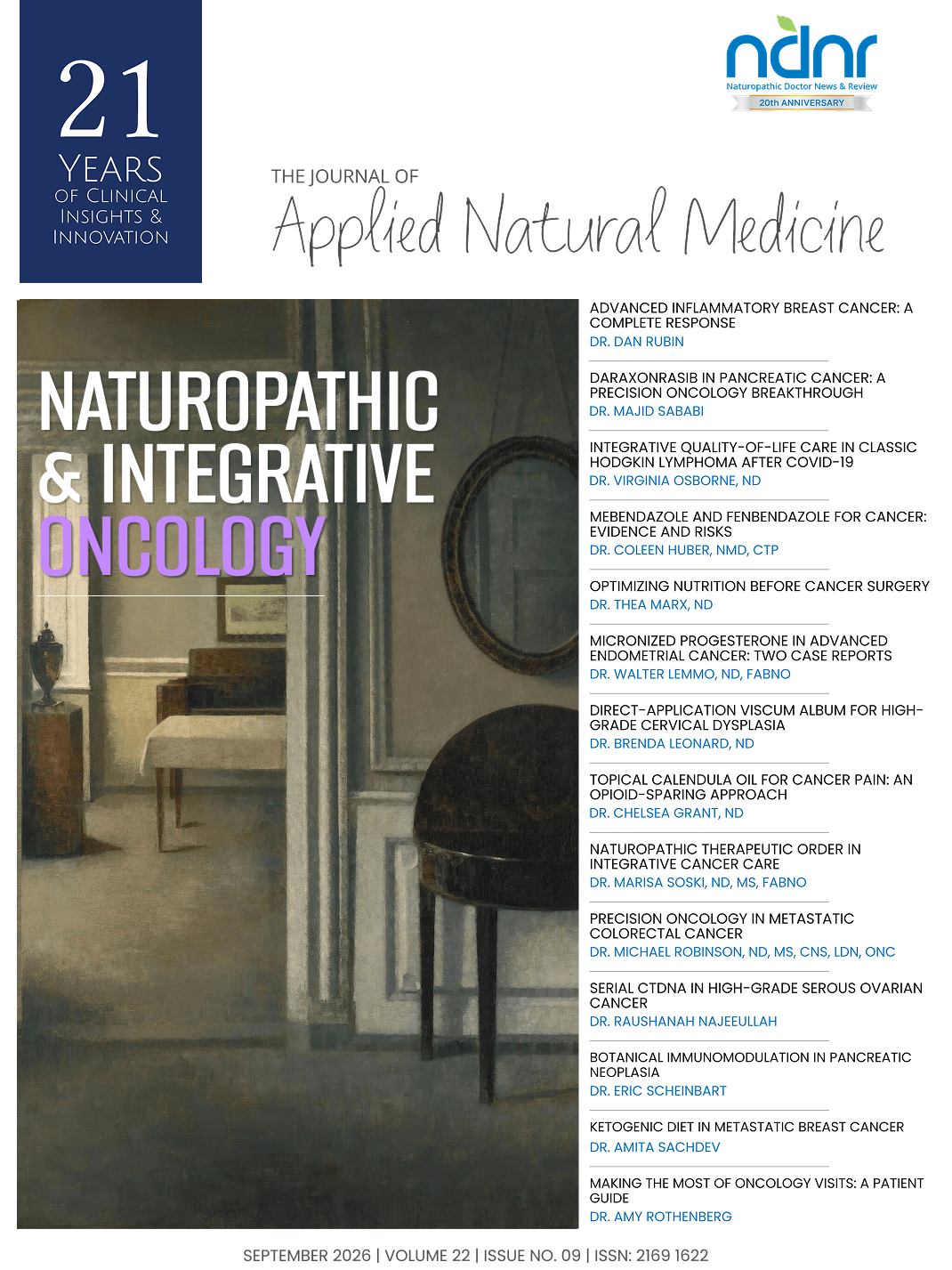
Daraxonrasib is reshaping the therapeutic landscape of RAS-driven pancreatic cancer and raising new considerations for integrative clinicians. This article explores pan-RAS inhibition alongside practical strategies for nutrition, exercise, symptom management, and careful evaluation of botanical and nutrient interactions within a precision integrative oncology framework.
This case follows a 44-year-old woman with inflammatory breast cancer that progressed to osseous metastatic disease and was managed through a multimodal naturopathic, immune-directed, and conventional oncology strategy. Serial imaging and molecular surveillance ultimately demonstrated complete metabolic response, zero circulating tumor cells, and repeatedly undetectable ctDNA, highlighting the potential value of adaptive, interdisciplinary integrative oncology care.
Can a ketogenic diet play a supportive role during treatment for advanced breast cancer? This case follows a 34-year-old woman with metastatic HER2-positive breast cancer who adopted a ketogenic diet and broader lifestyle changes alongside chemotherapy and HER2-targeted therapy, while examining the evolving evidence, potential metabolic benefits, and limitations of ketogenic diets in cancer care.
Cancer care can be complex and overwhelming, but preparation can make medical appointments more productive and less stressful. This practical checklist offers 18 strategies to help patients communicate effectively with providers, organize their care, explore treatment options, and build a collaborative medical “dream team.”
Can botanical immunomodulation play a supportive role in patients with pancreatic neoplasia? This case report describes the clinical course of a patient who declined surgery, chemotherapy, and radiation and pursued a physician-directed botanical regimen alongside nutrition, exercise, meditation, and other lifestyle measures, with subsequent imaging reportedly demonstrating stabilization followed by reduction in lesion size.
Serial ctDNA testing provided an evolving molecular picture of advanced ovarian cancer, helping inform treatment decisions as the patient moved between naturopathic and conventional care. This case illustrates how multiple liquid-biopsy platforms can complement CA-125 while adding molecular detail relevant to treatment response and progression.
Essential oils contain complex compounds with antimicrobial, antibiofilm, anti-inflammatory, and other biological activities. Dr. Sarah LoBisco explores how essential oil chemistry, formulation, and route of administration inform targeted applications for microbiome balance across the gastrointestinal, respiratory, and urinary systems.
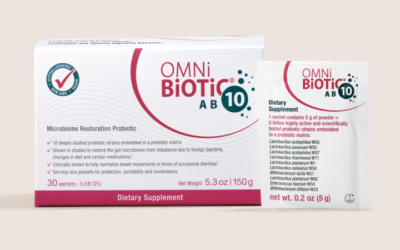
Omni-Biotic Human clinical trials demonstrate that functionally targeted Omni-Biotic AB 10 prevents diarrhea, reduces C. difficile risk, and eliminates multidrug resistant organism colonization in the gut. Introduction Antibiotics are among the most...

Robert Sheaff, PhD, and Ian Mitchell This study investigated whether quantum field exposure generated by Leela Quantum Bloc Technology influences cell recovery rates in human cell lines. A series of double-blind experiments were conducted using Human Dermal...
ClarityTx, a healthcare technology company, announced the launch of its clinical decision-support platform designed specifically for integrative and functional medicine practitioners. Created by a multidisciplinary team of clinicians, the platform helps practitioners...

Colleen Huber, NMD April 9 2026 The following is a comparison of my conventional medical education and subsequent naturopathic medical education. I wrote this in 2015, and now update it in April 2026, only with updated curriculum links and screenshots from the various...
